Cancel
Open app
Search
Sign Up
Log In
Nearby
Bookmarks
Start a Project
Add a Business on Yelp
Add Review
Call
Directions
Start your review...
Get app
14 years ago
Well administered. Sensible and pragmatic. Non-evangelical. Insightful.
Kilnwick Percy Hall Pocklington
Ellerton YO42
United Kingdom
01759 304832
Call Now
Hours
What time does Buddhist Meditation Retreats open?
What time does Buddhist Meditation Retreats close?
Get access to customer & competitor insights.
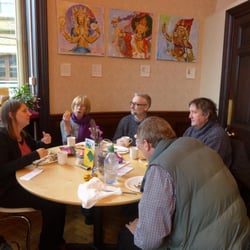
This vegetarian café and Buddhist meditation centre is a haven of peace in the centre of town. It's…read morefood is simple, tasty and cooked on the premises and they have a wide range of hot drinks and cakes. Add to this a complete spectrum of activities from drop-in meditation classes for everyone to in-depth Buddhist study programs, daily prayers and social events and that is why I cannot recommend this place enough.
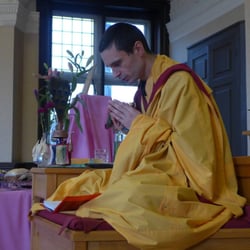
From the owner: Buddha Land Centre was established in 2001, by Venerable Geshe Kelsang Gyatso, to act as a focus…read morefor Buddhist practice and meditation and has since then grown steadily. The centre moved to a new building in August 2009 to 1 Lawkholme Crescent in the centre of Keighley. Buddha Land has continued to flourish and spread Buddhadharma, including a new centre that opened in Burnley in 2013. Buddha Land aims to provide peaceful and inspiring places where people can learn to meditate, to gain a practical understanding of Buddhism and bring about positive change in their lives. Everyone is welcome.
See all
the buddist center is set in some truely beautifull grounds and in a very well kept georgian…read morecountry mansion, built in 1784. has its own community of buddists they recieve men, women and families most of the year except august, offer meditation classes, spiritual direction and group studies. every year they have a summer fair (july) to raise money for restorations for the building and facilities, though this year i either missed it, or they did not have one? having lived i pock for a number of years and noticing the odd buddist roaming the streets, i never linked them to kilnwick percy hall? (pronounced kil-lick percy) so i was really impressed when my friend took me and my son up on a summer fair! one of the buddists even parked my car for me! (reverse parked it) we chatted and he was a car sales man. the whole atmosphere was relaxed and un-hurried. no-one was pushing the need to be spiritual or meditate not medicate messages. it was a simple but infomative tour of the building and the classes/courses they offered. the building, though has seen better years was none the less very grand looking! the tour included the grounds, the new garden with its kidney shaped twin ponds, would look exceptional when in full bloom, as we was it in it's just completed stage. they had a very good vegatable garden, and wild garlic grew everywhere, especially the wooded areas in the grounds. the fair itself, was like a well stocked and organised school summer fate. everyone was having fun! it had a bouncy castle, coconut shy, a long bit of tarp and hose that was a water slide! egg and spoon races etc they had a cafe on, with everything homemade and vegetarian! i've had vegetarian food before, but these flans and cakes where out of this world! and the prices they charged were more then fair! it made a great day out! for the family. but even without the fair, i think it would have made for an interesting day. there was a very small church just off the grounds, that i would have loved to have had a look at.
Brands by name
Articles by date
Built unusually all in one go, St Michael's replaced an earlier church on the site during the reign…read moreof Henry VIII, and sits at the end of Petergate in the shadow of the Minster. The exterior is (predictably) executed in Tudor Gothic, and is wide and low. The west front is newer, as it was rebuilt in the 19th century when adjacent houses were demolished. Inside, the church has generous aisles running the length of the church, but the real reason for a visit is to see the fine 18th century Baroque Altarpiece and the collection of late maediaeval glass: that in the East window dates from the mid-14th century and comes from the previous church, whereas that in the aisles dates from its rebuilding in the mid 16th century, in the Flemish style. There is also an extensive collection of 18th century monuments and memorials. Many visitors come to see the enlarged copy of Guy Fawkes' baptismal entry in the church's registers: I had no idea that our most famous traitor was born an Anglican! The modern church has a large and very active congregation, broadly evangelical in style.
Phrases like 'atmospheric', 'hidden gem' and 'perfectly preserved' often get bandied about when…read moretalking about old buildings, but this church, tucked away from the busy, touristy streets of old York, fits them better than most. For a start, it really is hidden: the churchyard is secluded behind rows of old buildings, accessed by narrow alleyways. It would not look out of place in a remote village. And it is perfectly preserved: such restoration as was undertaken by the Victorians seems to have been extraordinarily sensitive. It is about as close as you can get to how a church would have looked after the Reformation: dark, quiet, homely, with uneven floors, high box pews and plain walls. With candle-light it must perfectly evoke the late 17th century. It is rightly a Grade I listed building. The church actually dates back to the 12th century, although the current building owes rather more to the 13th-15th centuries: although part of the Chancel dates from the 12th century, the South Aisle and Chapel date from date from 1340, the Tower and North Aisle were built in the first half of the 15th century. The box pews are recorded as being repaired in 1633, and new ones added in 1700-1725. The pulpit dates from 1695. But the church's most notable feature - as is so often the case in York - is its mediaeval stained glass. The windows are decorated and perpendicular in style. The best is the late Perpendicular east window: this dates from 1470-71 and was presented by the then rector, John Walker. The glass depicts saints, including St George and St Christopher, as well as heraldic shields, around a central panel in which a representation of God as the Trinity holding the dead Christ, with the donors at his feet. Other features include a simple 15th century font and wall plaques recalling Lord Mayors of York, including the 'Railway King', George Hudson. The church is in the care of the Churches Conservation Trust.
Being so close to the Minster itself, this small church hardly gets a mention I bet. It's not…read moresurprising because unless you know it's there as there' only a small entrance onto busy Goodramgate, you'll easily miss it. What make this place stand out for me is the 18C pews inside; they're very tall and a whole family can fit inside one and sit facing each other.
A very friendly church in the North Yorkshire market town of Selby…read more Tucked away off a side-road, the building is a fairly traditional one; it's quite large, and so can just about be seen from Selby's main High Street. The church also has a good-sized Church Hall next door. The church itself is an evangelical one, with an emphasis on the Bible and fairly 'low' worship. If you prefer incense and bells, Selby Abbey may well be a better bet! The congregation are a very welcoming group of people (or at least, they were when I last went to a service a number of years ago) with a good mix of children, families and older folk. All in all, a warm, friendly community with whom to worship.
Beverley Minster is the Parish Church of St. John and St. Martin…read more John, bishop of York, founded a monastery on the site where Beverley Minster stands. John died in 721 and his body was buried in a chapel of the Saxon church. He was canonised in 1037. The present church was built around his tomb. Building work began in 1220 and was completed in 1425. Throughout the Middle Ages miracles which took place at his tomb attracted pilgrims from far and wide. Today the church is still a place of pilgrimage for visitors. It also continues to be a place of prayer and worship at the heart of the community.
Something of a hidden gem in the large church/cathedral stakes. It's never full of tourists and is…read moreconsequently quiet and calm. Watch out for weddings on Saturdays! It is often used as a classical music venue.
Right in the centre of town, this old church is a quiet haven from the busy shopping precinct. It's…read morevery peaceful inside & has a famous organ. There has been a religious building on the site since the 12th century & the font is 550 years old.
We were in York the other day. Were amazed by the York Minster. And came to Selby to check out the…read moreAbbey. But didn't expect it to be so massive, so impressive. The town center is easy to walk. The main street, the shopping centre and the Abbey. All in short distance. The church is one of the relatively few surviving abbey churches of the medieval period. And it's not a cathedral actually. But it is one of the largest. It was founded by Benedict of Auxerre[3] in 1069 and subsequently built by the de Lacy family. As the York Minster, this Abbey too was hit by a fire. In 1906. And in 2002 it underwent a big restoration, costing several million pounds. Now the Abbey is standing there in all its glory. Almost 1000 years of history looking at you! A really impressive piece of history and architecture. Walked around it first to see all the details and to explore the grounds. Inside the Abbey is equally impressive. Even a shop, a café and toilets are located inside. Which was a bit unusual. Be sure to check out the impressive organ and the Washington Window. Selby was a pleasant surprise, a wonderful town. And the heart and centerpiece is the amazing Abbey. Definitely a must-do when in the area. It's surprising how few visitors have found their way here, we've seen only a handful.
Founded by Benedict in 1069, and further build by the De Lacy noble Norman family originating from…read moreLassy, Selby Abbey is one of the very few surviving abbey churches of the medieval period. Selby Abbey is dedicated to St Mary the Virgin and St Germain. Being build by a Norman family one expects the tower to be Norman, but the eastern end is decorated in a Gothic style, and the west front a mixture of Norman, Gothic and Victorian. Like many Abbey's and Minsters, Selby Abbey boasts it own colourful past. Particularly damaged during the 17th century and then the great fire of 1906, the Abbey now finds its self benefiting from extensive restoration that ensures its status as one of the most impressive abbey's in the country. I would recommend the inspiring atmosphere, the beautiful stain glass and architecture and the quite daunting climb up the tower if you are brave enough!
This church is fairly modern, and we sometimes go to events there. Its really welcoming and…read morefriendly and its used as kind of a community centre as well as a church. Nice place to go for events and special services.