Cancel

    Open app

    Search

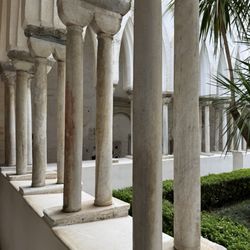
    Chiostro del Paradiso

    5.0 (1 review)

    Chiostro del Paradiso Photos

    Recommended Reviews - Chiostro del Paradiso

    Your trust is our priority, so businesses can't pay to alter or remove their reviews. Learn more about reviews.
    Yelp app icon
    Browse more easily on the app
    Review Feed Illustration
    Photo of Richard F.
    156
    2682
    12010

    9 years ago

    Helpful 1
    Thanks 0
    Love this 1
    Oh no 0

    Verify this business for free

    Get access to customer & competitor insights.

    Verify this business

    Cattedrale di Sant'Andrea Apostolo - Some of the basilica's treasures

    Cattedrale di Sant'Andrea Apostolo

    4.7(27 reviews)
    0.1 km

    Absolutely stunning architecture. So much history built on…read morethis beautiful part of the Amalfi coast. We enjoyed the coolness of the cathedral. And all of the express expressions of Art throughout.. It is so worth the time to go and enjoy the incredible history.

    Standing at the foot of the famous steps of Amalfi Cathedral (aka Duomo di Amalfi Or Cattedrale di…read moreSant'Andrea), it's hard not to stop and take in how beautiful this place is. Located in Piazza Duomo, the cathedral is one of Amalfi's most important landmarks and dates back to the 10th century, when it was built under Duke Manso I. Over the centuries, it has been rebuilt and redecorated, blending Romanesque, Baroque and other architectural influences. Most famously, it is home to the relics of the Apostle Andrew, which were brought to Amalfi in 1208 and remain in the cathedral's crypt. We climbed the steps, purchased our modestly priced tickets, and started by walking through the Cloister of Paradise, with its beautiful arches and columns. We browsed some of the exhibits before heading down into the crypt, where St. Andrew is said to be laid to rest. The crypt was probably my favorite part--beautifully and intricately decorated, with detailed frescoes, gilded stucco and a large bronze statue of the apostle at the altar. We then made our way into the cathedral itself and spent some time soaking in the beautiful architecture. There's quite a bit to see here without needing a huge amount of time, took us maybe 30-40 minutes to make our way through. The cathedral is conveniently located right in the center of Amalfi, making it an easy addition to any itinerary. Overall, I enjoyed our visit. It's beautiful, historic and definitely worth climbing those steps for. The green marble and intricate details reminded me of the Cathedral in Siena, which was one of the most beautiful cathedrals I've ever been to. Definitely take the time to go inside rather than simply admiring the cathedral from the piazza if you have the time.

    Photos
    Cattedrale di Sant'Andrea Apostolo - Ceiling art

    Ceiling art

    Cattedrale di Sant'Andrea Apostolo - In front of the Cathedral

    In front of the Cathedral

    Cattedrale di Sant'Andrea Apostolo - Double columns around a small courtyard

    See all

    Double columns around a small courtyard

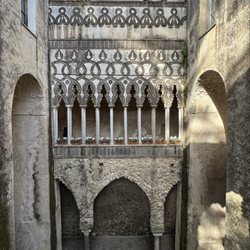
    Villa Rufolo - Small Moorish cloister courtyard

    Villa Rufolo

    4.4(25 reviews)
    1.7 km

    You will never say" this place was a disappointment" It is…read moreprobably one of the most beautiful, most charming, well spent afternoons you will ever spend in Ravello. If you need a reset, from all of the crazy crowds and excitement. Spend an afternoon here and enjoy every moment. It is extraordinary in every way

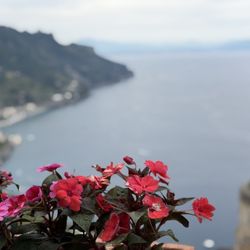
    Villa Rufolo is a beautiful garden and historic site right off the main square in Ravello, next to…read morethe church and near the tunnel you walk through when entering town. The grounds have some amazing views, beautiful gardens, and really interesting old architecture. A lot of it feels almost like very well-maintained ruins, which gives the whole place a lot of character. You can also climb up the tower for some great views over Ravello and the surrounding coastline. Inside, there are a number of art exhibits, including music-related installations, projections, and some other pretty unusual modern art. Some of it was a little weird for my taste, but it was still interesting to walk through, and there is plenty of history throughout the property as well. The gardens were probably my favorite part. Everything was very well kept, and there are some beautiful overlooks throughout the grounds. There were definitely plenty of tourists around, but it never felt overwhelmingly crowded when we visited. They were also setting up for the summer music and symphony events, which looked like it would be an incredible setting for a concert. Overall, Villa Rufolo is definitely worth visiting while in Ravello. Beautiful views, gardens, architecture, and plenty to explore right in the center of town.

    Photos
    Villa Rufolo
    Villa Rufolo - Kitty didn't want to be petted and ran away

    Kitty didn't want to be petted and ran away

    Villa Rufolo - View out the window onto the outside terrace

    See all

    View out the window onto the outside terrace

    Museo Archeologico Nazionale - Lighting and heating instruments collection

    Museo Archeologico Nazionale

    4.4(60 reviews)
    38.3 km•Centro Storico

    One of Naples' crowning museums, the artifacts here complement a visit to Pompeii in the same trip,…read moresince the collections span archaeological finds from Pompeii, Rome and beyond. From sculpture, sacred and funerary objects, mosaics, paintings, household items and furniture, to architectural models and decorative elements, there's plenty of intriguing objects to pique various interests. On a grey Sunday morning in April, I arrived at 10am, and was glad I didn't come later! There were two lines, one for those purchasing tickets at the entry and those with pre-booked tickets online in advance. The latter was a fairly short line, maybe about 10 people, while the former was about 20ish. When I left a couple hours later both lines had more than doubled in length. Inside, the exhibit halls begin with sculptures unearthed during archaeological finds, with the direction of visit encircling one of the smaller inner courtyards. They do an excellent job of providing Italian and English translations for didactic labels and descriptions, and I was able to learn much about a) the background and provenance of sculptures and other finds, b) key figures in archaeological excavations which discovered many of the pieces now housed here, and c) the history of this museum. The route of visit continues to a columned hall with some waiting area seating and contemporary local art pieces, (apparently where school groups rest before touring the museum with docents), which lead up a pair of curved stone staircases where you can look upwards at a central dome. On the second floor highlights include a collection of watercolor works from watercolorist Luigi Bazzani, who captured colorful paintings of Pompeii at the turn of the 20th century, a collection of elaborate furniture, and many rooms of artifacts from steles, ceramics, blown glass and tableware. Many colorful wall paintings found in villas and homes were transferred from archaeological sites to this museum. There's a curious collection of erotic art from antiquity called the Secret Cabinet* too. Unfortunately both these sections were closed: a) the mosaic floor where they previously allowed visitors to enter wearing cloth covers over shoes, and b) the sprawling mini replica of Pompeii that looked to be at least 12 x 15 feet. The latter I glimpsed thru a walkway that was cordoned off. The Sundial Hall, named after (you guessed it) a functional sundial installed in the SW corner of the room, was one of the most impressive rooms in the museum, originally serving as the Bourbon** Royal Library of Naples, then later as the National Library. The beautifully restored ceiling fresco depicts the Bourbon royalty as patrons of the arts. Among the most famous group of objects here are items from the Farnese Collection, begun by then Cardinal Alessandro Farnese (1468-1549), who later became Pope Paul III. Theses works were displayed in various settings notably the Farnese palace, villa and gardens in Rome, then subsequently passed down to descendants. Farnese Hercules, Farnese Artemis, the Farnese Bull and the Farnese Cup are all sublimely sculpted pieces. The total time recommended is easily 2.5-3 hours, additional if you want to read more of the placards. Free lockers, coat check and bathrooms are available. Admission is €20.00 for regular tickets, €2.00 for 18-25 year olds, free for teachers, disabled and those with certain city passes including Artecard and Naples Pass. Hours: 9.00 am - 7.30 pm with last entry at 6.30 pm Closed Tuesdays. *did not post these pics as I didn't want to get flagged for posting explicit content! lol **Bourbon as in the royal dynasty that ruled southern Italy from 1734 until 1860. Not the whisky made with a higher percentage of corn from the southern United States. =)

    Phenomenal collection of ancient artifacts. The museum is…read morehuge! It was a bit too hot to make it through the entire museum.

    Photos
    Museo Archeologico Nazionale - Museum cafe

    Museum cafe

    Museo Archeologico Nazionale - Paintings from early 1st century AD

    Paintings from early 1st century AD

    Museo Archeologico Nazionale - Stairs to second story

    See all

    Stairs to second story

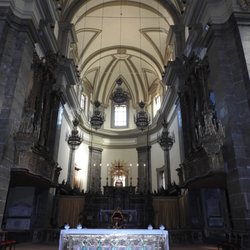
    Duomo di Ravello - Inside nave

    Duomo di Ravello

    4.5(2 reviews)
    1.7 km

    This simple yet imposing structure dominates Piazza Vescovado, the main town square in Ravello…read more With its origins dating back to the 11th century, its style mixes Romanesque and Baroque, though its current minimalist facade is a result of restoration in 1931. Dedicated to St. Pantaleone, the patron saint of physicians and midwives, martyred in the 4th century, he is also the patron saint of Ravello. The construction of this duomo was ordered by Orso Papice, the first bishop of Ravello, supported by the Rufolo family, a wealthy merchant household that also built the nearby Villa Rufolo (see my separate review for that!). The church is known for containing a relic from the saint, a vial of his blood that supposedly liquefies annually on his feast day July 27. Another notable feature are its ornate bronze doors, dating back to 1179. The bell tower of this church dates to the 13th century, I didn't climb up since it was close to closing when I visited, though I imagine the views are stellar. A small church museum is accessible via a side entrance, holds a notable marble bust believed to be Sigilgaida Rufolo, the wife of Nicola Rufolo, the 13th-century merchant who commissioned the cathedral's pulpit. Detractors maintain the sculpture depicts the Madonna or Joanna, Queen of Naples in the 14th century. For more info: https://www.ravello.com/attractions/duomo/

    The itinerary did not include an event here, but to pass it several times a day is an honor. It's…read moresurprising to say no one has written anything about this quaint beauty. Until now. Perfectly located.

    Photos
    Duomo di Ravello - Side view

    Side view

    Duomo di Ravello - Front facade

    Front facade

    Duomo di Ravello - A little about the church

    See all

    A little about the church

    Chiostro del Paradiso - museums - Updated September 2026

    Loading...
    Loading...
    Loading...