Cancel

    Open app

    Search

    Clayton Church

    5.0 (2 reviews)

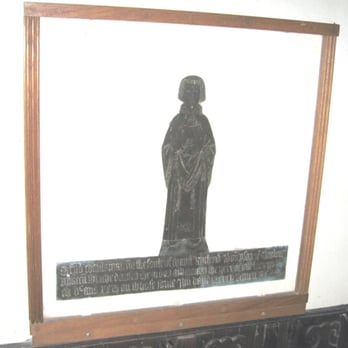
    Clayton Church Photos

    Recommended Reviews - Clayton Church

    Your trust is our priority, so businesses can't pay to alter or remove their reviews. Learn more about reviews.
    Yelp app icon
    Browse more easily on the app
    Review Feed Illustration
    Photo of David J.
    97
    2355
    12135

    19 years ago

    Helpful 0
    Thanks 0
    Love this 0
    Oh no 0

    17 years ago

    Helpful 0
    Thanks 0
    Love this 0
    Oh no 0

    Verify this business for free

    Get access to customer & competitor insights.

    Verify this business

    Church of St Margaret

    Church of St Margaret

    5.0(1 review)
    1.7 mi

    Ditchling is an attractive little village, built on a cross-roads in the shadow of the South Downs,…read morewith narrow streets which would be lovely were it not for the volume of traffic. But standing above all this is the large and handsome church of St Margaret, situated on a rise above the village green, duck pond and next to the little museum. The present church was built on the site of a Saxon church mentioned in the Domesday Book, the remains of which have been found in parts of the lower walls of the nave. The earliest dateable part of the church is the South Aisle, built by Cluniac monks from the Priory in Lewes in the 12th century, which suggests that the present Nave must have already have been there. The chancel dates from around 1260, the tower later on in the 13th century, and the south chapel called the Abergavenny chapel from the 14th century. Although the arches of the very modest south aisle arcade are simple and plain, the Early English Gothic in the Chancel is unusually rich: the single lancet windows all have shafts with stiff-leaf capitals, and have hoods with human heads at the ends, which may represent Henry III and Queen Eleanor. The crossing arches are later around 1300 but equally rich in style, with more stiff-leaf carving and clustered shafts. The chapel has Decorated Gothic windows, but again with shafts and hoods which may have been re-used from the chancel. The main furnishing of note is the monument to Henry Poole (d. 1580), moved in 1863 from the North Transept to its present position in the Abergavenny Chapel. It originally had four shields, but one was knocked out to 'admit a stove pipe' in Victorian times. Official vandalism is nothing new!

    Photos
    Church of St Margaret
    Church of St Margaret
    Church of St Margaret

    See all

    Church of St Martin

    Church of St Martin

    4.0(1 review)
    2.3 mi

    Nestling in an idyllic position under the South Downs and Ditchling Beacon, Westmeston is today a…read moretiny village on the minor road from Hassocks to Lewes. Its church sits above the sharp bend in the road at the centre of the village, amidst a lovely churchyard which is maintained partly as a wildlife reserve, and with fine views of the Downs. The Nave is Norman, and the north doorway through which you enter is original. The chancel was added in the 13th century, and the south aisle and arcade date from the 14th century as does the bell turret and the wooden timbers of the porch, sitting on a 17th century brick base. The south chapel now the vestry was the final addition, in the 15th century. Unfortunately, the church suffered rather severely at the hands of the Victorians, the main feature of which is the rather large chancel arch. This replaced a smaller arch, either side and above which were discovered impressive wall paintings which were, unfortunately, not preserved. A print on the south wall shows what they looked like. It has, however, a few interesting furnishings: a rare Norman chalk-stone font, a handsome Jacobean pulpit and a Kempe window at the west end. There are some interesting memorials which poignantly recall the hardships of local life in the 1700s and early 1800s: one to the Rev. William Henry Campion, Rector of Westmeston and nearby Streat, who died in Milan 'after a long and painful illness' in 1821 at the age of 36; and even more tragically, that of Mary, the wife of William Hampton, Rector of Ovingdean, and his twin infant sons: Mary died in January 1729, aged 25 (presumably in or just after childbirth); Ed died in March aged 3 months and Charles died in May aged 5 months. You can almost feel his despair. By way of lighter relief, the brightly coloured east window, by the Belgian glass painter Capronnier, was witheringly described by Pevsner, in his Buildings of England, as being 'as terrible as only Continental mid 19th century glass can be'!

    Photos
    Church of St Martin
    Church of St Martin
    Church of St Martin

    See all

    The Parish Church of St John the Evangelist

    The Parish Church of St John the Evangelist

    4.0(1 review)
    2.0 mi

    Surrounded by fields and just a scattering of houses, St John's has an idyllic setting, with fine…read moreviews of the South Downs. The church dates from the 13th century, but a rather severe Victorian restoration in 1875 by Carpenter and Ingelow resurfaced the walls, and renewed all the windows. A watercolour in the nave shows the church before restoration. From the outside, the main feature is the pretty Gothick west tower, erected in 1839. Inside, however, it still has the feel of an intimate village church, lit predominantly through tall lancets. The base of the Jacobean pulpit has survived, along with two ancient carvings, now incorporated into the modern lectern. There are some interesting wall memorials: a poignant one to John Newnham who died aged just 12 "& near 6 months" in 1756, set in the small north chapel that was once for the private use of the Lords of the Manor at Newtimber; a grand wall memorial to a former Rector, John Osborne (d. 1774); and a series to the tragic family of Sydney Charles, Viscount Buxton (1853-1935), who lived at nearby Newtimber Place. A Government minister, Lord Buxton held various posts until becoming Governor General and High Commissioner to South Africa 1914-20. However, he is perhaps best known as the President of the Board of Trade who had to defend the Government's policy on lifeboat regulations in the aftermath of the sinking of the Titanic. He was the first and last to hold his title, all his sons predeceasing him: his second son Kenneth died in 1894 aged 7; his eldest son Charles Sydney Buxton, died in 1911 aged 29; and his youngest son, Lieutenant Denis Bertram Sydney Buxton, died in action at Passchendaele in 1917, aged just 19. Charles is commemorated both in a wall memorial (complete with a rather striking profile), and a stained glass window of St Francis. His half-brother Denis has a splendidly romantic carved wooden memorial with a gilded knight in armour, set above the pulpit. More tragedy was to follow in 1923 when Lord Buxton's daughter, Doreen Fitzroy, died a few weeks after childbirth, aged 25. She is commemorated in the best monument in the church, a sculpture of a mother and child by Reynolds-Stephens. A nearby slate memorial commemorates Doreen's mother, the Viscount's second wife, Mildred Anne Smith (d. 1955). Outside, the churchyard has a tumble of table-tombs, some leaning at precarious angles. A recent addition is a black marble memorial to the sinking of the RMS Mendi in 1917, a troopship carrying 823 troops of the 5th Battalion, South African Native Labour Corps, including Chief Henry Bokleni Ndamase. The Mendi collided with the liner Darro in thick fog and sank in under 20 minutes, drowning the Chief and 670 men.

    Photos
    The Parish Church of St John the Evangelist
    The Parish Church of St John the Evangelist
    The Parish Church of St John the Evangelist

    See all

    Clayton Church - religiousorgs - Updated August 2026

    Loading...
    Loading...
    Loading...