Constructed in 1279, and for centuries the Royal residence of Naples' kings into the 16th century,…read morethe gothic exterior of this massive fortress with five towers is a magnificent reminder of Napoli's medieval history and maritime prowess, with an entrance over the largest man-made moat I've seen.
Arriving at 5pm on a weekday afternoon, I scrambled (ie. speed walked for half a mile) to make it before their assigned last entry time, which I thought was 5pm for a 6pm closing time, though apparently it's last entry at 5:30pm. Well...I got an extra workout.
There's a small ticket window to the left inside the main doors, which takes cash or card, and can also validate your city/museum pass (I had a Naples Pass). Regular admission is €15, tickets for local residents €10, free for children under 18. However because of ongoing renovations to major sections, they were offering reduced admissions of €10 and €6 respectively.
Inside what's available to view as of mid-April 2026 are several components. To me each stands alone and feels a bit disjointed to the others, though given its lengthy history and different functions over time perhaps the range of spaces truly embodies the story of the castle, one embued with varied relevance and purpose.
- Palatine Chapel: an austere chapel with stone block floors, inset with ledger stones.*
- Archaeological route and former Armory room: this is where the ruins can be viewed below a glass floor--of what's believed to be past of a lavish Roman villa from 1st century BCE beneath the castle. Tours need to be pre-booked in advance if you want to descend to the underground level to visit these.
- Hall of the Barons: this is the kind of grand hall I'd imagine medieval royalty to preside over, with a massive octagonal star-shaped arched stone ceiling and central round skylight, though it was actually a later construction in the 15th century. The layout includes a U-shaped wooden seating arrangement where the current Napoli city council meets.
- Chapel of the Souls of Purgatory: single room with entrance off the courtyard to the right of the entrance to the Palantine Chapel, the frescos are colorful though space is small.
- First floor Civic Museum - Art Gallery: this is up a flight of steps (aka the second floor for those of us across the pond), a gallery of about 50 works ranging from 15-18th century religious Neapolitan art, transferred here from other historic buildings that are no longer in use.
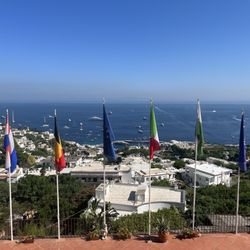
- terrace on second floor with partial view of the port: I was a little disappointed since I thought the roof of the castle would be accessible though I'm glad I didn't rush here on my first day in Naples and instead went to Monte Echia nearby where the views were much better, more panoramic.
It took about 30 minutes to walk around the parts that were open, there are more extensive galleries on the upper stories that were under renovation. I felt it made sense to reduce the price since some portions were closed.
For more info:
https://www.comune.napoli.it/vivere-il-comune/luoghi/castel-nuovo-maschio-angioino/#orari_apertura
https://www.naplesinsider.com/en/e/castel-nuovo-maschio-angioino
*an inscribed stone slab usually laid into the floor of a church to commemorate or mark the place of the burial of a deceased person. (as per Wikipedia)