Daniel L. Russell Historical Marker Photos

More like Daniel L. Russell Historical Marker
Recommended Reviews - Daniel L. Russell Historical Marker
Start your review...



Not far from Town Creek Park, this marker points out the birthplace of North Carolina's 49th Governor. The marker reads, "Daniel L. Russell, 1845-1908. Governor, 1897-1901; Superior Court judge, 1868-1874; member of Congress, 1879-1881. Born two miles northeast." "Daniel Lindsay Russell, Jr. (1845-1908) was elected to office by the uneasy "Fusion" alliance of Republicans and Populists in the bitter and racially charged election of 1896. Russell was nineteen when he was elected in 1864 to the first of two terms in the state House. With the advent of Radical Reconstruction, Russell sided with the new Republican regime and won election as a Superior Court judge, remaining in that position for six years. While Russell maintained a law office in Wilmington, his residence was in Brunswick County from which he was returned to the legislature in 1876. Two years later he entered the Third District Congressional race and served a single term." "By the early 1890s agrarian unrest and economic depression split the state's Democratic Party. The schism widened, giving the Republicans a long awaited opportunity. An alliance with Populists resulted in victories in 1896 that removed control of the legislature from the Democrats and placed Republican Russell in the governor's office." [Review 13994 overall, 1316 of 2020, number 2634 in North Carolina.] read more
More info about Daniel L. Russell Historical Marker













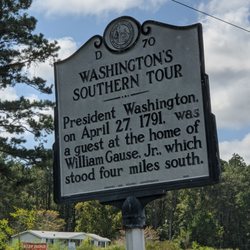
Daniel L. Russell Historical Marker - landmarks - Updated September 2026
Best of Winnabow
People found Daniel L. Russell Historical Marker by searching for…
Browse Nearby
BEST of Winnabow, North Carolina Restaurants near Daniel L. Russell Historical Marker
BEST of Winnabow, North Carolina Things to Do near Daniel L. Russell Historical Marker
BEST of Winnabow, North Carolina Parks near Daniel L. Russell Historical Marker
BEST of Winnabow, North Carolina Coffee near Daniel L. Russell Historical Marker
BEST of Winnabow, North Carolina Campgrounds near Daniel L. Russell Historical Marker
BEST of Winnabow, North Carolina Breakfast near Daniel L. Russell Historical Marker
BEST of Winnabow, North Carolina Hiking near Daniel L. Russell Historical Marker
BEST of Winnabow, North Carolina Hotels near Daniel L. Russell Historical Marker


