1. Die Metro

    1. Die Metro

    0

    ,

    Cancel

    Open app

    Search

    Die Metro Photos

    Die Metro Reviews in Other Languages

    Verify this business for free

    Get access to customer & competitor insights.

    Verify this business

    Hlavní nádraží Praha

    Hlavní nádraží Praha

    3.4(92 reviews)
    1.2 kmPraha 2, Vinohrady
    $$

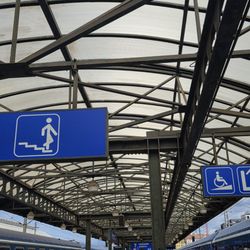
    Rode into Prague Central station the other day and it was a quick and easy experience. It was…read moremerely an escalator away from the platform to the train station. Signage was slightly tricky to get onto the tram. There were automated ticket counters at the train station although it wasn't too clear which direction each stairwell was to get down to the local tram. There were a bunch of shops, restaurants, and coffee shops right beneath the platform and it was quite busy.

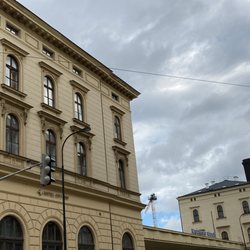
    This is the main train station in Prague, located conveniently in the eastern section of the city…read morecenter, walkable to many well-known local sites, including the Opera House directly to the south a block away, the Natural History Museum two blocks away, and the famous Zegar astronomiczny Praga (Prague astronomy clock tower) 15 minutes away by foot, in the main old town square. The station itself is a combination of old and new, originally built in the 1860s in a Renaissance Revival style, named the Emperor Franz Joseph Station the royalty by whose decree the station was built. Its current facade on the upper level east side was built between 1901 and 1909, in an Art Nouveau style. It's the largest station in addition to the largest Art Nouveau landmark in the Czech Republic. The dome is a work of art and I'm a little sad I missed it, though the pictures look elegantly restrained in its details. Major work on the station occurred in 1928 when the station and train lines began conversion to electricity. Post WWI additional tracks were added, then post WWII--after competitions to select designs for a new station, underground railway and check-in halls--a new terminal building was built between 1972-79 including an underground metro station, the first of its kind in Prague. Additional construction happened to replace tracks 1983-94, and continued modernization and maintenance 2006-2017. Given the two different structures and about two dozen above ground and additional underground tracks, this station is pretty large and has multiple levels. Recommend taking that into account when arriving to catch your next form of transportation. Both entrances have loops in front of the entrances for vehicles to circle and pick up passengers. The Art Nouveau building is located at the upper level, and has a large adjacent car park in front of it (or really on the roof of the lower level), that doubles as a bus stop* for multiple local and regional lines, and pickups for ride shares and bus tours. Most major railway routes within the Czech Republic and connecting to adjacent countries stop here, and you can also transfer to metro line C Hlavní nádraží station (separate ticket needed--easy to purchase at machines in the metro station). There are plenty of shops, restaurants and amenities inside, though since the immediate surrounding area is a park, you'll need to walk a few blocks away to reach other stores, hotels, and restaurants, though all in all still very convenient. Overall I found the station clean, with clear signage in Czech and English, pretty easy to navigate. I read some reddit threads on the potential sketchiness of the park in the nighttime around the station; did see some homeless folks though also saw people that looked like they were sitting on benches and hanging out. Of course best to be wary of your surroundings in an unfamiliar city, though coming from NYC it was pretty mild and I didn't feel unsafe. *this is not the main bus station though, that's about 15 minutes walking north of the train station.

    Photos
    Hlavní nádraží Praha
    Hlavní nádraží Praha
    Hlavní nádraží Praha - Main station Art Nouveau building

    See all

    Main station Art Nouveau building

    Smíchovské nádraží

    Smíchovské nádraží

    2.0(6 reviews)
    3.1 kmSmíchov, Praha 5

    Smíchov main line railway station is located on the west bank of the Vltava River, in the…read moresemi-industrial suburb of Smíchov and is served by trains on the main line to the beer-brewing town of Pilsen (Plzen). Opened in 1862, it was connected to Prague's main station (Hlavni Nadrazi) in 1872. Since then, the station has been relegated to something of a suburban stop, although all long-distance trains to the south west stop here, and some suburban trains also start from here. The station is of interest to fans of modernist architecture: it was rebuilt in 1953-56 and is a classic of the Communist brutalist style: designed by the architects John Zázvorka and Ladislav Žák, it contains an impressive mural by Richard Weisner (1900-1972) in the main booking hall. The interior is well preserved - to the extent that it feels like you really are in the 1950s! Although the station is spacious, everything feels slightly down-at-heel, especially on the platforms and the surrounding tracks, which could do with some serious refurbishment. Services include a ticket office, cafe-restaurant, newsagents and waiting areas. It's a world away from the normal tourist view of Prague, but it's functional enough. This may all change in the near future, as the area is being redeveloped for offices and new residential buildings, which should bring some vibrancy into the surrounding area. The main train services run to South Bohemia, notably to Pilsen (roughly every hour), and suburban services operate every 30 minutes to the attractive towns of Černošice and Beroun, to the south west, also stopping at the village of Karlstejn, famous for its impressive 14th century castle. In the other direction, most trains continue to Prague Main Station (Hlavni Nadrazi). On the other side of the tracks from the main station is the so-called North Platform, used by the very infrequent railcar trains (about 4 a day) on line 122 to Hostivice to the west of Prague. Tickets for these services can only be bought on the train and - rather confusingly - not from the main ticket office. The station is on line B of the Prague metro, and is also a major tram and local bus stop.

    No the easiest train station to get around or the most amenities but it's OK. A few benches to sit…read moreon. Tickets or reservations required long lines pulling a number. Upon return, we had to take an elevator to cross the street which since there were tons of people and the elevators held maybe six people, there was a big line

    Photos
    Smíchovské nádraží
    Smíchovské nádraží
    Smíchovské nádraží

    See all

    Orloj

    Orloj

    4.3(101 reviews)
    0.1 kmStaré Město, Praha 1

    Oldest working astronomical clock in the world faithfully performed at top of the hour.read more

    This magnificent clock is not just a timekeeper but also an impressive work of art that tells a…read morestory about the history of Prague and its people..Many call this one of the most over-hyped attractions in Europe, but I did find some interesting points after listening to our tour guide. The Astronomical Clock was built in the 15th century and is the oldest working clock of its kind in the world. It consists of three main components: the astronomical dial, the calendar dial, and the figurines. The astronomical dial displays the position of the sun, the moon, and the stars, as well as the time of day. The calendar dial shows the current date, zodiac signs, and saints' days. Finally, the figurines perform every hour, with the twelve apostles appearing in a procession. The clock face displays four different times, some recognizable and others ancient. Beginning on the outer edge of the dial, in deep blue, is Bohemian (or Old Czech) time shown in the Gothic numbers. The day consists of 24 hours and starts from the sunset (rather than midnight, as we'd use today). Bohemian time was utilized by Holy Roman Emperor Charles IV, and is pointed by the golden hand. Next is Central European Time (CET) Zone, two sets of 12 hours shown in Roman numerals inside the Bohemian time numbers. CET is also indicated by the golden Sun hand. Third is Babylonian (or Arabian) time, the oldest time displayed on the astronomical dial. Babylonian time, displayed in black Arabic numerals, separates the time between sunrise and sunset; that's why there are only 12 hours. Finally, there's star time, or sidereal time. Sidereal uses the time it takes Earth to rotate once on its axis and return facing a distant star. Its time is 23 hours and 56 minutes, four minutes shorter than a solar day. A solar day is defined by when the Sun is overhead at noon, which must account for the Earth tracking one degree, or day, along its orbit around the Sun and hence is longer. Follow the little golden star among the Roman numerals for sidereal time. Now you are prepared to tell time via the stars or even back in the Middle Ages. Fun piece of workmanship.

    Photos
    Orloj - People around every turn

    People around every turn

    Orloj - Dining area inside

    Dining area inside

    Orloj - The famous astronomical clock in Prague, it was constructed in 1410

    See all

    The famous astronomical clock in Prague, it was constructed in 1410

    Die Metro - landmarks - Updated September 2026

    Loading...
    Loading...
    Loading...