Dryburgh Abbey Photos


Recommended Reviews - Dryburgh Abbey
Start your review...



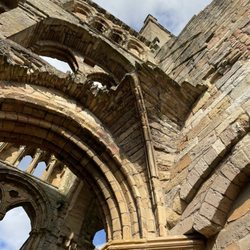
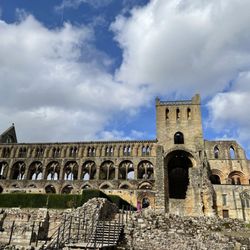
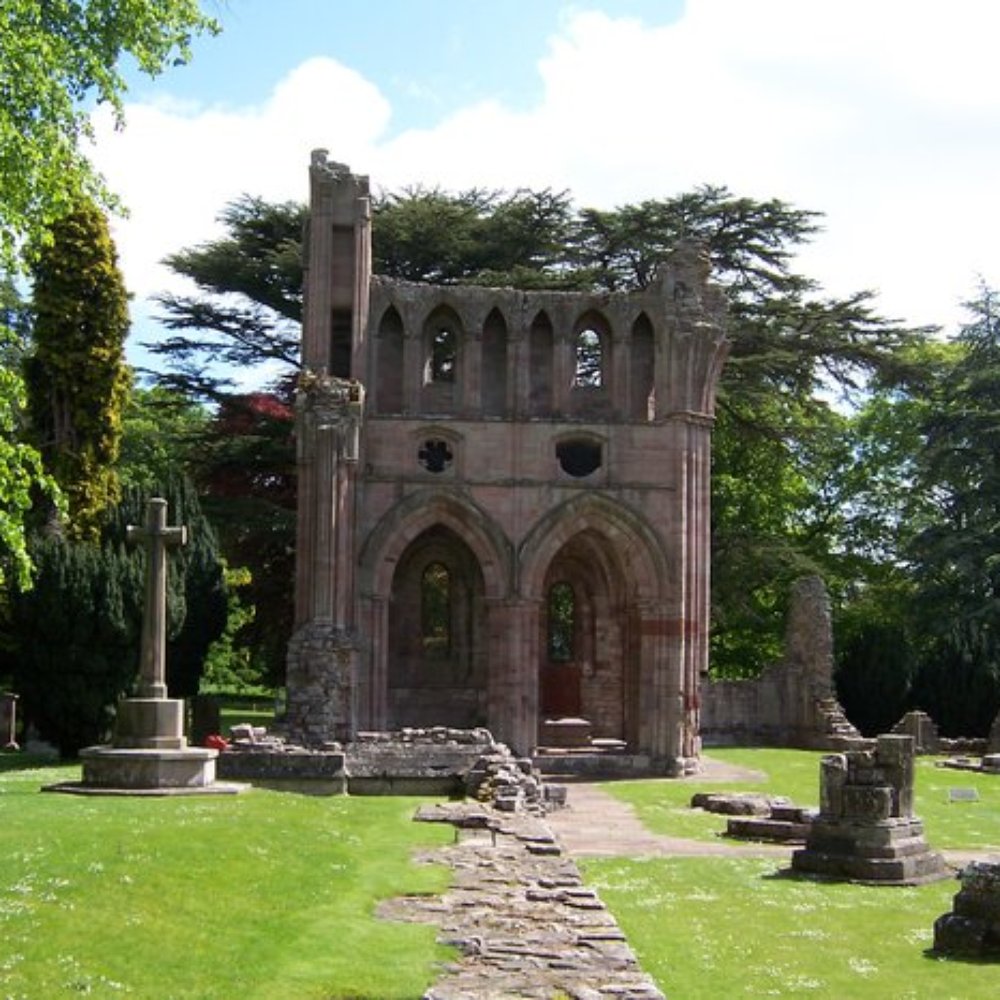
I wanted to visit at least one ruined abbey on my tour around Scotland; I chose Dryburgh mostly for the geography (an appropriate first stop on Day 1 out of Edinburgh) and as the burial place of Sir Walter Scott. However, when I walked onto the grounds, and the abbey came into view, I knew that I had made a perfect choice and a wonderful discovery. Sites like these are exactly why I love to visit Europe. On a Tuesday noon in late May, there were no other visitors, and the weather was splendid. At first, I had to restrain myself from rushing through too quickly, but later I sort of wandered around, or stood still, transfixed. Much of the structures are still standing, but many sections are mere outlines or foundations. Beyond admiring the sad beauty of their current condition, I imagined how the complex must have looked at its height in the 15th century. The impeccably maintained lawns made an effective frame or canvas against which to view the buildings. Of course, it wasn't like that during the time of the monks, but I liked the effect that the landscaping had, to sort of draw a contrast between the ancient and the modern, and heighten the sense of the abbey as a historical relic. Superficially, it just looked really pretty, like an upscale cemetery. Indeed, as I mentioned, Sir Walter Scott, as well as Field Marshal Douglas Haig and others, is buried here. The historical curiosity of Scott's burial place, while one of the main reasons for my visit, was pushed way into the background by the wonder of the abbey itself. For the historically curious, small plaques on the buildings tell you their purpose and era. The abbey had a turbulent history, thanks to its position near the Scottish-English border. It was founded in the 12th century, endured at least two cycles of destruction and rebuilding, and was finally abandoned after the violence of 1544. I spent about an hour wandering the grounds; climbing on the ruined walls; enjoying the beauty of the site, with the River Tweed to one side; and contemplating the monastic life that occurred there. Not to mention taking copious photographs. read more



14 years ago
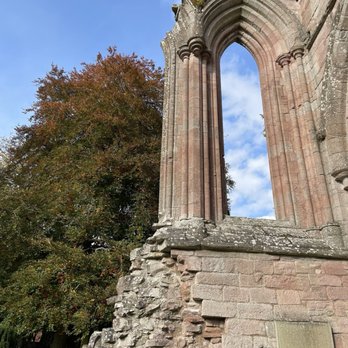
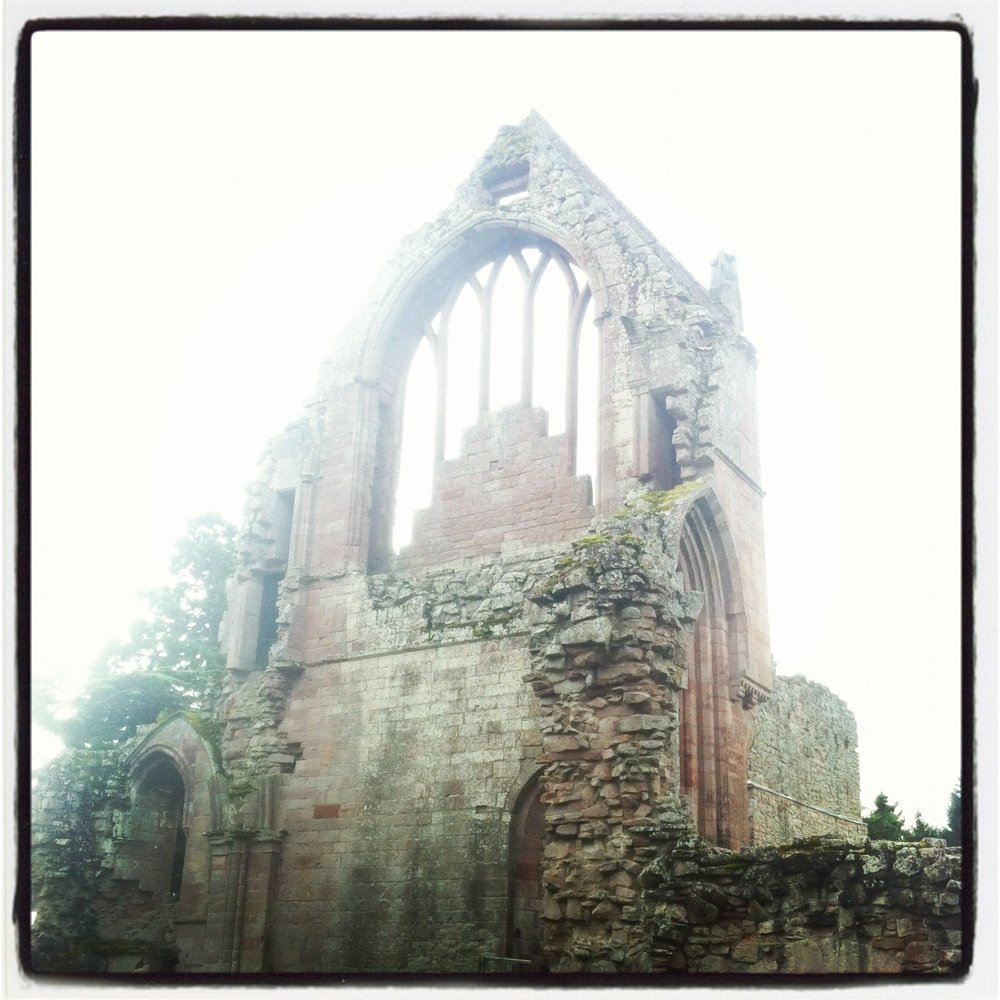
What a beautiful, peaceful place. When I first walked in (we had a rather large group), I thought the place was kind of small and I was a little concerned that we'd be all crowded about in one area. Nope. Although a lot of the abbey is gone, it doesn't take much to think back as to how grand this place must have been when it was first built. The one standing rose window looked surreal and beautiful, surrounded by the ruins of other standing structures and crumbling rocks. There are detailed plaques describing each area of the abbey (one of my favorite descriptors was of the book cabinet built into the stone wall on the side, complete with slots for shelves!) as well as an artist's depiction of what the place looked like in its prime. The graveyard (as well as the yards) are impeccably manicured and there are plenty of spaces to get some wicked photos. I wish we'd had more time to wander about, especially in the back near the River Tweed and other areas nearby. read more

11 years ago