Cancel

    Open app

    Search

    Eastern National Photos

    Recommended Reviews - Eastern National

    Your trust is our priority, so businesses can't pay to alter or remove their reviews. Learn more about reviews.
    Yelp app icon
    Browse more easily on the app
    Review Feed Illustration

    8 years ago

    Helpful 0
    Thanks 0
    Love this 0
    Oh no 0

    Verify this business for free

    People searched for Landmarks & Historical Buildings 204 times last month within 5 miles of this business.

    Verify this business

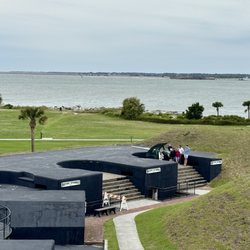
    Fort Moultrie - View towards Fort Sumter

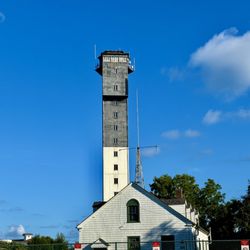
    Fort Moultrie

    4.5(76 reviews)
    0.8 mi

    I have to admit I'm an easy mark for a place like this…read more But I really found the price of admission and the information provided was absolutely worth it Small but informative museum, including a great Short documentary that provides all the information you need about the very important role This location played in the revolution. The tour of the Fort is self-directed and is interesting to see after going into the museum It's kept up well, but I actually found the museum more valuable than the fort itself glad I went! Didn't get to see Fort Sumter, which remains on the list, but this is also worthwhile and is both cheaper and less of a drag on time

    Interesting place, but not my favorite coastal fort. For that you need to head south to Fort…read morePulaski. However, Fort Moultrie has its own story to tell and I highly recommend the short film in the visitor center. The rangers, as usual, are the highlight of these national monuments and they do incredible work. In particular, they have a great activity (sort of a scavenger hunt) for young visitors. I'm from the West Coast and most of our coastal forts are from the WWII era, and Fort Moultrie reminded me of home. If you make your way to the lower level of the fort, you will see the WWII era maps, radio displays, uniforms, etc. But, the glory days of the fort were its vigorous defense during the Revolutionary and Civil Wars. Highly recommend a visit if you are staying in Charleston and make sure you leave time to pay reverence at Toni Morrison's Bench on the Road monument nearby and also to explore Sullivan's Island.

    Photos
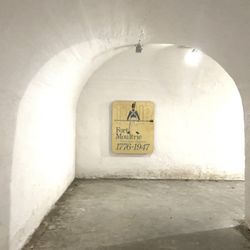
    Fort Moultrie - Visitor center

    Visitor center

    Fort Moultrie
    Fort Moultrie

    See all

    Toni Morisson's Bench By The Road - The bench surrounded by construction (2026)

    Toni Morisson's Bench By The Road

    5.0(2 reviews)
    0.8 mi

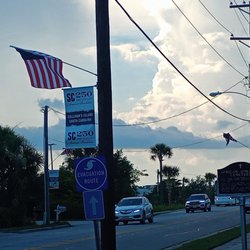
    Beautifully written review by Richard R. which will tell you everything you need to know about this…read morehistorical marker. While I can't improve upon it, I did want to note that the area is currently under construction. Normally, you would access this bench from the Fort Moultrie National Historic Park at the back of the main parking lot. Because it is blocked, to access the bench you need to take the road just prior to the fort (Station 13 Street where it intersects with Cove Avenue) and walk behind the gates to reach the bench. If nothing else, please read Richard R.'s review and the understand the importance of these type of memorials. Not everyone's history is as well documented and heralded in this area, but it is no less important.

    Hello yelp friend and readers. Thank you so much for visiting my page and checking out my reviews!…read moreIt means a great deal to me and I do my very best to introduce worthwhile places to visit with a dollop of historical details for knowledge. FEBRUARY is traditionally honored as Black History Month and last year in 2021 I decided to do a month long series where every day of the month I posted a new review either highlighting a black-owned business or Black History landmarks. I've decided to extend that series to 2022, so please come on a journey with me for the next 28 days as I explore the food, history and significant offerings of a rich culture of people. FIRST UP is Toni Morisson's BENCH BY THE ROAD #1 *** Born Chloe Ardelia Wofford, Toni was an American novelist who wrote the critically acclaimed Song of Solomon and won a Pulitzer Prize for the book Beloved in 1988 whom Oprah made into a movie 10 years later in 1998. She was most notably awarded the Nobel Prize in Literature in 1993. She met Harold Morrison (a Jamaican architect) while teaching at Howard University and married him in 1958. The 'Bench By The Road' Project was launched on February 18, 2006, on the occasion of Toni's 75th Birthday to alleviate the absences of historical markers that help remember the lives of Africans who were enslaved. She said: "There is no place you or I can go, to think about or not think about, to summon the presences of, or recollect the absences of slaves . . . There is no suitable memorial, or plaque, or wreath, or wall, or park, or skyscraper lobby. There's no 300-foot tower, there's no small bench by the road. There is not even a tree scored, an initial that I can visit or you can visit in Charleston or Savannah or New York or Providence or better still on the banks of the Mississippi. And because such a place doesn't exist . . ." *** The VERY FIRST bench placed by the Toni Morrison Society honors the memory of both the enslaved Africans who perished during the Middle Passage as well as those who arrived on Sullivan's Island, a major point of entry for Africans who entered the United States during the Transatlantic Slave Trade. About 40 percent of African-Americans alive today can trace their ancestral roots to West Africa through the arrival of slaves @ Sullivan's Island. I won't go into grave detail about the conditions of slaves during the passage, but if you are interested, here is a link to a narrative describing the voyage: https://www.youtube.com/watch?v=PmQvofAiZGA It was not uncommon to feed slaves who were sick to the sharks, because a sick slave was ZERO profit for the transporters, but a slave who died during transportation was insured and worth more dead than alive :-( The remainder of them often arrived here on the shores of Sullivan Island, where they had no control over staying with their families, many of whom were separated forever. Children were often separated as young as 3 years old. Fathers who protested were treated cruelty to subdue any uprising or sold away from their families entirely. Confusion and fear were the main measures of control. Lineage and tradition were often lost and African cultures combined to form GULLAH-GEECHEE traditions, a melting pot of their various indigenous African traditions from cooking and music, to arts and crafts, to spiritual traditions. They also created a creole language known as Gullah that is not spoken anywhere else in the world and it all began here upon arrival @ Sullivan Island. The significance of this entry point and the culture created in this specific corridor (from Jacksonville, FL to Wilmington, NC) is still alive and celebrated today in Gullah Geechee festivals, folklore, foods & time honored traditions. The bench rest in a quiet area behind the Fort Moutrie Visitors Center, beneath an outcrop of small trees overlooking the Sullivan Island Cove. Many will find this space to be filled with a quiet reflective reverence as you sit and connect with the past in a tangible way, knowing the ancient footsteps who walked here long before us were having a far different experience. I found myself wishing I had brought a single rose, so I could have scattered its pedals on the waters. *** FINAL THOUGHTS If I'm being honest, it is very emotionally draining for me to produce a months worth of Black History that you will often not find in typical American schoolbooks. This series is a labor of love for me and while taxing, I hope to enlighten my yelp family to the glory of a magnificent people. Where we have been, where we are and where we are going with no shame to anyone. I am a black man in American, and through these stories of endurance, I find strengthen and meaning. I hope you will continue all month long with me as I dive deeper into American History of the Black Experience AND celebrate those who are making their way in business and innovation while remembering the past, lest we forget. 2022 / 33

    Photos
    Toni Morisson's Bench By The Road
    Toni Morisson's Bench By The Road - Looking out over Sullivan Island Cove

    Looking out over Sullivan Island Cove

    Toni Morisson's Bench By The Road - The FIRST Bench By The Road ever placed (July 2008). As of December 2021, there are 27 bench placements across USA & France.

    See all

    The FIRST Bench By The Road ever placed (July 2008). As of December 2021, there are 27 bench placements across USA & France.

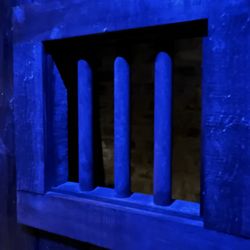
    The Old Exchange & Provost Dungeon - Old Exchange and Provost Dungeon_Yelp_Sanju-5

    The Old Exchange & Provost Dungeon

    4.3(130 reviews)
    5.0 miFrench Quarter

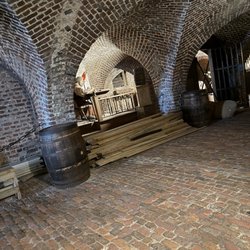
    Visited: February 16, 2026…read more The Old Exchange & Provost Dungeon was the perfect blend of history and hustle. From the moment you step onto the grounds, you feel the weight of Charleston's past. Inside, the immersion begins immediately -- postcards, patches, and meaningful souvenirs that make it easy to bring a little history home for friends and family. The highlight, though, was the tour. Our guide was a jolly local with razor-sharp, dry Southern wit -- the kind of storyteller who can pivot from Revolutionary War imprisonment to a perfectly timed sarcastic aside without missing a beat. Equal parts charm and "bless your heart," she made centuries-old history feel present and personal. Down in the Provost Dungeon, those brick walls carry gravity. British occupation. Prisoners of war. Pirates passing through. It's one of those rare spaces where you instinctively lower your voice. You don't just learn history -- you feel it. History hit different here. If you appreciate immersive storytelling, preserved architecture, and a tour that balances education with personality, this is absolutely worth your time.

    Fact: Provost Dungeon is older than our country!…read more The British originally owned it and used it as a commercial exchange and customs house. Also used as a post office, prison, and city hall, it is currently a museum. In addition, in 1788 South Carolina approved the US Constitution here. Yet another testament to the rich history of Charleston, Old Exchange, and Provost Dungeon a fascinating places to visit. Built in 1771, it has changed roles countless times: it was a British dungeon during the American Revolution, an elegant hall during George Washington's 1791 visit to Charleston, and a meeting place for the ratification of the Constitution, In 1780 the British occupied Charleston for two years and housed many prisoners in one large cell in this basement making it a provost, or dungeon. Because of the awful conditions here, disease was rampant due to crowding, and no bathroom facilities. Under these conditions, many people died while in prison here. This prison held all types of people, including American and British soldiers, private citizens, and slaves. The first and second floor of the building is home to a museum dedicated to the other uses of the Exchange Building. Fee: Admission to this historic building is only $12 for adults. For a small fee, a guided tour through the lower level and you can learn a lot from the guide.

    Photos
    The Old Exchange & Provost Dungeon - Amazing brickwork throughout dungeon

    Amazing brickwork throughout dungeon

    The Old Exchange & Provost Dungeon - Dungeon time

    Dungeon time

    The Old Exchange & Provost Dungeon - Old Exchange and Provost Dungeon_Yelp_Sanju-6

    See all

    Old Exchange and Provost Dungeon_Yelp_Sanju-6

    Eastern National - landmarks - Updated June 2026

    Loading...
    Loading...
    Loading...