Cancel

    Open app

    Search

    Gasparilla Island Lighthouse

    5.0 (1 review)

    Gasparilla Island Lighthouse Photos

    More like Gasparilla Island Lighthouse
    Recommended Reviews - Gasparilla Island Lighthouse

    Your trust is our priority, so businesses can't pay to alter or remove their reviews. Learn more about reviews.
    Yelp app icon
    Browse more easily on the app
    Review Feed Illustration

    1 year ago

    Helpful 33
    Thanks 6
    Love this 30
    Oh no 0

    Verify this business for free

    Get access to customer & competitor insights.

    Verify this business

    Circus Bridge - Circa: 1967

    Circus Bridge

    5.0(1 review)
    23.0 mi

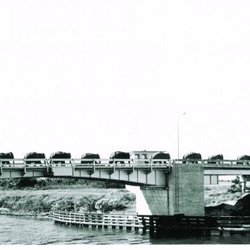
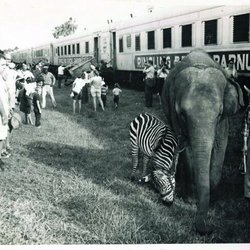
    2100th Review The…read moreCircus Bridge is no ordinary bridge although one wouldn't know it's historic significance by merely looking at it or even driving over it, it's played a huge part in the celebration each and every year in Venice for more than three decades as the animals from Ringling Bros. and Barnum & Bailey were unloaded from the circus train each winter and marched across this bridge, the crowds that gathered to watch cheered celebrating the end of a long season entertaining the masses with countless performances. Ringling Bros. and Barnum & Bailey wintered at the circus arena near the Venice airport which was finally demolished after years of attempts to preserve it in some way; the building's skeleton had remained in place long after the circus left the site behind in the early 1990s. But in its heyday, in the 1960s, '70s and '80s, the arena welcomed thousands of spectators as well as top circus performers, who rehearsed their new shows here. For residents and visitors, the arrival of the circus train was a memorable highlight of each winter season. On January 14, 2017, it was announced that the circus will be closed forever in May 2017 after 146 years of bringing smiles to millions and will lay off more than 462 employees between March and May 2017. Declining attendance combined with high operating costs and loss of the elephants are among the reasons for closing. On May 7, 2017, its "Circus Extreme" tour will be shown for the last time in Providence, Rhode Island. The circus's last performance will be its "Out of This World" tour at Nassau Veterans Memorial Coliseum on May 21, 2017 and that my friend will be the end to maybe the grandest entertainment icon ever, but this bridge will remain and continue to be ghostly reminder of the past for those that witnessed it's grandeur at the end of each circus season that's until it too will become obsolete and replaced with a concrete span named after some politician who's grand kids will only read about "The Greatest Show on Earth" but never witness it's magic...

    Photos
    Circus Bridge - Da Bridge

    Da Bridge

    Circus Bridge - Circa: 1967

    Circa: 1967

    Circus Bridge

    See all

    Murphy - Burroughs House

    Murphy - Burroughs House

    4.8(6 reviews)
    25.4 mi

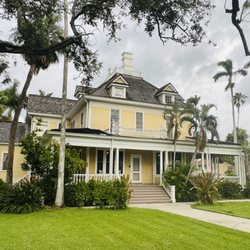
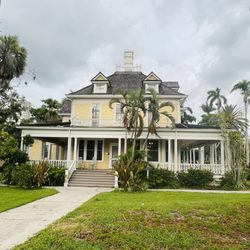
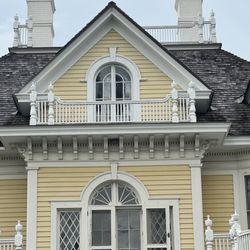
    I love old houses and this yellow beauty is an architectural gem. The Murphy-Burroughs House is a…read moreGeorgian Revival style mansion built in 1901 for John T. Murphy, a cattle rancher from Montana. It is located in the River District of Fort Myers on two acres of land on the Caloosahatchee River. The house was built on First Avenue, the first house on what would become known as Millionaires Row. Materials to build the house were brought in by train and then carried the rest of the way to Fort Myers by barge. After construction was completed it drew other wealthy people to build their homes on the street. It is the only one of Millionaire Row's mansion that is still standing in its original position. Murphy was very involved in local civic and business affairs during his time in Fort Myers. He was a major shareholder of a bank and helped built a seawall that protected the downtown area. He passed away in 1914 and the house was sold to a businessman from New Jersey. In 1919 Nelson Burroughs purchased the house so his family could escape the frigid Chicago winters. Nelson made his fortune in land investments and banking. While in the home the family hosted lavish parties attended by famous winter Fort Myers residents Thomas Edison, Henry Ford, and Harvey Firestone. In 1922 Burroughs transferred ownership of the house to his daughters, Mona & Jettie. Mona bequeathed the property to The City of Fort Myers prior to her death in 1978. After her husband died in 1983 it was no longer used as a residence. On August 1, 1984, the house was added to the U.S. National Register of Historic Places. Today you can tour the home that has been lovingly restored with a grand staircase, beautiful fireplaces, and antique furnishings. Features of the house include a veranda wrapping around three sides, a large dancing porch on the east side, bay and stained glass windows, a widow's walk on the roof, and decorative woodwork. The house is a popular wedding venue. Every December, the Fort Myers Community Women's Club decorates the historic mansion for the holidays. The Uncommon Friends Foundation manages the house as well as the Burroughs family records.

    What a beautiful place to throw a party, host an event or have a wedding…read more The sunset here is absolutely magnificent and there are trees and flowers everywhere.

    Photos
    Murphy - Burroughs House
    Murphy - Burroughs House
    Murphy - Burroughs House

    See all

    Captain Francis A. Hendry House

    Captain Francis A. Hendry House

    5.0(1 review)
    50.4 mi

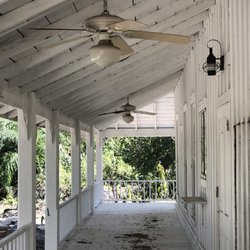
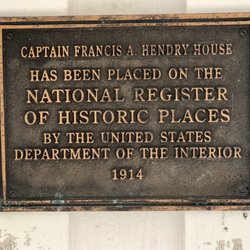
    As a fan of historic architecture I was excited to find this structure on a recent trip to Labelle…read more The house is located at 512 Fraser Ave. next to the LaBelle Nature Park. This historic vernacular one and one and a half story home was built in 1914 for Captain Hendry who fought in the Confederate Army in the Civil War. After the war Hendry became a cattle rancher. Hendry hired self taught builder Benjamin F. Magill to supervise the construction of his home in the town of LaBelle which he founded on the western end of his vast ranch holdings in Monroe County. Hendry moved into the home at the age of 81 with his wife. Due to his poor health, Hendry was only able to live in the house for a few months before moving to Fort Myers for better access to medical care. He passed away in 1923 and his final resting place is a private family cemetery in Fort Myers. When Hendry County was formed in 1923 it was named after Captain Hendry. This is is the only surviving structure left associated with him. After Hendry's death, the house had numerous owners through the years. On February 5, 1998, it was added to the U.S. National Register of Historic Places. The house is not open for visitors. It looks like construction is being done on the stairs and porch. It was still fun to peek in the windows and around the outside. I love the huge wraparound porch. It looks like there are a few period furnishings inside and historic photos on the wall. I saw online that LaBelle uses the grounds for outdoor events and weddings.

    Photos
    Captain Francis A. Hendry House
    Captain Francis A. Hendry House
    Captain Francis A. Hendry House

    See all

    Fort Denaud

    Fort Denaud

    5.0(1 review)
    46.5 mi

    As white settlers flooded into Florida the government became determined to relocate all Native…read moreAmericans west of the Mississippi. This forced removal policy sparked the Second Seminole War in 1835. The Seminoles fled south into Florida to evade capture and being sent out west and they moved into the Everglades in order to hide. In response the army set up forts south of Tampa to the east coast along rivers as they chased after the Seminoles who were much more skilled at surviving in the terrain than the soldiers. Fort Denaud was established by Captain B. L. E. Bonneville and troops of the 7th Infantry in 1838 on the the south side of the Caloosahatchee River. The fort was named in honor of Pierre Denaud, A French-Canadian trapper who had traded with the Seminoles and who owned land in the area in the 1830's. The fort consisted of a blockhouse with tents around it and it served as a supply depot for troops in Lake Okeechobee. The stockade at the fort guarded a bridge over the river on a military highway between Fort Myers and Fort Meade. The Fort Denaud historical marker marks the site of the blockhouse at Fort Denaud. Fort Denaud was closed after the end of the Second Seminole War and reopened at the beginning of the Third Seminole War in 1855 under Brevent Major William Hays. Soldiers added a hospital, guardhouse, jail, Sutler's store, and stables. A fire ravaged the fort in 1856 and it was rebuilt two miles downstream on the north side of the river. The fort was abandoned in May of 1858. After the war settlers moved into the town of Fort Denaud that sprang up and began farming sugar cane and citrus but most of them left after the fort was abandoned. Although there is no trace of the fort a few historic structures still remain. Today the area is mainly citrus groves and a new housing development.

    Photos
    Fort Denaud
    Fort Denaud
    Fort Denaud

    See all

    Hotel Punta Gorda

    Hotel Punta Gorda

    5.0(1 review)
    18.7 mi

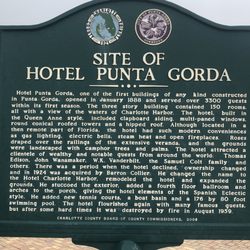
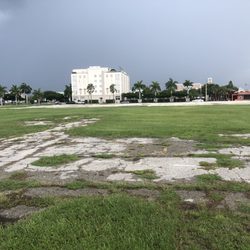
    Hotel Punta Gorda was one of the first buildings of any kind constructed in Punta Gorda. It was…read morelocated at the southern terminus of railroad service on Florida's west coast, which was provided by the Florida Southern Railway. The hotel was built by Henry Plant who was known for building grand hotels on Florida's east coast like the ones Henry Flagler was building on Floridas east coast. Hotel Punta Gorda was one of 20 grand hotels built in Florida in the 19th century when it opened in January 1888. During it's first season it served over 3,300 guests which was quite the feat considering the area was sparsely populated. The three story building contained 150 rooms all with a view of the waters of Charlotte Harbor. The Queen Anne style included clapboard siding, multi-paned windows, round conical roofed towers and a hipped roof. Not everyone was enamored with the beauty of the hotel. Reporter Mr. Peeples from the Punta Gorda Herald wrote in 1910: "The big unsightly building known as the Hotel Punta Gorda continues to be an eyesore and an incubus to the town and there seems no prospect that it will ever be anything else. ... The huge old hulk standing idle and ugly for nine years past is actually a curse to the community." Located in a remote area of Florida the hotel still had many modern conveniences like gas lighting, electric bells, steam heat and open fireplaces. The grounds were beautifully landscaped with camphor trees and palms. Visitors to the hotel included wealthy and notable snowbirds Thomas Edison, John Wanamaker, W. K. Vanderbilt, and the Samuel Colt family. The hotel declined through the years and closed in 1914. In 1924 Barron Collier purchased the hotel and changed it's name to the Hotel Charlotte Harbor. Over three years and $250,000 he remodeled the hotel and expanded the grounds. He stuccoed the exterior, added a fourth floor private apartments, a fifth floor glassed in ballroom, arches to the porch, a boat basin and a 176 x 80 foot swimming pool. In 1927 two clay tennis courts were put in for famous tennis player Big Bill Tilden who started his career in Punta Gorda and he won a tournament here in 1931. Reopened on January 2, 1927 the hotel flourished again with many famous guests until the Great Depression 5 years later. Upon Colliers death the hotel was sold to G. Floyd Alford in 1944 and he let Martin Fleischman take over the mortgage in 1956. Mr. Fleischman changed the name of the hotel to the Charlotte Harbor Spa and poured money into turning it into a health retreat but it never turned a profit. A fire on August 14, 1959 provided the death knell for the hotel. The fire could be seen or 25 miles and firefighters were called out from three counties. At one point the fire threatened to engulf the rest of the town. By the time the fire was put out there was only a blackened chimney and the twisted metal of the elevators left. The cause of the fire remains a mystery. A dedication ceremony was held on September 9, 2009, at West Marion Avenue for the historical marker. It was paid for by the Charlotte County Historical Center and the City of Punta Gorda. All that is left as a reminder of the hotel is this marker, a downtown mural, and the hotels fountain that sits in Punta Gordas History Park. The land the hotel sat on is currently for sale.

    Photos
    Hotel Punta Gorda - Mural of the hotel in the downtown when it was called the Hotel Charlotte Harbor.

    Mural of the hotel in the downtown when it was called the Hotel Charlotte Harbor.

    Hotel Punta Gorda
    Hotel Punta Gorda

    See all

    Rosemary Cemetery - Naples first pioneer.

    Rosemary Cemetery

    4.4(5 reviews)
    46.6 mi

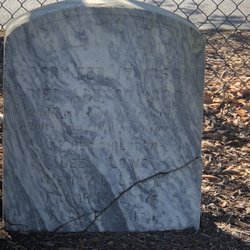
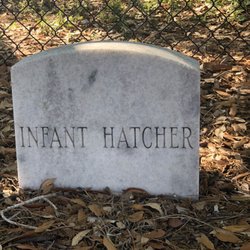
    I've always remembered this little cemetery as I was born in Naples, and have been here my entire…read morelife. But, it's been decades since I have walked through here. I remember my mom explaining to me when I was a kid that this cemetery was for original settlers of Naples. It's still in great shape, and looks like it has regular visitors as there were flowers on every grave when I visited. Some of the markers have no visible lettering, so must've been worn away over time and replaced with just a new stone. Definitely an interesting piece of Naples history, and as a native of our beautiful town, I'm glad that I made the time to give my thanks and respects to those who came here long before me to establish this beautiful place I call home.

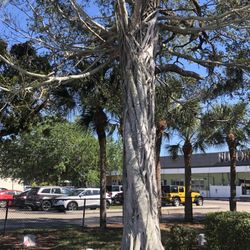
    Located in literally the parking lot of a CVS is the historic Rosemary Cemetery. Some of the people…read moreburied here were originally buried at a cemetery at the corner of 3rd Street South and 10th Avenue South St. near St. Ann's Catholic Church in old Naples. As Naples became developed in the 1930's it was decided that the bodies should be moved to the outskirts of town. The Rosemary Cemetery Corp. was formed to find a suitable location for the new cemetery and a 20 acre plot was donated by Edward W. Crayton, president of the Naples Improvement Company. The name of the cemetery was taken from the highly scented rosemary bushes that once grew here. It is believed that Naples earliest settlers are buried here including John and Madison Weeks, Naples first permanent settlers. The cemetery opened in 1931 and the last known interment was in 1947. It had to be closed because the high water table caused some of the caskets to pop up back out of the ground during rainy season. It is believed that approximately 20 people remain here but who they are is a mystery because some of the headstones are no longer legible. The cemetery is listed as Unit B on a 1944 map that lists the graves in the area. In 1943 when the city registered the cemetery it listed over a hundred graves. What happened to those graves is unknown. Hurricane Donna destroyed the cemetery records in 1960. This was the only cemetery in Naples until Naples memorial Gardens opened in 1955. What was once the outskirts of town is now a major road and an empty lot is now a CVS parking lot. A historical marker was added to the cemetery in 1993. The next year the Collier County Museums restored the cemetery and added marble headstones. The city held a formal re-dedication ceremony of the cemetery on November 27, 1994. If you didn't now this cemetery was here it would be easy to drive past it. Once you pull in to the CVS parking however you can't miss it. The gate is left open so you can come by to visit the Naples pioneers.

    Photos
    Rosemary Cemetery
    Rosemary Cemetery
    Rosemary Cemetery

    See all

    Gasparilla Island Lighthouse - landmarks - Updated July 2026
    Loading...
    Loading...
    Loading...