Granby Historical Marker Photos


More like Granby Historical Marker
Recommended Reviews - Granby Historical Marker
Start your review...



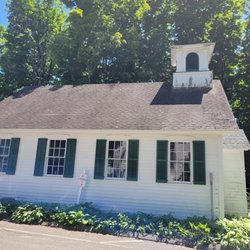
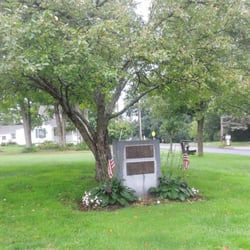
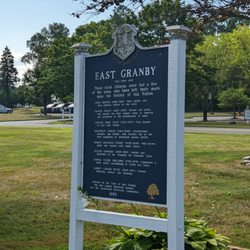
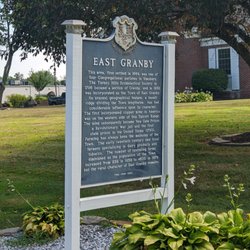
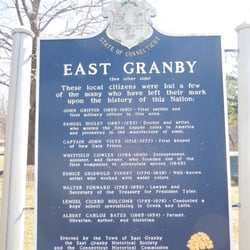
This is a two-sided historical marker on Route 10 North, on the property of the Salmon Brook Historical Society. It was erected by the Town of Granby, the Salmon Brook Historical Society, and the Connecticut Historical Commission in 1980. The marker gives an overview of Granby's history in a very wide ranging narrative stretching from colonial times through the Viet Nam war. It has so much content on it, that it is engraved on both sides. It reads: "Side One Settled as the Salmon Brook section of Simsbury early in the 18th century, and established as a separate ecclesiastical society in 1736, Granby became a separate town in 1786. From the beginning, farming was the main endeavor of the populace: first subsistence farming, then raising fruits of the orchard, tobacco growing, and diary farming until agriculture waned in the 1950's. Industry, producing shoes, horse-drawn carriages, wool cards, and forest products, developed along streams where water tumbled over the rock ledges common to Granby terrain. On July 4, 1825, in Granby at the Connecticut-Massachusetts border, Connecticut's Governor Wolcott commenced construction of the Farmington Canal (1825-1849) by turning the first spadeful of earth. Settled by emigrants from Windsor, Granby, like Simsbury, was the 18th century frontier for the mother town against Indians and the French allies. Side Two One early citizen, Daniel Hayes, was kidnapped by local Indians and taken to Canada, whence he escaped to return home to live nearly a half century longer. Granby sons and daughters in the 20th century have gone on to become prominent attorneys, president of a major life insurance company, Chief Justice of the Connecticut Supreme Court and Librarian of the State of Connecticut. Ours sons have fought and some of them have died in each of the country's wars from the Indian conflicts of the 17th and 18th centuries to Vietnam. In the Civil War, volunteers from Granby included free blacks fighting for the freedom of their southern brothers. Many of Granby's young men were among those in the Connecticut 16th Militia Regiment who suffered and died in the infamous Confederate prison stockade at Andersonville, Georgia. Granby citizens participated in the westward movement of the 19th century, founding the town of Worthington, Ohio, now a suburb of Columbus. The plaque is in great condition, with crisp sharp white lettering on a blue background. read more


More info about Granby Historical Marker













Granby Historical Marker - landmarks - Updated September 2026
Best of Granby
People found Granby Historical Marker by searching for…
Browse Nearby
BEST of Granby, Connecticut Restaurants near Granby Historical Marker
BEST of Granby, Connecticut Coffee near Granby Historical Marker
BEST of Granby, Connecticut Things to Do near Granby Historical Marker
BEST of Granby, Connecticut Scenic Drive near Granby Historical Marker
BEST of Granby, Connecticut Breakfast near Granby Historical Marker
BEST of Granby, Connecticut Campgrounds near Granby Historical Marker
BEST of Granby, Connecticut Museums near Granby Historical Marker
BEST of Granby, Connecticut Hotels near Granby Historical Marker
BEST of Granby, Connecticut Ski Resorts near Granby Historical Marker


