Hierapolis Antique City Photos


Recommended Reviews - Hierapolis Antique City
Start your review...


Reviews With Photos
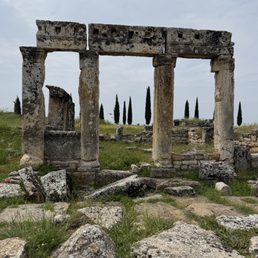

Just a casual 2nd century BC 100,000-person ancient city with a theater bigger than most modern apartment complexes. We strolled streets older than original sin while I tried to wrap my head around the fact that these people had spas and sacred hot tubs before I had a microwave. And listen, I'm not saying I want to trade my yoga pants for a toga, but if I did, Hierapolis would make a strong case. Oh, and let's not forget the Plutonium, aka the "Gate to Hell," which the ancients legit thought was a VIP entrance to the underworld. Built different. Literally. This is a must visit!
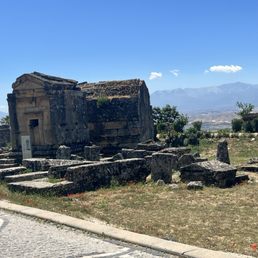

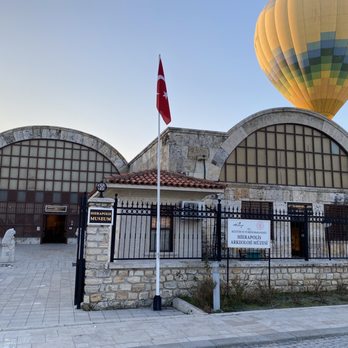
This historic city is located at Pamukkale. This city is big in ancient time due to hot springs in the city. The city is Cleopatra love. Because she use the thermal pool here. The pool is still there. During our visit the pool is under renovation. There is a fees to use the pool. Imagine swim in the same area of Cleopatra. The city also has mineral terraces pool. It is beautiful. The city is one of the kind. It is more like a residential city. There is mount to overlook the entire city. Museum also located in the site. You need two hours to finish entire experience. I would suggest spending a day there. read more


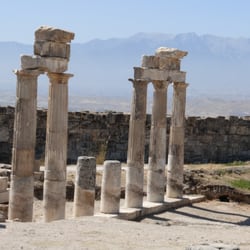
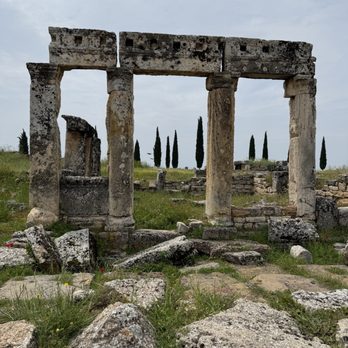
I've never been to a UNESCO World Heritage Site that wasn't awesome and amazing, and Hierapolis is certainly no exception. Just amazing. Can't even subtract because of the very annoying group tours and numerous underqualified guides, you really don't need a tour guide. What you want instead is a good guidebooks, Rick Steves, Lonely Planet, National Geographic, or DK Eyewitness Guide. Also, admission price includes an audio tour, they do give you blue tooth earpieces but I would bring your own so they are fully charged. The audio tour is pretty good and certainly much better than the live guides who often just make stuff up. A little less crowded than Ephesus, and not bad at all during the cold offseason. Much of the annoying groups are more enamored with the hot springs part than the ancient ruins as well. 200 meters high overlooking Pamukkale (cotton growing and textile processing area, hence the name of our hotel, the Cotton House), Founded by the Hellenistic Attalid kings of Pergamom at the end of the 2nd century B.C.E., at the site of an ancient cult. Its hot springs were also used for scouring and drying wool. Ceded to Rome in 133 B.C.E, Hierapolis reached its peak 3rd century CE. An earthquake in 60 CE resulted in massive destruction. Remains of the Greco-Roman period include baths, temple ruins, a monumental arch, a nymphaeum, a necropolis and a theatre. Following the acceptance of Christianity by the emperor Constantine and his establishment of Constantinople as the 'new Rome' in 330 CE., the town was made a bishopric. As the place of St. Philip's martyrdom in 80 C.E., commemorated by his Martyrium in the 5th century, Hierapolis with its several churches became an important religious center for the Eastern Roman Empire. There's a lot to see here over a pretty wide area, do not miss the amphitheater. read more


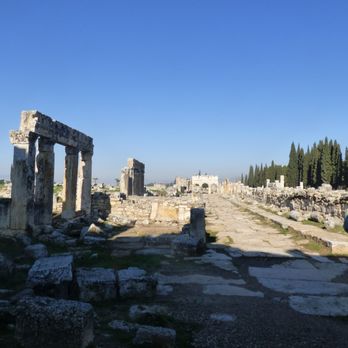


Just a casual 2nd century BC 100,000-person ancient city with a theater bigger than most modern apartment complexes. We strolled streets older than original sin while I tried to wrap my head around the fact that these people had spas and sacred hot tubs before I had a microwave. And listen, I'm not saying I want to trade my yoga pants for a toga, but if I did, Hierapolis would make a strong case. Oh, and let's not forget the Plutonium, aka the "Gate to Hell," which the ancients legit thought was a VIP entrance to the underworld. Built different. Literally. This is a must visit! read more
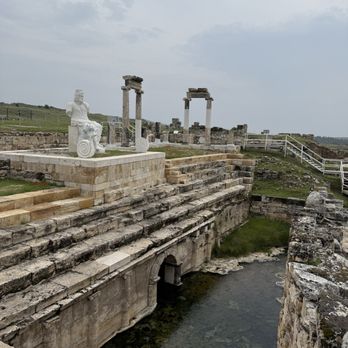
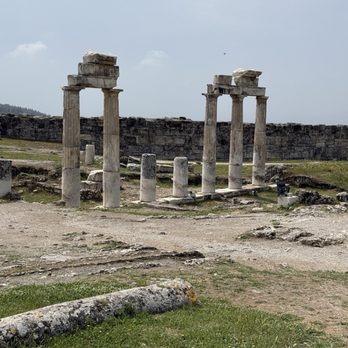

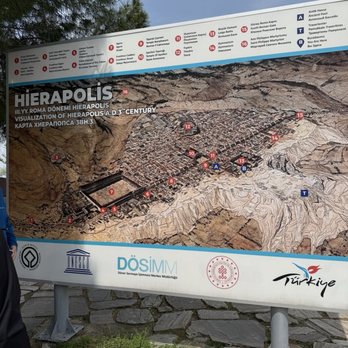

Hierapolis is AMAZING!! This is a must do experience. Cleopatra spent a lot of time here. This was her retreat. She loved the natural hot springs and thermal baths. Mark Anthony built Cleopatra a special pool known as the Antique Pool. Unfortunately, a seventh century earthquake toppled the Temple of Apollo, and the pillars still sit in the water where they fell. Locals believe that the water has magical restorative properties, and there is one "pool" that is open to lounge and relax in. The hike through the city does take time, and it's hot out here! Carry water with you. I was fascinated by the entire experience. The aged ruins, and walking through history. Everything is so well preserved. The Romans created a beautiful city, and it's easy to imagine how beautiful it was when it was built. read more


2 years ago