Cancel
Open app
Search
Sign Up
Log In
Nearby
Bookmarks
Start a Project
Add a Business on Yelp
Add Review
Directions
+1
Start your review...
Get app
5 years ago
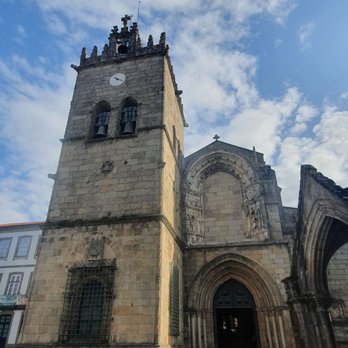
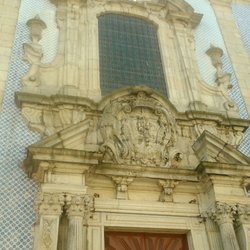
The most impressive part of this church is outside it. The facade and the shrine outside are pretty nice. The interior is OK. You can pay 2€ to see the upper choir & a recessed chapel, but I didn't find them very interesting. read more
See all
Largo da Oliveira 8
4810-431 Guimarães
Portugal
Hours
What time does Igreja de Nossa Senhora da Oliveira open?
What time does Igreja de Nossa Senhora da Oliveira close?
Our tour only stopped here for 20 minutes after a long bathroom break - too few booths (two for…read morewomen and one for men) with too many of us, on a rainy afternoon. We missed ton!
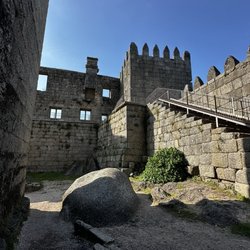
Last year when we visited Guimaraes it was a holiday and the castle was closed…read more You have to purchase tickets on line- barcode available at the entrance. Staff check your online tickets and you're allowed in. When my husband was younger, he indicated he was actually able to walk in the castle. The staff stated about 3 years ago, stairs and trail were built to conserve the castle. Great views from the top of the castle. There are huge boulders on the grounds and as part of the castle itself. Street parking.
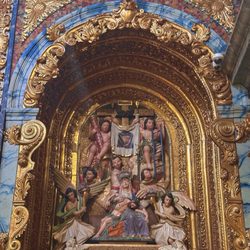
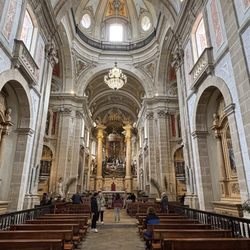
Don't judge the church by its cover…read more Igreja de Santa Clara in Porto is a true hidden gem with one of the most stunning golden church interiors. We stood in awe by the altarpiece as we soaked in every detail of the gilded woodcarvings from floor-to-ceiling. Porto is a city of many churches and this one represents a pinnacle of Portugal's Golden Age in the 18th century with colonial wealth largely funnelled from Brazil. The entrance is modest with a small Renaissance portal inside a quiet courtyard. The €5 entrance fee is steep to only view the nave & the upper choir but we were blessed with calm reflection away from the bustle of the city. The dazzling Baroque interior is without empty space rather hosting expressive side altars for the worship of Christian figures and a central altar with a painting depicting Santa Clara's miracle in expelling Moorish invaders from this convent. The best viewpoint of the nave is from the upper floor upper choir where nuns traditionally attended mass. Staff were very kind to insist that we climb upstairs as we were about to exit the church just so that we could take in this excellent bird's eye view. Rich decor above the choir seats also contains rare church chinoiserie ornament influenced by Portugal's maritime past. Skip it or hit it? This church off the beaten path is well worth a 45 minute visit.
Igreja de Santa Clara
Portugal has been a very religious country throughout its history (less so now according to my tour…read moremanager). During their ultra-wealthy days from colonialism with gold and gems flooding in from Brazil and Angola, ultra-fancy churches in the scale of compounds, sanctuaries, and more were built. Bom Jesus do Monte in Braga is such an example. The present sanctuary started construction in 1722. Other than the Baroque church at the top, one set of zigzag shaped stairways are dedicated to the Five Senses each represented by a fountain and one set of stairways is dedicated to the Three Theological Virtues: Faith, Hope and Charity, each with its fountain. Chapels on either side of these staircases have sculptures dedicated to the Passion of Christ. In addition, they have a huge garden, a shop, historical items, a funicular (called elevator) and much more. See their website for more than what my photos can convey. https://bomjesus.pt/?lang=en We visited on a day of pouring rain, and it was still fantastic. They have different winter vs summer schedules for every location. Best to check their website here: https://bomjesus.pt/informations/?lang=en The location is about one hour drive from Porto. It is a great day trip from Porto. Be sure to visit Braga, the historical center also.
This place was amazing, the architecture and gardens were so beautifully kept up…read more Of course the history is awesome, you wonder what it would have felt to be alive when it was built.
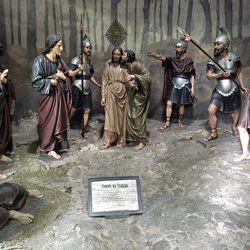
Passion of Christ artwork inside chapel
Side chapel
Remains
Avenida dos Aliados is one of the most popular tourist attractions in Porto. This large avenue…read morefeatures the local government's city hall and other buildings and statues that were built in the 19th and 20th centuries, and it has a central square where locals meet and hold events. My tour guide took my husband and me on a drive down this avenue. We liked seeing the architecture of the city hall and the statue of King Dom Pedro IV.
Monument of Pedro, short history of how Porto was named. Near central bank. It is said body of king…read morein in Brazil but heart remains in Porto
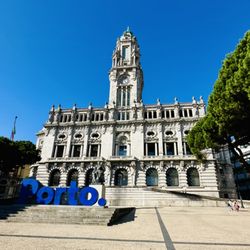
City hall with Porto sign
I thought I'd have to bribe Jamie W to climb this historic tower, but he surprised me by not…read morewhining about it. I knew from more youthful vloggers on YouTube that the panoramic views were spectacular from the top. At 246 feet, the tower is the highest point in Porto's historic center. However, before we climbed the inevitable 240 steps, the museum beckoned. It was formerly the private quarters of the clerics who founded the church. The space now houses religious artifacts and related art exhibits and extends into the High Church Gallery, a balcony promenade that provides an elevated view of the church's ornate nave (Photo 5). Before entering the stairwell, we had our photos taken in front of a green screen for souvenirs they pitched to us later. The climb wasn't that bad, just a bit claustrophobic in some sections, specially when we had to squeeze by perspiring tourists. They were more spritzing than sprinting. There are two observation floors. The first is about 2/3 of the way up, while the narrower space at the summit provides the ultimate payoff with panoramic cityscape and river views (Video). As usual, the climb down was easier since we knew how long it should take. And yes, there were photos of us standing at the summit in comic poses. I usually bypass them, but for 8€, I couldn't help myself (Photo 7). RELATED - Exploring Porto? Here's a collection of places I've visited and reviewed: https://yelp.to/CzAl-vBlP0
A historic climb for a view of Porto's skyline…read more The Clérigos Tower is a baroque landmark easily spotted from vantage points across historic Porto, and therefore one that's worth climbing for that panoramic view from above. The 75m bell tower monument is connected to a church that was built for the Clergy brotherhood in the 18th century. The ornate church and relic exhibit are also worth sightseeing to gain appreciation of its history. We pre-booked our visit (€10) and were serenaded with a concert taking place in front of the brilliantly lit church altar. From there we were able to head above the nave for a full vantage of the church and dome in its pink & white marble tones. At our exact booking time, we were able to queue in line before taking the steps up the actual tower. The queue was slow-moving because the staircase is narrow and the steps themselves were quite steep making it challenging particularly for those with knee pains. Once we made it to the top, we were rewarded with the 360 panoramic views including the famous bridges connecting to Gaia, and the historical city centre with orange rooftops underneath. It can be a workout getting up and down as the tight staircase has to accommodate the constant two-way flow of visitors. Skip it or hit it? This is one of the prominent sites in Porto but be ready for the stairs.
Sardine tin inspired souvenirs
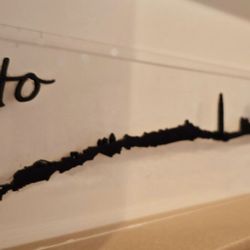
Souvenir shop's Porto landmark silhouette
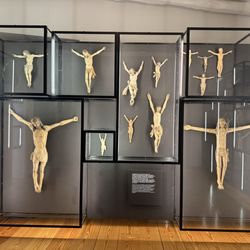
Photo 10: Religious artifacts
Die tolle Brücke, gesehen von der Altstadt
Niklas Kirche
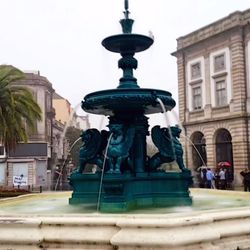
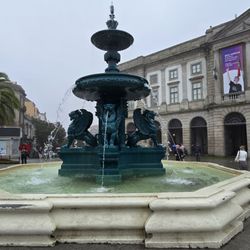
Fonte dos Leões (Fountain of the Lions) is a 19th century fountain in the Praça de Parada Leitão…read morenear the famous Igreja dos Clérigos. According to sources, it is a copy of the fountain in the Town Hall Square of Leicester, England. The central fountain has a cruciform layout with the group of sculptures of winged lions at the base. The water flows from each of their mounts into the fountain. It's a great meeting spot!
This 'Fountain of the Lions' located in the downtown of Porto, is a gorgeous centerpiece for the…read morecity with interesting stories surrounding it. For instance, JK Rowling lived here for awhile after writing the first Harry Potter and it's said that she based the Gryffindor icon off of the fierce lions in this fountain. There is a gorgeous book store (Livraria Lello) close by this fountain that she took inspiration from for the Diagon Alley bookstore with the crazy staircase. It's also been named one of the most beautiful bookstores in the country. Definitely come explore this area, as EVERYTHING around it is gorgeous. This fountain is also in front of of a university where the students literally do where capes around as if Harry Potter has come to life. It's awesome!
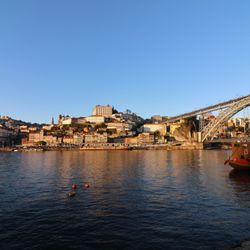
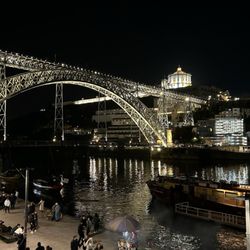
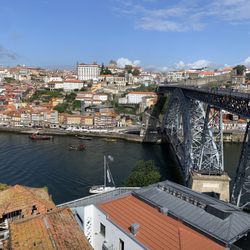
Iconic bridge in the heart of Porto…read more Dom Luís I Bridge is a 19th century double-deck iron bridge spanning 172m across the Douro River between downtown Porto and Vila Nova de Gaia. It was designed by a student of Gustave Eiffel who incorporated a metal arch reminiscent of the Eiffel Tower that blends modern design with versatility to this day. The upper level is used by metro streetcars while the lower level 45m below it for cars. Each offers a unique perspective to those of us who walk across it. From Gaia, many locals and tourists alike come for the sunset view next to this UNESCO world heritage landmark. At golden hour, the view of the bridge was picturesque with Porto's historic backdrop and drifting boats under the bridge. While huge crowds gathered at Jardim do Morro with a tree obstructed view, we found the best view to be on the other side above it at Miradouro da Serra do Pilar by the monastery. Don't try climbing Pedra dos Gatinhos, as it was fenced off along the path underneath the monastery. While bridge viewpoints at golden hour are busy, we felt the energy of local musicians playing relaxing tunes. This bridge can also be viewed from the Teleférico de Gaia cable car including during sunset. After dinner the bridge is brightly illuminated and we observed locals gathering merrily at Jardim do Morro. Conveniently there's a metro station nearby for the streetcar which crosses Dom Luís I Bridge back to Porto. Skip it or hit it? Walk it twice if you can for both upper & lower bridge crossings experiences.
The Dom Luis Bridge is one of the iconic sights in Porto, and one of the biggest bridges I have…read moreever seen that pedestrians can walk on! Aside from its giant stature, it's also quite famous because the architect behind the Dom Luis Bridge was a student of Gustave Eiffel, the mastermind behind the Eiffel Tower. When you keep that in mind, you can definitely see his influence in the structure of this bridge. It's almost like the bridge version of the Eiffel Tower! The Dom Luis Bridge goes over the Duoro River, which is gorgeous in its own right as well, but extra cool to see from this bridge. It spans the two sides of Porto - which are the town of Porto proper and then the district of Vila Nova de Gaia on the other side. Seeing the Duoro River splitting the two sides of Porto was really cool from the top of the bridge. I think lots of folks work or live on either side so there were lots of folks coming and going on the bridge whenever we would walk on it. I will say, if you have a fear of heights, this may not be the best bridge for you to traverse, because it is very high up and you can see through the metal grating straight down, which can be disconcerting if you have that fear already. Dom Luis is an amazing architectural wonder that also serves as a great commuter bridge for pedestrians - and throw in the beautiful sights from atop the bridge and you have the best of both worlds!
Abandoned Bolt scooters
Night view
View of bridge from Gaia
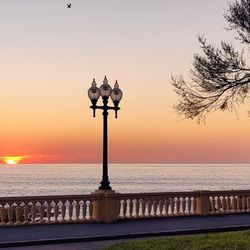
Foz do Douro means "Mouth of the Douro" and is a district where the Douro River meets the Atlantic…read moreOcean. My tour guide took my husband and me through this area. We saw the gorgeous ocean, sandy beaches, some nice-looking houses, a fort, gardens, restaurants, a sea wall, etcetera. The area was very scenic and had a peaceful and relaxing mood. Our tour guide told us that you can see the currents and color of the water change where the river and ocean meet.
" Fox do D'ouzo " is situated in the western part of Porto where the Douro River meets the Atlantic…read moreOcean and it is really a magical place at sunset. Many locals and fishermen are there to try their luck - open bond fire with grill everything is ready for the experience. It is a great place for walks nearby the sea and admiring the Altantic that comes for a last time blasting its surf on the rocks. Some seagulls flying, a descending sunset in fresh breez. God life is good!!! And for all Yelpers - Happy Thanksgiving we have a lot to be grateful for and to have YELP guiding our footsteps with the wisdoms of those who have been here before! SYOY!
Brands by name
Articles by date
The visit to this cathedral was a little disjointed. Usually the sights in a cathedral (or indeed…read moremost churches) are joined up, but here they were all over - many chapels were not accessed from the interior of the church, the Baroque choir on the second floor was not accessible from the main part of cathedral but instead up some stairs and the museum was in a separate wing. That said, most of the visit was guided so all I had to do was to follow my guide around (except for the main part of the church and the museum, where I could wander alone). The visit was also flexible - though I opted to see everything, I could've paid for and done the Cathedral, the chapels/Baroque choir and the museum separately. In any event, there was quite a lot to see, as you'd expect of a thousand year old cathedral. The painted wood ceilings were quite unusual. There were also the painted tiles that are common in Portugal. The bodies of the parents of the first King of Portugal were missing but their tombs were in the chapel with the mummified bishop Lourenco Vicente. The museum wing was very modern and I saw a lot for 5 euros. It was a pretty good collection too. They even had 2 Roman capitals and a Paleochristian sarcophagus as well as a 1004-1008 AD coffer (cofre de marfim). The only downside was that photography in the museum was not allowed.
When standing in front of Igreja do Carmo, we are in fact looking at two churches with a very…read morenarrow house, called Casa Escondida or the Hidden House, between them. The right side is Igreja do Carmo (built 1756 to 1768), a catholic church and is popular for its rococo/Romanesque style with the tile exterior. The left side is Igreja dos Carmelitas (mid-17C) that may or may not be open for visitors. The neat thing about visiting Igreja do Carmo is that the admission fee provides access to uncommon corners and behind-the-scene places, such as standing at the pulpit, the catacombs with a mummified sister on display (yeah, for reals!), relics (i.e. fingers and bones of saints), a museum, and roof access. The altar is very ornate. A unique viewing point is accessible that may have been a private corner for the very wealthy or royalty. And, I can kiss the foot of Jesus (no, I did not). The 3-storey Casa Escondida or the Hidden House has a wall-to-wall width that is supposed to be 1 meter wide (according to their website). It looks wider than that. Legend has it that this house was built to prevent contact between the monks of Igreja do Carmo and the nuns in the Igreja dos Carmelitas. The reality is likely less juicy, to fill an unsightly gap. It also housed guests and held secret meetings during the Napolean invasion in 1832. Definitely recommend seeing this church with the unique access.
Two churches. One facade. Zero personal space. These side by side beautiful churches are separated…read moreby the world's narrowest house (bless that tenant). The Carmo side is tiled and extra while the Carmelitas side is older and more humble. Legend has it, the tiny house in between was built to keep the monks and nuns from getting... too social if you know what I mean. The drama!
If one church visit isn't enough how about a double-church…read more Igreja dos Carmelitas is one of the unique churches in Porto's historic streets, connected to its adjacent twin, Igreja do Carmo. These two churches nearly blend together. Built in the 17th century, the Carmelitas side on the left for nuns is classic baroque. And unlike the Carmo side on the right for monks, entry was free when we visited making it a convenient pit stop between other historic sites. There is even a 3 ft wide narrow house between both churches that traditionally segregated Carmelite monks from nuns. Before going in, admire the elegant azulejo blue tiled wall on one side and the magnificent bronze Fountain of the Lions nearby, thought to be the inspiration for Harry Potter's Gryffindor crest. Inside the church feels quiet and intimate with decor featuring soft gold accents and traditional woodwork. Everything felt restrained except for the gilded main altar with intricate woodwork and a tiered mantlepiece dedicated to Our Lady of Mount Carmel (Virgin Mary). Skip it or hit it? It's a quick and free visit in this area of Porto worth exploring.
Beautiful and hidden gem away from the crowds. I would recommend this for the opulence.read more
The Church of Santa Clara has very recently reopened after a 3 year restoration project. This…read morechurch and convent was built in the 1400's for the Poor Clares (lol, more on that later) and is a UNESCO site since 1996. The entry is a modest €4 & well worth it to see outstanding examples of Portuguese woodcarving and artistry. First, you'll walk through a small room where some early paintings and altarpieces are preserved. Then, you'll head into the church - prepare to be stunned by the most ornate & elaborate decor ever. It seems that every square inch has been beautifully carved and embellished and then plated in shining gold. It's truly breathtaking and honestly, for its size is more impressive than some more "famous" churches. Really take time and look at the details - the altar painting is S. Clara driving back bad guys with a gold monstrance. There's several depictions of Mary, one with a bonus depiction of a snake Satan with an apple. The ceiling is incredibly detailed as well. I guess I know why the order is the Poor Clares, it looks like they spent everything on this jewel box of a church. You'll then head upstairs to the choir which offers a different perspective and higher views. There's a short 4 minute video that details the restoration which is well worth the time - it's amazing what they started with and were able to do in just 3 years. The docent working was really friendly and knowledgeable as well. IMO, make this place a must-see in Porto. Plan ahead as they close for an hour or two for lunch mid-day.
Gorgeous chapel along the Camino! The coastal route is so stunning as it is, but this landmark…read moretakes the cake. It was a small Franciscan monastery back in the day, but now it is a breathtaking landmark along the beautiful Camino da Costa. Lovely!
The stunning Golden Church is worth visiting…read more Igreja de São Francisco is one of Porto's most impressive UNESCO heritage sites, featuring the golden Baroque church as well as a second church of the Third Order of Saint Francis, a museum and catacombs all accessible with the entrance ticket (€12). From the outside, the 14th century Gothic church facade on one side appears fairly understated, but the interior celebrates the wealth and history of Portugal's colonial explorations up to the 18th century. Within the main church, we admired every surface that was covered in intricate gold-gilded wood carvings from altar to altar. This included the Tree of Jesse that depicted the intricate family tree of Jesus Christ, the altar of Martyred Saints of Morocco, and the main altar adorned with golden steps & columns above the Franciscan coat of arms. It's estimated there are nearly 500 kg of pure gold coated within the interior! The details were a feast for our eyes. Directly adjacent to this is the Church of the Third Order of Saint Francis, built in the 19th century as a cleaner Neoclassical space of worship. We appreciated the elegance of the white lit interior leading to the main altar painting. Beneath the church, the catacombs add a darker contrast to the self-guided tour. The overall complex was relatively busy with visitors but is vast to explore. Skip it or hit it? It's a worthwhile stop to one of the most unique interiors in Porto.
When ever there is anything big happening in Porto this square is the center of most activity. From…read moreconcerts to protests and everything in between.
The majority of this church is nothing special, but what makes it worth a trip is the…read morepre-Romanesque portion which was originally built by the Visigoths in the 7th century. This ancient part of the church is raised and behind a metal gate on the right as you enter through the main entrance. Opening hours can be erratic - when I went in November 2021 the official hours online were wrong, but Google had the right opening hours. There aren't a lot of staff either, so if the church keeper needs to run an errand it may be closed. That said, it's really cheap and not too far out from Braga anyway, so it's worth a look.