Kensington Olympia Station
Kensington Olympia Station Photos


Recommended Reviews - Kensington Olympia Station
Start your review...



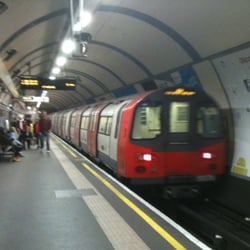
If you come here on a weekday and are expecting to catch an underground train you will be waiting a very, very long time. It basically only runs on weekends and special days. However, the overground does pass through here, though not as often. Of course, it is a pain when there is a breakdown, but hey, that's one of the issues with rail transport (but then again, the same thing happens on roads). read more

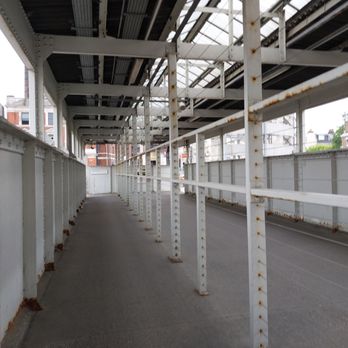



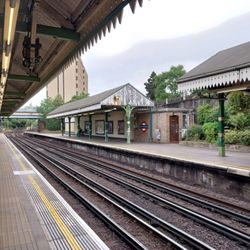
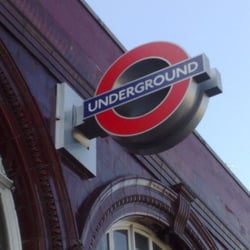
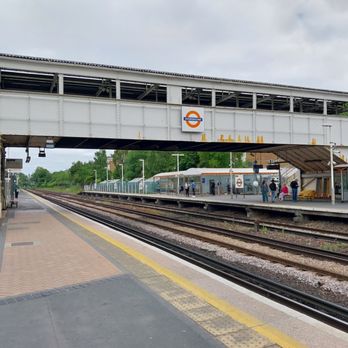
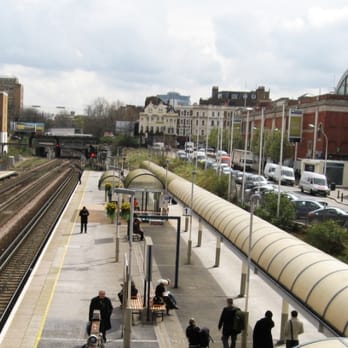
Currently one of the terminus stations on the District Line though it will soon only be open for weekends and special events, it is also a stop on the Overground. The station opened in 1844. It is located in Travelcard Zone 2. There are no ticket barricades, but there are ticket vending machines and Oyster readers. There is also an indoor waiting area for the Overground trains. The platform is at street level, so there is step-free access (if you are on the correct side of the tracks). The station is quite simple and plain, with a pedestrian overpass to get from the District line platform to the Overground platform. There is also a decent sized Boris bike stand to the east. During my first visit to London in 2008, this was my first tube station (other than Heathrow) as I was staying at the nearby Hilton. read more


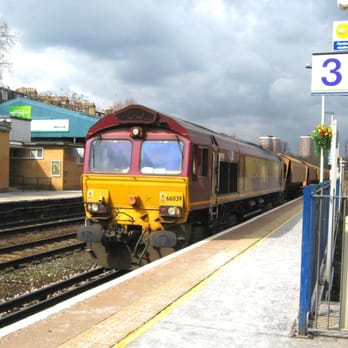
Nowadays, most people think of Kensington Olympia as simply the tube station for the adjacent Olympia Exhibition Centre, and indeed it is very convenient for that. But it has a fascinating and complex history of its own, and was once one of the largest and grandest stations in London. The first line in the area was the West London line, opened in May 1844, running from the Euston-Birmingham Line at Kensal Green and terminating just south of the present station, at Kensington Canal Basin. A half-hourly passenger service was provided, but was not a success and was discontinued later the same year. The line became a busy goods artery, however, supplying coal to depots in Shepherd's Bush and Kensington. In 1863, this line was extended to Clapham Junction, and a circuitous service operated from Southall to Victoria station via Battersea. In 1864, the station on the present site was opened, called simply 'Kensington', (it was renamed 'Kensington Addison Road' in 1868 when High Street Kensington opened). This coincided with the opening of another branch line, this time from Latimer Road on the Hammersmith & City line. In 1869, yet another branch opened, from Hammersmith Grove Road station (adjacent to to-day's H&C station) up to Shepherd's Bush Green and then curving back down again to Kensington Olympia. This enabled Richmond trains to run via Olympia, West Brompton and Battersea to Waterloo. Finally, in 1872, the District Railway built a short line from Earl's Court. Thus Kensington Addison Road became a major station, with trains running in literally all directions. In 1886, the opening of the Olympia Exhibition hall provided yet another source of traffic. The station was rebuilt on a grand scale, with two long through platforms and bays at both ends. Gradually, however, the development of other underground lines ebbed traffic away. The Richmond service and the line to Hammersmith closed in 1916. Although an electric service to Willesden Junction was inaugurated in 1916, this service, together with the branch to Latimer Road closed in 1940. In 1947, the station was renamed Kensington Olympia, but by then it had reduced solely an ad-hoc Underground service to Earl's Court, run in conjunction with exhibitions at Olympia. By the 1960s, the magnificent buildings had been demolished. In 1966, however, the station received a new lease of life with the opening of the Motorail terminal, with car-transport services to wide range of destinations in Scotland, Wales and the West Country. These services ceased in 1988, and the Motorail terminal closed down. It is now used as a covered car-park, and the reception area is now the booking hall and ticket office. But a renaissance began in 1986 when the District Line recommenced a full service, joined in 1994 by a rejuvenated service on the West London Line, from Willesden Junction to Clapham Junction, and from Watford Junction to Brighton. There are now effectively four sets of services: - Willesden Junction to Clapham Junction service every half hour, augmented in frequency and extended to Stratford via the North London line in the peaks. - from Watford Junction to Clapham Junction, Gatwick Airport and Brighton (operated by Southern; runs hourly, cut back to Clapham Junction in the evening, and on Sundays) - District Line services to High Street Kensington via Earls Court: about every 15 minutes, with extra trains for major exhibitions; - five Cross-country trains a day, to/from Birmingham, Manchester, Gatwick Airport and Brighton. These are due to be rerouted away from Kensington in 2009. To accommodate the West London Line services, a new platform (number 3) was built on the east side. District line trains have their own bay platform on the west side of the station, next to the ticket office. There are passenger toilets available when the ticket office is open, but they are not suitable for wheelchair users. Other services include cycle storage racks, a first-aid post, public telephones and a small coffee kiosk on platforms 1 and 2. The station has step-free access throughout, although there is no lift to the footbridge, so passengers wanting to cross to platform 3 for Clapham Junction must use the Addison Road entrance. (It's a good 5 minute walk, via the road bridge, from the ticket office and the other platforms.) Though a major interchange once more, used by over 1.25 million passengers a year, the rather spartan passenger facilities give it a rather uninspiring feel, enlivened only during major exhibitions. There are plans afoot to improve the frequency of trains along the West London Line in the next five years. read more





14 years ago


15 years ago


14 years ago