1. Lydney Youth & Community Centre

    0

    Lydney, GLS

    Cancel

    Open app

    Search

    Lydney Youth & Community Centre

    3.0 (1 review)

    Lydney Youth & Community Centre Photos

    Recommended Reviews - Lydney Youth & Community Centre

    Your trust is our priority, so businesses can't pay to alter or remove their reviews. Learn more about reviews.
    Yelp app icon
    Browse more easily on the app
    Review Feed Illustration

    15 years ago

    Does seem like an awful lot goes on here.

    Helpful 0
    Thanks 0
    Love this 0
    Oh no 0

    Verify this business for free

    Get access to customer & competitor insights.

    Verify this business

    City Hall Cardiff - Statuary lining the West Staircase in the Marble Hall

    City Hall Cardiff

    4.4(10 reviews)
    32.9 mi

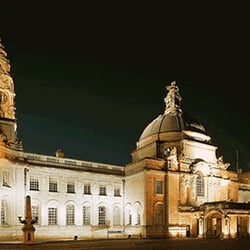
    Cathays Park in Cardiff is one of Europe's finest Civic Centres, built in the early years of the…read more20th century to reflect Cardiff's rapid development as a major city and trading port, largely due to the export of coal. What had been a small town of a few thousand souls in 1800 was, by 1900, the largest coal exporting port in the world, and home to over 150,000. A key figure in the early life of Cardiff was the local landowner, the 1st Marquess of Bute. He was responsible for the rebuilding of Cardiff Castle and Castell Coch, and in 1898 sold what had been the grounds of a Georgian Mansion to the City to enable construction of the Civic Centre. It now contains the National Museum of Wales, the main buildings of the University, administrative buildings of the Welsh Assembly, Law Courts and, as its crowning glory, Cardiff City Hall. Completed in 1904 and built in white Portland stone, this magnificent baroque building was designed by the firm Lanchester, Stewart and Rickards after an architectural competition. The basic design includes an imposing central dome and entrance portico, with an offset 194ft (60m) tall bell tower. The external statuary represents the City's three rivers, the Taff, Rhymney and Ely. The bell tower is something of a landmark, and contains five bells, each inscribed with a motto in English or Welsh: Hour bell: 'Y gwir yn erbyn y byd' (His truth against the world) 1st Quarter - 'I mark time, dost thou?' 2nd Quarter - 'Duw a phob daioni' (God is all goodness) 3rd Quarter - 'Time conquers all and we must time obey' 4th Quarter - 'A gair Duw yn uchaf' (God's voice on high) Inside the main entrance hall has two grand staircases leading to the grand first floor reception, appropriately called the 'Marble Hall'. The most impressive internal rooms (there are also offices, of course) are the Council Chamber and the Great Assembly Hall. The latter possesses three huge bronze chandeliers and has been used for all sorts of functions, from dinner dances (which my Mum and Dad used to attend for 1/6 in the 1950s!) to banquets for Royalty and visiting Heads of State. The Council Chamber, of oak and Breccia Marble, is also worth a look, and was used for a meeting of the European Council in 1998. The Edwardian period was a time when Wales was rediscovering its history and confidence, and so the interior reception halls - especially that on the first floor - are decked out with the best Edwardian marble statues of Welsh heroes and heroines by noted sculptors of the day. To modern eyes, apart form the dubious historical accuracy, they are a bit overblown, but impressive nonetheless. Better is the building's impressive art collection, mostly of late Victorian English painting, including some minor pre-raphaelite works by Blair Leighton and my favourite, 'Winter', by the Scottish artist, Joseph Farquharson, (much beloved of Christmas Cards). There are also portraits of political figures, such as Lloyd George, George Thomas and James Callaghan, and a rather odd triple portrait of Diana, Princess of Wales by John Merton (for hardened Diana fans only). As well as conferences, banquets and similar events, the Marble Hall is licensed for weddings and they can also cater for receptions for up to 500 guests.

    NOTES: ~ This review is for using it as a wedding venue!…read more Cardiff's City Hall was where I got married and overall the people and process was fantastic. I'll explain the 1 star off later. ~ Support: The support from the staff here was fantastic and the process was very smooth. There were several stages to the process from getting registered to booking a date and everything went smoothly. They had selection pack where you declare what music you want (of which there were a variety of options), what statements you wish to be made, and generally how the whole flow of the ceremony was good. The person who married us was also very kind and supportive. I had a little crying breakdown during our vows and she was very patient with me and also seemed really genuinely happy for us on the day. ~ Venue: As noted by other reviewers, the building is beautiful which makes it for a great location to get married. Just look at the photos! ~ Downside: I recognise that this may be a rare occurrence, but I wish they were a bit more strict on people who don't turn up on time. There was a wedding scheduled before us and they were very late so our guests had to wait in the waiting room with guests of another wedding which made it very awkward and not intimate at all. My partner and I also had to wait until our own ceremony and so waited with our guests. We are all pretty relaxed people and this didn't bother me too much and I actually found it hilarious, but I can imagine if it happens to anyone else it would be very hectic. Maybe a 15 minutes or cancellation policy? The couple before us were over half an hour late which cut the "nervous pre-wedding anticipation" down by quite a lot.

    Photos
    City Hall Cardiff - Queen's 88th birthday - Royal Gun Salute

    Queen's 88th birthday - Royal Gun Salute

    City Hall Cardiff - From official site

    From official site

    City Hall Cardiff - Statuary lining the East Staircase in the Marble Hall

    See all

    Statuary lining the East Staircase in the Marble Hall

    St Woolos Cathedral

    St Woolos Cathedral

    5.0(2 reviews)
    22.8 mi

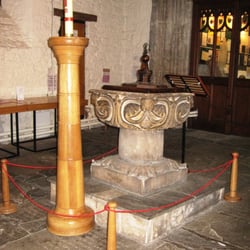
    Set high on Stow Hill and commanding fine views over Newport, the Cathedral of St Woolos (Welsh: St…read moreGwynllyw) is the mother church of the Anglican Diocese of Monmouth. Incorporating elements spanning 1,000 years, it has a rich and fascinating history. History The exact origins of the church are shrouded in legend, but the first church is said to have been built around 500AD by Gwynllyw, a local Lord. He fell in love with Gwladys, daughter of the King Brychan (modern Brecon) but, having been refused her hand in marriage, he abducted her. Evidently she still married him and, over time, Gwynllyw was converted to Christianity both by Gwladys and their pious son Cadog (later St Cadog). Gwynllyw then built a religious settlement or Clas on the site of the present cathedral - chosen, again according to legend, after an angel in a dream told him to build a church where he found a white ox with a black spot on its head. This original 6th century building would have been made of wood and wattle-and-daub, but the site was revered sufficiently for the Saxons to build a later stone church on the site of the present St Mary's Chapel, possibly in the 10th century. The remains of this church constitute the oldest part of the present building. In 1080 a new church with a nave and lean-to aisles was built by the Normans, immediately east of the Saxon building. The earlier church was probably by this time a ruin, as the Norman west door pierced its east wall. Around 1200, the Saxon chapel was restored and the walls raised, with narrow lancet windows inserted above arched tomb niches. The church was badly damaged in 1402 by the forces of Owain Glyndwr, but later in the 1400s substantially enlarged and repaired, mostly by Jasper Tudor, uncle of Henry VII. The north aisle was enlarged and fine Perpendicular Gothic windows were inserted, followed later on by a similar enlargement of the south aisle, and a double-height south porch with a priest's house on the first floor. Finally, the tower was added towards the end of the 15th century, and included a statue of Jasper Tudor, as Governor of Newport 1485-95. The church's history then shows a period of steady decline: much damaged during the Civil War, by the early 19th century St Mary's Chapel had become a charnel house, and the nave had effectively become a chapel, with a singing gallery on the site of the rood screen, cutting off the nave from the chancel. Restoration began in 1818 with the repair of St Mary's Chapel, which then became the main entrance of the church. An extensive further restoration in 1853 replaced the south porch and the two 15th century south aisle windows with three new ones; restored the Norman font and 15th century chancel; and removed the singing gallery and inserted a new chancel arch. The next phase of building resulted from the decision in 1921 to create a new Diocese of Monmouth. After much deliberation, St Woolos was chosen to be the new Cathedral, a process finally completed in 1949. However, it was clear that the original chancel was too small for its function as cathedral, so an new East End was built in 1961-2 by the eminent architect ADR Caroe, decorated with a mural and new rose window designed by the artist John Piper. The church The church is today entered through the 15th century tower, into the 13th century St Mary's chapel. This includes the restored Norman font, with green men on each corner. The effigies in the tomb recesses are unfortunately horribly mutilated and decayed (and, sadly, rather fenced off by modern central heating pipes), although that of Sir John Morgan (d. 1491) and his wife Janet has some better preserved elements. The low window on the right has a mediaeval rose inserted into what is probably an original Saxon window. Stonework on the lower left and right sides also remains from the pre-Conquest church. Eyes are, however, drawn forwards to the Norman door, one of the Cathedral's treasures. The columns are very unusual, and are likely to be Roman, sourced from the settlement at Caerleon. The capitals are also unusual: they are of Composite design, but incorporate Norman humanistic sculpture (depicting praying men and birds). The capitals may therefore have been Roman, with the Norman work carved into them when the church was built. The arch itself has bands of bold zig-zag, billet and chevron decoration. The nave is instantly recognisable as Norman work, with five bays of rounded arches on round piers with scalloped cushion capitals. Both arcades have empty windows which once formed the clerestory, but became internal when the aisles were raised. On the left by the chancel arch, the door to the long-vanished rood-loft can be seen. The north aisle is bright and wide, the Tudor windows filled with clear glass; the south aisle is narrower, and a line of corbels indicates the height of the original aisle. At the east end, a tall modern Gothic arch leads onto St Luke's chapel, a


    Since this Cathedral is in Wales, why not recognise the history of Christianity in Wales, this 5th…read moreCentury Welsh saint and the Welsh people, by giving back this Church it's original and correct name: The Church of St. Gwynllyn.

    Photos
    St Woolos Cathedral
    St Woolos Cathedral
    St Woolos Cathedral

    See all

    South Wales Police

    South Wales Police

    3.0(1 review)
    33.0 mi

    My only dealings (thankfully) with this Police Station were as a witness for an unprovoked assault…read moreon a friend of mine, for which he required stitches to his face and severe bruising. Naturally we called the Police immediately who showed up after about 10 minutes. We drove around trying to find the guy again before going to the hospital but to no avail. They then required us to go into the station to check out some photo-fits. At this time I worked from 1pm to 9pm in Bridgend and didn't want to take a day off unless necessary. They booked us in for 9am though and assured me it would take half an hour maximum. I showed up at 8.50am as planned and was told I'd be seen ASAP. Unfortunately we were waiting until 11.30am to get seen. In fairness we were informed no-one was available and I'm loathe to be too harsh as I understand something could have come up which was more important than our appointment. We went and grabbed food before heading back. They called me in at about 11.50am and I was in there for about an hour and a half, making me late for work. Afterwards I was told it was highly unlikely that they would find the man, making me wonder why they bothered wasting our time in the first place. Like I said I don't want to be too harsh as I have a lot of respect for the Police, having worked for them myself but I ended up having to work back the hours I missed to attend a completely pointless interview.

    Photos
    South Wales Police
    South Wales Police

    See all

    Lydney Youth & Community Centre - publicservicesgovt - Updated September 2026

    Loading...
    Loading...
    Loading...