Cancel

    Open app

    Search

    Michelham Priory and Gardens

    5.0 (3 reviews)

    Michelham Priory and Gardens Photos

    Recommended Reviews - Michelham Priory and Gardens

    Your trust is our priority, so businesses can't pay to alter or remove their reviews. Learn more about reviews.
    Yelp app icon
    Browse more easily on the app
    Review Feed Illustration

    19 years ago

    Helpful 0
    Thanks 0
    Love this 0
    Oh no 0

    18 years ago

    Helpful 0
    Thanks 0
    Love this 0
    Oh no 0

    18 years ago

    Helpful 0
    Thanks 0
    Love this 0
    Oh no 0

    Verify this business for free

    Get access to customer & competitor insights.

    Verify this business

    Arlington Reservoir - The western shore, view towards Polhilll's Farm.

    Arlington Reservoir

    5.0(3 reviews)
    1.9 mi

    Arlington is a small reservoir, constructed in 1971 to supply water to Eastbourne, Hailsham,…read morePolegate and Heathfield. Built on the site of part of the Cuckmere River bed, the reservoir is an oval shape, with a long curving dam. The maximum depth is 37ft (11.3m) and its total capacity is 3546 million litres of water, all abstracted from the Cuckmere River in winter. The 49 hectare site was designated a Site of Special Scientific Interest in 1985, and is also a Local Nature Reserve. It contains a diverse range of habitats, which in turn support some 173 species of bird, including a winter population of 10,000 wildfowl. The site has hides for birdwatching, and also provides some of the best trout fishing in the South East of England (tel: 01323 870810). The water company also organises school nature trips, including pond dipping. The reservoir path also provides a reasonably level walking trail, which, as well as wildlife, also offers lovely views of the South Downs. A walking leaflet (http://www.eastsussex.gov.uk/NR/rdonlyres/047A41DB-1684-4128-AADD-1C508D15F780/0/ArlingtonReservoirWalkWebversion.pdf) is available on the East Sussex County Council website or you can get a hard copy by phoning 01273 482250. Practicalities There is a car park at the main entrance on Station Road, just north of Berwick railway station (on the right hand side, going north). This has information boards, toilets and picnic tables. Swimming and boating are not permitted.

    This reservoir owned by South East Water is a lovely place to visit on a warm summer's day. It has…read moretoilet facilities and a large car park both of which are useful for a day trip. The reservoir itself is huge and the area also contains a bird watching lodge and a wood. If you are going here, I recommend taking a pair of binoculars and a camera, as you can capture the beauty of East Sussex right here. It has picnic benches for in the summer. Overall, this is a wonderful place to visit if you want a day trip out or if you are touring East Sussex. I personally have recommended this place to people wanting to go to see some beautiful sights.

    Photos
    Arlington Reservoir - Arlington reservoir dam

    Arlington reservoir dam

    Arlington Reservoir - Looking south-west towards the South Downs National Park

    Looking south-west towards the South Downs National Park

    Arlington Reservoir - Looking south towards the South Downs National Park

    See all

    Looking south towards the South Downs National Park

    Bluebell Walk

    Bluebell Walk

    4.0(1 review)
    0.8 mi

    Bates Green Farm has been opening up its ancient woods for walkers to see the bluebells every…read morespring for 39 years. Situated between Lewes and Eastbourne, it's become a very popular (and award-winning) seasonal visitor attraction, and raises a lot of money for local charities in the process. A number of trails are provided, some just through the bluebell woods, but others taking in more countryside, if that appeals to you. You can walk for up to 4 miles if you plan it well, or just over half a mile (1km) if all all you want to see is the bluebells. Maps are available as you enter. The farm has a tea-room with cakes and sandwiches, as well as stalls run by local charities selling gifts, greetings cards, books, home-made jams and chutneys; and a farmers' market. This is still a working farm, so if you want to, you can even watch the cows being milked in the dairy! The website has full details of all the attractions. The main walk is suitable for wheelchairs (albeit rather bumpy), and mobility scooters can be hired. Full details are on the website. Dogs are allowed (but must be on a lead) but cyclists are not allowed to ride through the woods. (A rail is provided to which bikes can be securely locked.) Car parking is in an adjacent field. There's a picnic area, though you can't picnic in the woods themselves. The farm hosts school visits as well - the woodlands are an important wildlife conservation habitat. In 2011 entry for adults was £4.

    From the owner: The Arlington Bluebell Walk and Farm Trails are open between April and May. Six walks covering…read morewoodlands, fields, riverbanks and three working farms. Open during the spring, the walk through Beatons Wood is wheelchair friendly and provides an opportunity to enjoy enchanting vistas of wood anemones and bluebells. On this walk there are seats for you to enjoy the peace and tranquility of the ancient oak and hornbeam wood. Along all of the walks there are illustrated information signs describing the flora and fauna of the countryside. With busy tearooms and other attractions the walks help raise money for national charities and local projects.

    Photos
    Bluebell Walk
    Bluebell Walk
    Bluebell Walk

    See all

    Painshill Park - The Crystal Grotto

    Painshill Park

    4.2(5 reviews)
    42.4 miCobham

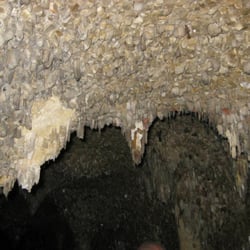
    An idyllic destination a short drive from London, Painshill Park is a great place to spend a day…read moreenjoying the beauty of the English countryside. Created by the eccentric Charles Hamilton, the park was created as a "romantic landscape". Both organized and naturalistic, the park offers many vistas, perspectives and experiences. Created with a variety of follies dotting the landscape, the park offers panoramic views and interesting scenes. Views from the Gothic Temple and the Turkish Tent are breathtaking. While exploring the man-made grotto (which is currently undergoing renovation) you can't help but be in awe of Hamilton's vision while at the same time thinking "This guy must have been totally out there to build stalactites with lathe and plaster and then cover them in pieces of crystal!". Whether walking the grounds, bringing a blanket and a book and enjoying the solitude, Painshill Park is a wonderful place to visit. Be prepared to walk, as the park is large and very hilly. It's a good climb to the top of the Tower as well. Would definitely recommend this if you need a relaxing afternoon away from the hustle and bustle of London.

    A grade 1 listed park, much renovated over the last 25 years, by the trust that owns it…read more Created by Charles Hamilton ,in the mid 18th century, after his 2 (obligatory) Grand Tours, he wanted to create an idyllic natural setting, around a lake, with water diverted from the river Mole. He was very succesful in this, and created a number of follies, a Grotto, and the unusual Turkish Tent. Many of the plants are of American origin, and were just becoming fashionable at the time. It's worth remembering it's a park like setting rather than a garden like Wisley. Reasonable cafe near the entrance, and the ever present gift shop. Worth chcking their website for offers, currently free entry on Wednesdays in November, children free at weekends, and A special Santa event. The Grotto is only open at the weekends. A great place for a walk on a sunny day, great views across the lake and Surrey.

    Photos
    Painshill Park - Inside the grotto

    Inside the grotto

    Painshill Park - Detail of the man made stalactites

    Detail of the man made stalactites

    Painshill Park - Gypsum stalactites inside the Crystal Grotto

    See all

    Gypsum stalactites inside the Crystal Grotto

    The Long Man of Wilmington

    The Long Man of Wilmington

    4.8(4 reviews)
    2.0 mi

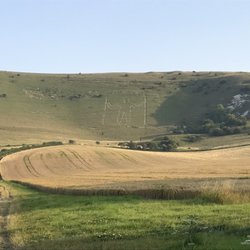
    The Long Man is one of several chalk figures cut in the landscape of southern England, and along…read morewith the Cerne Abbas giant, one of only two human figures. At over 70m tall, the Long Man is Europe's largest representation of the human form and the second largest in the world. The figure is formed from trenches dug into the ground to reveal the chalk substrate below. History So who is he? His age has long been a mystery and is the topic of fierce dispute. The first recorded image is a drawing made in 1710, which showed him with facial features, a helmet-like head and his feet pointing outwards. It showed the outline as more of an indentation in the grass than a solid white line. Subsequent 18th century drawings depicted the 'staffs' as being a scythe and a rake, although evidence on the ground does not support this - nor the theory that, like the Cerne Abbas giant, he once had genitalia. An archaeological analysis in 2003 of the chalk on the hillside gave a mid-16th century date, although some excavations have produced Roman pottery from the trenches, implying a pre-Roman date. Similar Northern European depictions of helmeted figures with staffs or spears appear from the Iron Ages to the Viking periods and on Roman coins. If he is pre-mediaeval, it is however strange that there is no reference to the figure in the records of the nearby Wilmington Priory. We will probably never know for sure, but there's no doubt that he cuts an imposing figure on the landscape. Whatever his origins, the current image was formed in 1874 when outlined in yellow brick by Rev. W. de St. Croix of the Sussex Archaeological Society, although even then it was realised that the new outline distorted the original image. In 1891 the bricks were replaced with white versions, painted regularly to keep him fresh, but was rather ignominiously painted out using green paint during World War II to prevent him being used as a landmark by enemy planes! In 1969 the outline was remade using concrete blocks into the form we see today. Practicalities There's a car-park just south of the ruined Priory in Wilmington village, from where a public footpath take you right up to the figure. There are excellent views from a wide area of the surrounding countryside.

    I grew up in this village, with its majestic chalk man looking down over us each and every day…read more When we were youngsters we used to be able to take our sleds up on a snowy day and whizz down over the Long Man but over recent years they have taken much better care of him and now have fencing erected to preserve him. The walk is quite steep and if you are not too sure-footed, it would be best to just admire the view from the lower levels as both access points (either to the left or to the right of the Priory carpark exit) are very rough. muddy and pitted by horses hooves. Pagans celebrate around the Long Man on specific pagan/wicca "holidays", such as Imbolc, Beltane, Lammas and Samhain (Hallowe'en) including the equinox celebrations although obviously they are also not allowed on to the figure itself. No-one really knows where he came from 'tho many theories exist. Locals believe he is an older figure, along the lines of the White Horse in the West Country but whatever, he is a powerful image and draws many many tourists to the area each year. He rests in a dip in the Sussex Downs, in many respects sheltered from the worst of the weather from inland and the coastal region (which is only a few miles away). There are plenty of pathways and walks across the Sussex Downs, for example starting off in Polegate and walking across to the River Cuckmere at Exceat, a beautiful walk, which will bypass our Long Man.

    Photos
    The Long Man of Wilmington
    The Long Man of Wilmington
    The Long Man of Wilmington

    See all

    The Pergola and Hill Garden - Flower

    The Pergola and Hill Garden

    4.8(4 reviews)
    51.7 miHampstead Heath

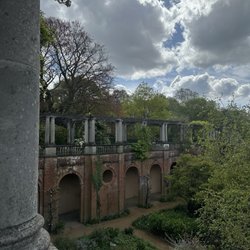
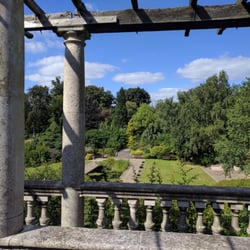
    This has to be one of North London's best kept secrets! I can't believe I had never heard of this…read moregarden (even my dad had not heard of it and he grew up near here.) I assume the lucky locals would like to keep this as a secret treasure, but it is too good not to share with yelpers!! The Pergola and Hill Gardens are hidden between Hampstead Heath and Golders Hill Park. The Pergola half of the garden is essentially a long raised walkway, under a long pergola made from wood and stone, covered in gorgeous smelling roses and other climbing plants. The other half of the garden has a large square pond full of lilies, sculptured hills and nice soft grass to sit on and have a picnic. I have a feeling it could be very busy on nice days...but when we visited it all seemed far quieter than Golders Hill Park - even though it is so, so much nicer. Practicalities: - If you don't want to walk, just take the 210 bus and get off at Inverforth House, you can see the signs to the garden. - It's free (!)

    This place is beyond beautiful. I'm always surprised when I find places like this in London that is…read moreopen for the general public with no fee. Tucked away on the smaller side of Hampstead Heath, in between Hampstead Heath and Golders Hill Park is this little Gem. Because it's hidden away it's less busy than both the known green spaces. The pergola goes on and on with hidden entrances to the gardens. The gardens all have walk ways for you to meander through them. I can imagine that this place will get used for many photoshoots. You have to be careful you're not walking into someone else's shot. None of the photos or reviews will EVER do this place justice. Trust me and go see for yourself.

    Photos
    The Pergola and Hill Garden
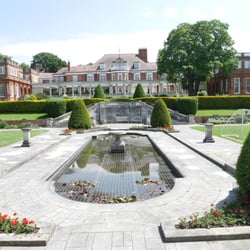
    The Pergola and Hill Garden - Inverforth House

    Inverforth House

    The Pergola and Hill Garden

    See all

    Michelham Priory and Gardens - parks - Updated July 2026

    Loading...
    Loading...
    Loading...