Miracle at Hominy Falls Photos

More like Miracle at Hominy Falls
Recommended Reviews - Miracle at Hominy Falls
Start your review...



This marker is along WV-20, a curvy road and there isn't much room to pull over to stop. Use caution if you do. The marker reads, "On May 6, 1968, the Gauley Coal and Coke Company's Saxsewell No. 8 mine, located along Hominy Creek, flooded when a continuous miner accidentally cut into an abandoned mine full of water. Eli E. Walkup, Renick F. McClung, Claude R. Dodd Jr., and William F. Burdette died at once. Fifteen men were saved on May 11. Rescue efforts continued and freed six more men on May 16." It was erected in 2018 by the West Virginia Department of History & Archives. [Review 19609 overall - 83 in West Virginia - 580 of 2023.] read more
More info about Miracle at Hominy Falls


















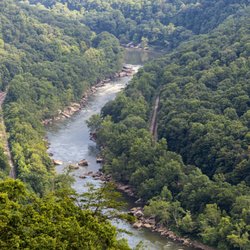


Miracle at Hominy Falls - landmarks - Updated August 2026
Best of Leivasy
People found Miracle at Hominy Falls by searching for…
Places to Take Pictures in Leivasy, WV
Tourist Attractions in Leivasy, WV
Hiking Trails With Waterfalls in Leivasy, WV
Scenic Overlook in Leivasy, WV
Things to Do on a Rainy Day in Leivasy, WV
Abandoned Places in Leivasy, WV
Public Services & Government in Leivasy, WV
Historical Sites in Leivasy, WV


