Located in the small town of Ripoll, high in the Catalan Pyrenees, the monastery of Santa Maria has had a chequered history. The original Christian site founded by the Visigoths was overtaken by the Moors, only to be restored as a Benedictine monastery by the wonderfully-named Wilfred the Hairy in 879.
Intended to encourage Christians to re-settle the area, the monastery flourished in the 10th and 11th centuries, and by the 12th century was firmly established as one of the most significant romanesque buildings in Catalonia, and a great European centre of learning. Unfortunately, a 15th-century earthquake heralded a period of decline, and the church was almost completely destroyed by fire during the Carlist Wars in 1835.
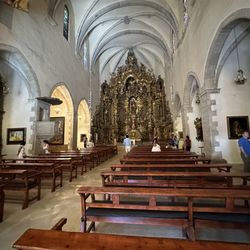
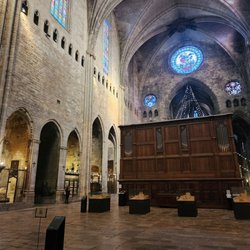
Much of the abbey church we see to-day, therefore, is a result of the late 19th-century restoration. Unfortunately, that re-building has left a rather disappointing church: the nave, in bare stonework, is a dull and gloomy space, not helped by years of grime and a lack of furnishings. Even Wilfred's tomb is just a plain stone box.
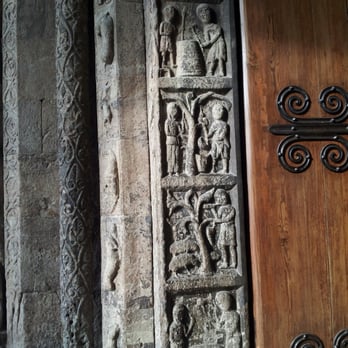
Better, then, to concentrate on what survives from the earlier periods. The 12th-century West Portal has an intricately carved door flanked by large decorated panels, depicting saints, biblical stories (including Daniel and the lion's den), the months of the year and assorted beasts, both fantastic and real. It ranks as one of the most outstanding pieces of Catalan romanesque art.
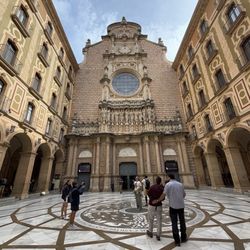
More impressive still is the cloister. Dating from the 12th-14th centuries, it is unusual in having two storeys, with rows of delicate paired columns under rounded arches, each with elaborately carved capitals. These reflect animal and plant life, and both biblical and secular human themes. They are of astonishing quality, and excellently preserved. Furthermore, the rhythm of the arches results in a glorious space, made nicer still by the formal gardens within. From its centre ironically comes the gentle, soothing sound of water falling from a Moorish-style fountain.
After you've had your fill of culture, the square in front of the church contains several decent bars, where refreshment of a more prosaic kind can be sought read more