1. Nová radnice

    1. Nová radnice

    0

    Prague, PR

    Cancel

    Open app

    Search

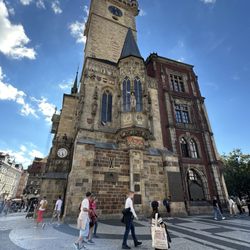
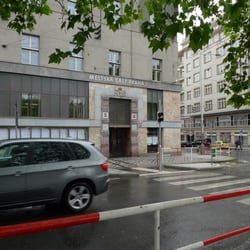
    Nová radnice

    Prague City Hall

    4.7 (3 reviews)
    Closed 8:00 am - 6:00 pm

    Nová radnice Photos

    Recommended Reviews - Nová radnice

    Your trust is our priority, so businesses can't pay to alter or remove their reviews. Learn more about reviews.
    Yelp app icon
    Browse more easily on the app
    Review Feed Illustration
    Photo of Aleesh R.
    0
    29
    109

    8 months ago

    Helpful 0
    Thanks 0
    Love this 0
    Oh no 0

    4 years ago

    Helpful 5
    Thanks 0
    Love this 6
    Oh no 0
    Photo of jason z.
    378
    24
    1273

    9 years ago
    Helpful 2
    Thanks 1
    Love this 2
    Oh no 0

    Verify this business for free

    Get access to customer & competitor insights.

    Verify this business

    Church of Our Lady before Týn - 12/25/2022 - Christmas Day in Prague

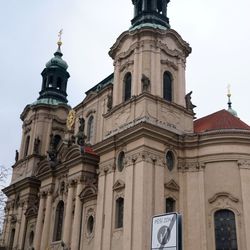
    Church of Our Lady before Týn

    4.2(5 reviews)
    0.3 kmStaré Město, Praha 1

    Late Gothic Landmark with Limited Hours…read more Peter Parler and Matthias of Arras designed and built this 14th century spired cathedral. It is so interesting how the "face" has been changed with the addition of a building directly in front of the church entry. Climb the Old Town Hall Towers for a better view. Note: There are limited hours for entry. Check the schedule, we were lucky to enter 5 minutes before they closed midday.

    Church of Our Lady before Týn is the name of the ridiculously gorgeous Gothic church that stands in…read morePrague's Old Town Square. You've seen pictures before. Despite visiting years ago, it took living here for a month for me to learn its name or explore inside. It wasn't until one of my new friends invited me along for a classical music performance that I became acquainted with it. I heard that it's a rarity to be able to attend a concert in the church, but I also heard the opposite, so I'm not actually sure. Either way, if you have the extra funds and want to experience some local, albeit touristy, culture, be sure to book through Via Musica. The ticket cost me around $38 (935 crowns...NOT cheap!!) but I think it was worth it for a one-time visit. I spent most of the 65-minute concert mesmerized by the church itself. Faces everywhere. Gold everywhere. Intricate designs. Unreal beauty. It was such an amazing experience! It was also cold. Keep in mind it's a very old church. Even though it's indoors, it's not like they have central heating so you'll still feel the elements. Dress appropriately! And be sure to arrive early for a good seat. If you're visiting Prague, don't miss a trip inside this church. Classical concert or not!

    Photos
    Church of Our Lady before Týn
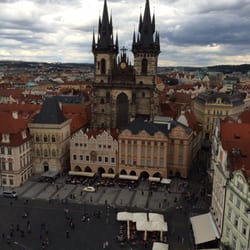
    Church of Our Lady before Týn - View from the tower above the astronomical clock

    View from the tower above the astronomical clock

    Church of Our Lady before Týn

    See all

    Orloj

    Orloj

    4.3(101 reviews)
    0.2 kmStaré Město, Praha 1

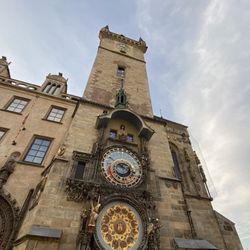
    Oldest working astronomical clock in the world faithfully performed at top of the hour.read more

    This magnificent clock is not just a timekeeper but also an impressive work of art that tells a…read morestory about the history of Prague and its people..Many call this one of the most over-hyped attractions in Europe, but I did find some interesting points after listening to our tour guide. The Astronomical Clock was built in the 15th century and is the oldest working clock of its kind in the world. It consists of three main components: the astronomical dial, the calendar dial, and the figurines. The astronomical dial displays the position of the sun, the moon, and the stars, as well as the time of day. The calendar dial shows the current date, zodiac signs, and saints' days. Finally, the figurines perform every hour, with the twelve apostles appearing in a procession. The clock face displays four different times, some recognizable and others ancient. Beginning on the outer edge of the dial, in deep blue, is Bohemian (or Old Czech) time shown in the Gothic numbers. The day consists of 24 hours and starts from the sunset (rather than midnight, as we'd use today). Bohemian time was utilized by Holy Roman Emperor Charles IV, and is pointed by the golden hand. Next is Central European Time (CET) Zone, two sets of 12 hours shown in Roman numerals inside the Bohemian time numbers. CET is also indicated by the golden Sun hand. Third is Babylonian (or Arabian) time, the oldest time displayed on the astronomical dial. Babylonian time, displayed in black Arabic numerals, separates the time between sunrise and sunset; that's why there are only 12 hours. Finally, there's star time, or sidereal time. Sidereal uses the time it takes Earth to rotate once on its axis and return facing a distant star. Its time is 23 hours and 56 minutes, four minutes shorter than a solar day. A solar day is defined by when the Sun is overhead at noon, which must account for the Earth tracking one degree, or day, along its orbit around the Sun and hence is longer. Follow the little golden star among the Roman numerals for sidereal time. Now you are prepared to tell time via the stars or even back in the Middle Ages. Fun piece of workmanship.

    Photos
    Orloj - People around every turn

    People around every turn

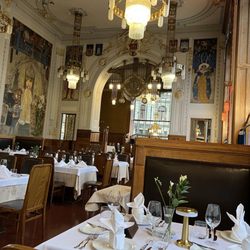
    Orloj - Dining area inside

    Dining area inside

    Orloj - The famous astronomical clock in Prague, it was constructed in 1410

    See all

    The famous astronomical clock in Prague, it was constructed in 1410

    Pamětní deska Jana Želivského - Jan Želivský Memorial, Prague

    Pamětní deska Jana Želivského

    3.0(1 review)
    0.2 kmStaré Město, Praha 1

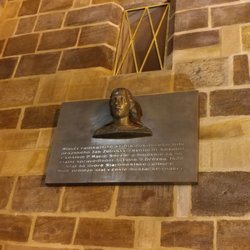
    Jan Želivský (1380-1422) was a prominent Czech priest during the Hussite Reformation. From the…read morewikipedia article. "Želivsky preached at Church of Our Lady of the Snows (Panny Marie Sněžné). He was one of a few Utraquist priests in Prague at the time and he was strongly influential, owing to his sermons which were noted both for their eloquence and their apocalyptic descriptions. On 30 July 1419, Želivsky led the Hussite procession through the streets of Prague, and past the New Town Hall. "The priest and his followers were, however, received with derision by the town-councillors, who appears at the windows, and stones were thrown at the procession. One of the stones struck Priest John [Želivsky]... and the infuriated people immediately attempted to storm the town hall." "This event ended in the First Defenestration of Prague, which was one of the major triggering events for the Hussite Wars. "For a time during the Second Anti-Hussite Crusade, he held almost ultimate authority over the lower classes in Prague. "After his defeat in the Battle of Brüx in 1421, Želivský was removed from command. On 9 March 1422, during the civil wars between the various Hussite factions, he was arrested by the town council of Prague and decapitated. If you're not familiar with the term "defenestration," it is when people are executed - they are thrown out high windows. The judge, the burgomaster and several members of the town council were killed. It led to the Hussite Wars (1419-1434). [Review 12264 overall, 2048 of 2019.]

    Nová radnice - townhall - Updated September 2026

    Loading...
    Loading...
    Loading...