Penshurst Place and Gardens Photos



Recommended Reviews - Penshurst Place and Gardens
Start your review...



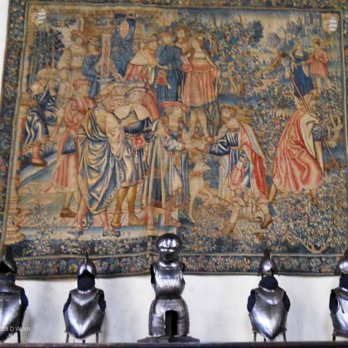
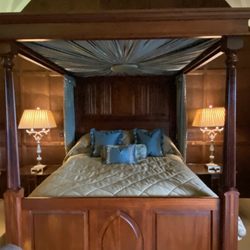
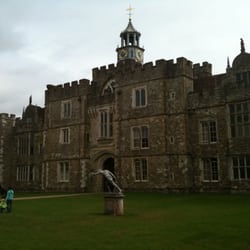
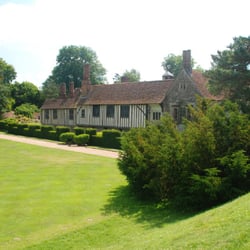
Penshurst Place evidently still resembles that which Sir John de Pulteney, a former Mayor of London, constructed between 1338 and 1341. it has a rich history. Penshurst changed hands between a few dukes after Sir John and, in 1483, was inherited by Edward Stafford, 3rd Duke of Buckingham. Edward was the son of Henry Stafford (the 2nd Duke) and Katherine Woodville, sister to Queen Elizabeth (wife of King Henry IV). King Henry VIII had visited Edward (whom he considered a threat to the crown) at Penshurst in 1519 and even though the king had been lavished with what today would be over £1 million as a gift, King Henry VIII had Edward convicted of treason and executed in 1521, at which point the king took control of the estate. Henry used Penshurst as a hunting lodge but it was also where he stayed when he visited nearby Hever Castle while courting his future 2nd wife and queen, Anne Boleyn. Fast-forward to the king's divorce from his 4th wife, Anne of Cleves and Penshurst became hers, for a short time, as part of the settlement. Sir Ralph Fane (also Vane), who was knighted on the field of combat, was granted Penshurst in 1550 by Edward VI, the 13 year old King of England. However, less than two years later, Fane was convicted and hanged for treason, at which time the manor was given to Sir William Sidney by Edward VI as a reward for Sidney's services as steward and tutor to the household. Penshurst has remained in the Sidney family since 1552! By the late 1700's, the estate had started falling into disrepair. Restorations began in 1818 and the estate did well until damage was sustained during World War II. As a means to assist funding restorations in 1947, Penshurst Place was opened to the public. The family's stewardship of the manor has resided, since 1991, with Philip Sidney, 2nd Viscount De L'Isle MBE, Her Majesty's Lord-Lieutenant of Kent. Though a fairly narrow building it is long and when one is touring through the various rooms you can glimpse much of the history that is held within the walls, from paintings that adorn the walls to mannequins wearing period clothing, from armor that had been worn to fancy lace and elaborate bedding. When visiting anywhere near Kent, England, Penshurst Place should be on the short list to tour. It doesn't take a long time but the history is worth your time. read more


9 years ago

11 years ago
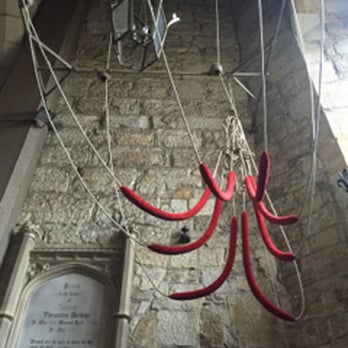
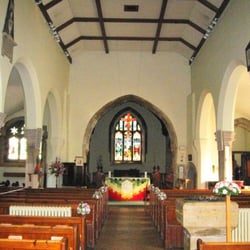
The Castle was closed, but we could look through the gates to see the extraordinary gardens, even as they were preparing to sleep for the cold winter. Walls surround the castle making it appear as a fortress. The St. John the Baptist Penhurst Church was open. It stands in the south west corner of Penshurst Place's park. We walked in via the village through the buildings of the small Leicester Square. The Old Guild House dating from 1475, sometimes called The Church House is one of only two still left standing in England. Every parish used to have one to house spits, crocks, utensils, fire fighting equipment, and weapons. The church yard cemetery contains burials from eight centuries and the stones date back to the 17th century. What was of the most interest to us were the ropes to ring the bells. A relative of our friends was a revered bell ringer for several decades until her recent passing. Some of the bells are from 1450. A walk through a back gate leads to fields where a great view of the various architectural periods of the castle can be witnessed. This is an enthralling place and well worth a visit if you are a history, church, or architecture fan. read more





15 years ago
More info about Penshurst Place and Gardens














Why does Yelp recommend reviews?
1 review that is not currently recommended
The reviews below are not factored into the business's overall star rating.

16 years ago


