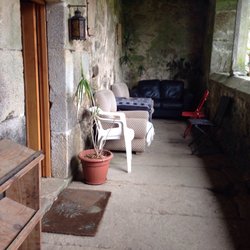
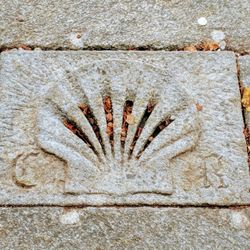
A small church like so many in Galicia (the 4 provinces of northwestern Iberia). Not hard to get to on winding roads from Santiago de Compostela, through Bertamiráns. The sanctuary's construction was authorized in mid-19th century. It was erected to house the body of the Roman child martyr, Saint Minia. The body of the young saint arrived at the barroque church after a long journey which is documented. IN 1781 the body was found in St. Calixto cemetery (catacomb of St. Inés) near Cádiz in southern Spain. It was eventually given to Luis Tobío, from Brión, who in 1848 reached Galicia with the urn.
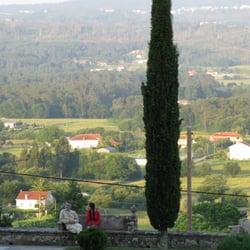
The church itself is simple, but the pilgrimage or romaría (romería in Spanish) celebrated in late September (26 and 27) is now traditional. It is always an experience to be present in a rural Galician village when one of these events takes place. The people, events and spaces are still tied to the 19th century or even earlier and each has its own personality because of the local cult and the legends and traditions that have sprung up around it. The surrounding area of Brión has other views of the scenery and a few historical spots one might also want to visit. Try:
http://www.galiciaguide.com/Brion.html
http://www.turgalicia.es/sit/ficha_datos.asp?ctre=121&crec=4970&cidi=G&menu=6&subMenu_1=1
http://noyaymuros.com/turismo-rural-galicia/brion/brion-lugares-de-interes/gmx-niv71-con16.htm
In Galicia there will always be a church nestled somewhere, an old noble's residence, ruins of towers or similar type of construction, to go along with the landscape. New highways may threaten some of the serenity once more plentiful, but for those not enamored of big cities, this is an area the offers explorers much to see, even after they've been several times. The same site, such as this church, will seem very different depending on whether one visits during the day, during mass, at night, or during the pilgrimage period. Once hooked by the small, out-of-the-way places, you will continue to return... read more