Cancel

    Open app

    Search

    Spital on the Street

    3.5 (2 reviews)

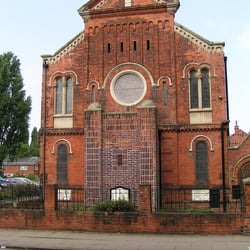
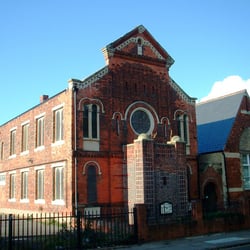
    Spital on the Street Photos

    Recommended Reviews - Spital on the Street

    Your trust is our priority, so businesses can't pay to alter or remove their reviews. Learn more about reviews.
    Yelp app icon
    Browse more easily on the app
    Review Feed Illustration

    18 years ago

    Helpful 0
    Thanks 0
    Love this 0
    Oh no 0

    18 years ago

    Lovely pretty building, nice to go and see

    Helpful 0
    Thanks 0
    Love this 0
    Oh no 0

    Verify this business for free

    Get access to customer & competitor insights.

    Verify this business

    Old Clee

    Old Clee

    5.0(2 reviews)
    17.2 mi

    Old Clee is great for interacting and work due to the multiple shops and a factory!For children…read morethere is plenty of space to play loads of different sports and a school.

    Old Clee is a village..odd to review a village? Well it is now swallowed up between Grimsby and…read moreCleethorpes but still feels like a village. It was once tidal and reading will and inventories for here shows it was a prosperous place, full of yeoman farmers and fishermen, and in the 1600's several had valuable bibles and could read. The houses around the church are interesting. Dutch gable ends built by overseers of the Dutch community draining the lands. Also an amazing Turor stile manor with barley stick chimmneys. Fletcher Christian (of The Bounty) is said to come from here. It is lanes and quite amid the noise of the neighbouring areas. I was part of an archeological dif here but no significant finds. The main focal point is Old Clee Church. The 2nd Oldest Building in Grimsby. Holy Trinity and Saint Mary. The Saxon Tower dates back to c1050AD, and was designed to warn locals of Viking invasion. It was once administered by Wellow Abbey in Grimsby and the Bishops Visitation reports at the time are really funny to read (NO history isn't stuffy!) where the monk taking services whiines and complains of not liking leaving his monastary and the walk of about 2 miles was bad and he got hungry etc. No shops or cafes etc but the church is usually open to look around and the architecture is worth a look too. Look for the stone of the witches head on the tower. Sometimes I can see it and sometimes I can't. I think she pops out.

    The Church of All Saints, North Street

    The Church of All Saints, North Street

    5.0(2 reviews)
    49.0 mi

    If you visit just one church in York (aside from the Minster), make it this one. This fascinating…read morelittle church, tucked away on the rather less touristy west bank of the Ouse, has a fascinating history and contains one of Britain's most impressive collections of mediaeval stained glass. History There has been a church here since at least the 11th century, and probably predating the Norman invasion. In the 12th century, the single-cell church was expanded with aisles, some of which incorporated Roman columns from the original Roman settlement of Eboracum. The chancel was reconstructed in the 13th century in the Early English style, but a major rebuilding in the 14th century saw the east end rebuilt in the decorated style, with the aisles extended to form a rectangular plan. Later in the same century, the tower and 120ft spire were built, and the fine chancel and aisle ceilings were added in the 15th century. The church On entering, the church has a slightly rustic and homely feel to it. With no crossing, the nave is divided from the chancel only by the rood screen, and the aisles run uninterrupted from east to west. The arcades are in the simplest Early Gothic style, with simple capitals. One of the original Roman columns can clearly be seen between the north aisle and chancel. But the main event is unquestionably the stained glass: almost all of it is mediaeval, and of very high quality. There is simply too much to describe here in great detail, but there is more information available on the church's website. But essentially, the north and south aisles and east end contain windows which are complete or almost entirely complete in their original form, and date mostly from the 14th and 15th centuries. The most famous are in the north aisle: first, the 'Corporal Acts of Mercy Window' shows a bearded man (who may be the donor, Nicholas Blackburn, a merchant and mayor of York), carrying out six of the seven bodily acts of mercy, ie feeding the hungry, giving drink to the thirsty, offering hospitality to strangers, clothing the naked, visiting the sick and relieving those in prison. The final act (burying the dead) is omitted. Next along in the aisle is the unique 'Pricke of Conscience' window, so named after a Middle English poem, written in the Northumbrian dialect, describing the last 15 days of the world. The panels depict the destruction of the world and the fate of humankind, each panel underscored with the relevant passage of the poem, and all intended to call people to repent. As you might expect, the images include some wonderful beasts, demons and devils, along with people in varying states of terror or torment. The families of the donors sit watching all this at the bottom of the window. Finally, in the south aisle, look out for the bright and colourful 'Orders of Angels' window in the south aisle: in one of the lower panels is a man wearing a pair of very uncomfortable looking 15th century spectacles. Other fittings of note include a fine 15th century memorial slab on the floor of the south aisle near the chancel arcade, and the imposing late 17th cetury pulpit. Don't forget to look up, either, to the chancel and aisle ceilings with their beautifully carved 15th century hammerbeams depicting angels and men of the church. Practicalities The church is in the Anglo-Catholic tradition, and Mass is said on Thursday at 12.45, and on Sundays at 12 noon and 17.30. The church is normally open for visitors in the middle of the day.

    Not as impressive as The Minister, but worth a look. In my opinion, this was an Archeologist gem,…read moremedieval structure. This church received my admiration twice on my 5 day visit. Super good vibes.

    Photos
    The Church of All Saints, North Street
    The Church of All Saints, North Street
    The Church of All Saints, North Street

    See all

    St Margarets Church

    St Margarets Church

    4.0(1 review)
    14.8 mi

    Why has Qype insisted on heading this as being in Louth? It…read moreis SOMERSBY quite a way from Louth!! Somersby, Lincs, 15th Century Church dedicated to St Margaret. The Father of the Poet Laureate Alfred Lord Tennyson was a Rector here and is buried here. Dr Tennyson wrote and delivered complex sermons to the mystification of his parishioners. He suffered from savage manic depression, epilepsy and alcoholism. Life at Somersby could be absolutely miserable. Alfred, Lord Tennyson (1809-02) born in Somersby educated Louth, Somersby and Trinity College Alfred succeeded to fame and fortune as the Poet Laureate to Queen Victoria. After his death on October 5 1892 he was buried in Poets' Corner at Westminster Abbey. His birthplace, the Old Rectory, (they don't like you standing looking) remains opposite the church in the Lincolnshire Wolds, hilly and picturesque country reminiscent of the Cotswolds west of Oxford. The Lincolnshire Wolds are deservedly known as Tennyson Country. Here the great poet lived for his first 28 years, with his parents and 10 siblings in the rectory at Somersby (now private), and began his poem ''In Memoriam.'' Tennyson Research Centre in Lincoln holds the most significant Tennyson archive in the world. Lincolnshire Archives holds the wider family's social and business papers. Somersby Rectory, across the lane from the church and where the eleven Tennyson children grew up, is now a private house. Although it was rebuilt and improved before the Tennysons moved in, Dr Tennyson enlarged the house and in 1819 built the 'Gothic Hall' (completely rebuilt in 1973 to correspond as closely as possible to the original.) In 1824, Dr Tennyson complained that there were 23 people sleeping in the house suggesting there must have been about 10 servants a big establishment for a country rector and a small house. The church is an ancient sandstone (Spilsby sandstone, locally referred to as greenstone, because it is partly composed of the mineral glauconite, which weathers to a definite green colour.) building and dates from the 15th century built some time before 1612 and restored in 1863-5. The church only seats about 80 people.. The interior was renovated in the middle of the 19th century and the roof remained thatched until the turn of the 20th century. Parts of the original church remain and centuries of weather have necessitated repairs, accomplished with contrasting, but pleasing, red brick. There is not much stained glass but some of it nevertheless dates from 1407 too; look out for two small window panels, one of which bears the arms of Crowland abbey with which Albinus had connections. There is also an interesting font bearing a rare carved Pieta. Original, too, is the south door with part of a Saxon shield nailed to it. One important extra, however, is the extremely rare churchyard cross, still complete and surmounted by a crucifix. Inside there is a fine George III Royal Arms and another more comprehensive Tennyson display including a marble bust of the poet. One of Tennyson's most popular poems was The Brook. Written in 1855, it is widely regarded as referring to the River Lymm which, in its infancy, is only a narrow stream at Somersby. I think I wrote before in my Hubbards Hills review that the brook there is the more likely place..here it really babbles and is known to have been a favourite place of the young man.

    Sir Moses Montefiore Synagogue

    Sir Moses Montefiore Synagogue

    5.0(1 review)
    17.2 mi

    This is a beautiful building which, when I was lecturing in Local History, I was invited to visit…read more The Ark was opened and it's beautiful objects beheld. The windoes are lovely too making the inside a myriafd of reflected lights. In 1276 when Grimsby was only a small settlement, valued only for the tidal creek of the River Humber, there was mention of 'the Jew, Ben of Grymesby' (sic) which demonstrates the length of time members of the Jewish faith have been living in the area. The Jewish cemetery, which I didn't realise existed, in Grimsby, was consecrated by the Reverends J.Goldsmith and B. Rosengard in March 1886,and the foundation stone for the Sir Moses Montefiore Synagogue in Heneage Road, which still stands as a Grade II listed building, was laid in July 1885, with the Synagogue finally opening in 1888. The synagogue in Grimsby is situated in Heneage Road, which at one time was close to the centre of the busy fishing industry. Not far away was the fish docks and the corporation docks, and it would have been surrounded by housing. It certainly would have been within 2000 cubits of many of the population in accordance with Jewish Law of the Sabbath. Members of the Jewish community have served on both Cleethorpes and Grimsby Councils and in 2001 President of the Synagogue Leo Solomon (who was once my music and maths teacher..I was in his choir)was made an Honorary Freeman of the Borough of North East Lincolnshire for his involvement in community issues. It still has a regular attendance.

    Photos
    Sir Moses Montefiore Synagogue

    See all

    Spital on the Street - religiousorgs - Updated August 2026

    Loading...
    Loading...
    Loading...