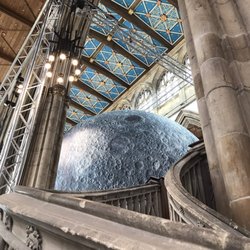
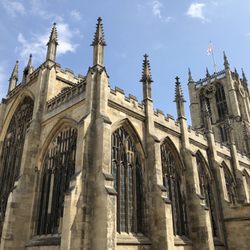
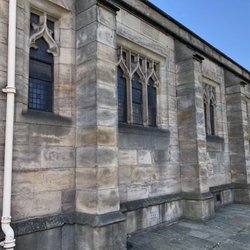
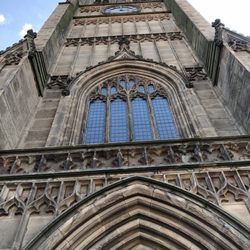
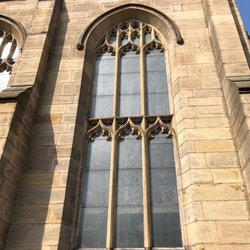
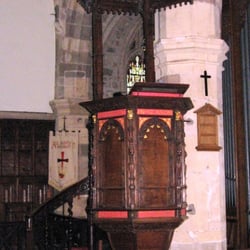
St Peter's Church Photos


Recommended Reviews - St Peter's Church
Start your review...



18 years ago
Barton-upon-Humber lies in the shadow of the Humber Bridge, midway between Lincoln and York.Barton is on the south bank of the Humber estuary and is at the southern end of the Humber Bridge. The Viking Way starts near the bridge. Barton developed thanks to its prime position by the Humber and in the 11th Century it was the most important port in the region. Because of its wealth as a trading centre many impressive Georgian and Victorian buildings were erected which make it an ideal place to wander through. One of its main attractions is its view of the Humber Bridge, which can be best seen from Barton's Clay Pits, which cover five miles. Once the home of a thriving tile and brick industry, the flooded pits are now a haven for wildlife and each has its own character. Visitors can take advantage of the facilities they provide by fishing, sailing, birdwatching or enjoying watersports. Although I wouldn't recommend it as a holiday destination Barton has a hotel on the water's edge and many sites for caravanning and camping, it also boasts several restaurants and traditional pubs. The area is perfect for walkers and ramblers who can follow the Viking Way. The trail stretches 14 miles from the Humber Bridge into the heart of North Lincolnshire. Some of Barton's main tourist spots include the traditional (market town) shopping streets, (a Christmas fair and carnival with stalls takes place each year) ,Baysgarth House Museum, Far Ings Nature Reserve, St Peter's Church, Bardney and Tyrwhitt Halls and St Mary's Church. It was once the home of Sir Isaac Pitman 1813~1897, inventor of the world-famous shorthand system, and Chad Varah, founder of the Samaritans plus Ken H. Harrison, the artist who draws Desperate Dan. A concern that started in a black-smith's shop in 1880 when the graceful Big Wheel (Penny Farthing) was the bicycle of fashion was the famous makers of the famous Elswick and Hopper Bicycles. Still made here and using only locals as employees. The main archeological dig of recent years was the church site. The Saxon church tower of St Peter, and there have been many Saxon archaeological finds within the town. The former church was reopened in May 2007 as a centre for medical research into the development of diseases, and ossuary, (not where you stable the 'osses) containing the bones and skeletons of some 3,750 people whose remains were removed between 1978 and 1984 from the 1,000 year old burial site, after the Church of England made the church redundant in 1972. Two churches in Barton-upon-Humber, St Peter's church and St Mary's church, are located only several feet apart, leading to speculation about the reasons for their close location. The reason the was that at the time they were built, the churches served two separate villages that later amalgamated into Barton-on-Humber. A ferry to Hull began in 1351, being granted by Edward II running until 1851, but this was superseded by a ferry at New Holland which began in 1820. The town is now mostly famous for it's American residents and the Kimberley Clark factory. read more

15 years ago
This is a lovely little market town very near the Humber Bridge. It boasts all the usual facilities, library, arts centre etc. Some lovely pubs and beautiful walks. Well worth a visit. read more