Cancel

    Open app

    Search

    Staithes Photos

    Recommended Reviews - Staithes

    Your trust is our priority, so businesses can't pay to alter or remove their reviews. Learn more about reviews.
    Yelp app icon
    Browse more easily on the app
    Review Feed Illustration

    14 years ago

    Helpful 0
    Thanks 0
    Love this 0
    Oh no 0

    Verify this business for free

    Get access to customer & competitor insights.

    Verify this business

    Whitby Museum

    Whitby Museum

    4.5(2 reviews)
    6.9 mi

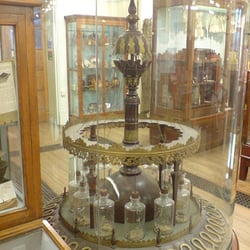
    An unusual museum in many ways reminiscent of Victorian style…read more Whitby Museum is an independent Museum founded in 1823 and run by Whitby Literary & Philosophical Society. The main hall retains the atmosphere of a Victorian/Edwardian Museum and has sometimes been called a 'Museum within a Museum'. It is also remarkable for the variety of its collections. An amazing collection of local fossils, natural history, model ships, carved jet, toys, costumes and social history. There are relics of the Scoresbys - famous whalers - and Captain Cook. Ships captains of the past brought back to the Museum unusual things from all the seven seas. The fossil collection with the wall mounted saurians and the wonderful jet collection are of international importance. Other very important collections are the Samplers, Ethnography, Ship Models and the Scoresby (2 whaling captains). If you are interested in natural history, James Cook, archaeology, ceramics, paintings, bygones, Whitby Abbey, toys and dolls or militaria you are bound to find something of interest. A large varied and ever growing collection of toys, dolls, books and games ranging from Elizabethan wooden dolls to the Pelham puppets along with an early Punch and Judy set. A host of other toys includes a furnished dolls house plus a selection of tin toys and wind up vehicles. There is also a varied selection of wax-headed, bisque and composition dolls, most in beautiful costumes. The really interesting part ..a MUST SEE! Whitby Museum is the home of the 'Hand of Glory' (used in many a novel) The Hand of Glory is the dried and pickled hand of a man who has been hanged, often specified as being the left (Latin: sinister) hand, or else, if the man were hanged for murder, the hand that did the deed. According to old European beliefs, a candle made of the fat from a malefactor who died on the gallows, virgin wax, and Lapland sesame oil (the candle could only be put out with milk), and the hand having come from the said hanged criminal, lighted and placed in the Hand of Glory (as in a candlestick) would have rendered motionless all persons to whom it was presented. (In another version the hair of the dead man is used as a wick, also the candle is said to give light only to the holder.) The Hand of Glory also purportedly had the power to unlock any door it came across. The other wonderful item is the 'Tempest Prognosticator'.a 19th century invention by George Merryweather in which leeches are used in a barometer. The twelve leeches are kept in small bottles inside the device; when they become agitated by an approaching storm they attempt to climb out of the bottles and trigger a small hammer which strikes a bell. The likelihood of a storm is indicated by the number of times the bell is struck. The Society also runs a library, an archives and lectures. A new wing has been recently added to the Museum and contains temporary exhibitions and costume galleries as well as displays on ship building, herbaria and the Growth of Whitby. The Library and Archives: Contains books and other resources on the history of the Whitby area. Members of the public are welcome Tuesdays to Fridays 10am to 1pm and the first Sunday afternoon of each month 2pm-4pm. Prices Adult £3.00 Child £1.00 Family £7.00 Concession £2.50

    This museum boast some 70,000 items and it's all packed in very densely. You'll find a complete…read morelist of their collection on the website but it includes such curiosities as dinosaur fossils, taxidermy birds and fish, an entire room a antique model ships (a few made of bones!), a petrified human hand, antique clothes and shoes. It was impressive, fascinating, and a little grotesque.

    Photos
    Whitby Museum - The Hand of Glory

    The Hand of Glory

    Whitby Museum - The Tempest Prognosticator

    See all

    The Tempest Prognosticator

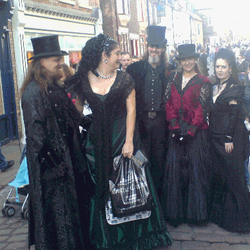
    whitby goth weekend

    whitby goth weekend

    4.8(5 reviews)
    6.8 mi

    I love the goth weekend despite not being a goth…read more The community is so friendly and accepting. Everyone talks and are happy to discuss their clothing. As an autistic person, crowds can be tricky but everyone is accepting. It feels like a super safe atmosphere.

    Twice a year Whitby has weekends when the place is overun with Goths. You can go to the event which…read morehas great bands or just go and stare at the insanity and the wonderful outfits. It is like the world of the undead has risen. The origins of WGW lie in an ad hoc meeting of around forty pen-pals who had met through NME and which was arranged in 1994.It states that Whitby was chosen for its Dracula connections, although probably more so because this had already fostered a sense of acceptance on the part of locals and businesses rather than any inherent romanticism regarding the location. The festival was held yearly until 1997, when it became twice-yearly, now held in April and October. It has since grown into one of the most popular gothic events in the world, attracting attendees from across the UK and around the world. Most of the events are held at the town's 1,000 capacity Whitby Spa Pavilion (known just as 'The spa', this is also where the 'Goth Market' is held), however, other venues such as The Metropole Hotel are used for overspill and The Resolution Pub for unofficial events. Although referred to as a weekend it includes events during the day on Friday and Saturday as well as fringe events on the Thursday, Sunday and Monday. It sells out fast so tickets need to be bought online well in advance.

    Photos
    whitby goth weekend
    whitby goth weekend

    See all

    The Sutcliffe Gallery - Lizzie who is on my wall

    The Sutcliffe Gallery

    5.0(1 review)
    7.0 mi

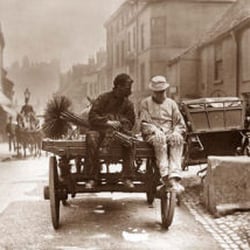
    The Sutcliffe gallery is a gem. I have a few framed prints that I bought in this shop and spent…read moreages looking through images of past times. Some are local characters like fishergirls Polly Swallow and Lizzy Alice Hawksfield. He produced magnificent studies of the characterful fisherfolk working around the harbourside with its picturesque square-rigged ships. Think Prospect of Whitby (the pub in Wapping) named after one of the ships. Love the one of the miller and the sweep on a cart..new meaning to black and white! Naked children swimming and playing (Water Rats)..children on doorsteps..farm workers..urchins. Lizzy spent many years on my wall as did one of ships in harbour. His most famous image is called Water rats (1886), a delightful picture which caused considerable controversy, and the wrath of the Whitby clergy for corruption of the young; it is said that they excommunicated Sutcliffe for exhibiting what they felt to be an indecent print to the corruption of the young and the other sex. By contrast the Prince of Wales (later Edward VII) purchased a copy of the picture. A photographer who is regarded as a pictorialist, there is also the documentary aspect of much of his work, portraying as it does the life of the times, with their street musicians, farmers, and other ordinary people. The full extent of his contribution was not recognised until long after his death. His work may also be seen at the Whitby Literary and Philosophical Society, Whitby. If you love Victorian scenes and photography..mainly of happy people then I defy anyone to browse this place and not come out owning a few prints. Background history for those interested: Frank Sutcliffe, born at Headingley, Leeds in 1853, set up his own professional photographic studio in a dis-used jet workshop in Waterloo Yard, Whitby in 1875. He remained in Whitby up until his death at the age of 88 in 1941..Sutcliffe developed a great affection for the busy little fishing port on the rugged North Yorkshire coast. These Whitby photos, together with his superbly composed landscapes and the farming community going about its daily tasks in the neighbouring moorland villages and valleys, eventually earned him over sixty gold, silver and bronze medals at exhibitions throughout the world between the late 1870s and the end of the 19th century. The vast majority of his negatives were on whole plate glass, the earliest being on wet collodion requiring the glass to be coated with the sensitive emulsion immediately prior to exposure of the plate. These negatives and the business were acquired by the Shaw family in 1959 after having been passed along through two other owners subsequent to Frank Sutcliffe. In 1965 Sutcliffe's plates were donated by The Sutcliffe Gallery to Whitby Literary & Philosophical Society, owners of Whitby Museum. Since that time a gradual process has taken place of transferring the images from the original plate, in the early days onto 8x10 sheet film, to create high quality duplicate negatives but now, with the means available to make high resolution scans, each subject is being digitally recorded on to two CDs, one for the Gallery archives and one for Whitby Literary & Philosophical Society. The main reason for doing all of this is the ethical one of obviating any further handling of the original negative.

    Photos
    The Sutcliffe Gallery - Sweep and miller

    Sweep and miller

    The Sutcliffe Gallery - Polly Sparrow on many Whitby advertising items

    Polly Sparrow on many Whitby advertising items

    The Sutcliffe Gallery - Frank Sutcliffe

    See all

    Frank Sutcliffe

    Robin Hoods Bay Interesting Stuff

    Robin Hoods Bay Interesting Stuff

    4.0(2 reviews)
    11.2 mi

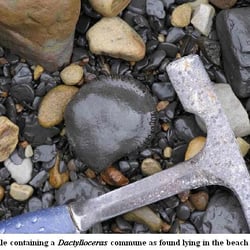
    Some of the interesting stuff I have found at Robin Hoods Bay. A day or two can be spentlooking…read more There are also long coastal (clifftop) walks to do. There is not a scrap of evidence to suggest that Robin Hood of Sherwood Forest folklore visited the Bay. The name is more likely to have grown from legends with local origin and probably from more than one legend. Robin Hood was the name of an ancient forest spirit similar to Robin Goodfellow and the use of the name for such an elf or spirit was widespread in the country. The first reference to Robin Hood's Bay comes in 1538 when it was recorded as a fisher townlet of twenty boats. At that time the settlement consisted of just fifty houses, but from that day to this the activities of the people living here have centred around and been dominated by the sea. Generations of fishermen have lived out their lives here, and smuggling looms large in the village's history. Many of the houses were once connected by a network of tunnels -- some still are -- that enabled smuggled goods to be easily transported from bay to clifftop without ever seeing the light of day. Millions of years ago, the land upon which Robin Hood's Bay is situated was once a deep sea. The sea animals of the time, buried in the mud, became fossilised, providing one of the best sources in Britain for the fossil hunter. Some of these fossils can be seen on display in the museum and can still be picked up on the beach if you look carefully. A plaque fixed to a wall near the Collecting-Box Mine tells a fascinating story of courage and determination. On the 18th of January, 1881 there was a violent storm, during which a brig called Visitor ran aground in Robin Hood's Bay. The weather was so bad it was impossible to launch the local lifeboat, so a remarkable decision was made. The lifeboat from Whitby -- six miles away - was taken from its housing and physically hauled overland. To make the task even more difficult, there were deep snowdrifts along the route, and at many points the two hundred men and eighteen horses involved were straining to pull their burden uphill.As the Whitby lifeboat inched towards the village, men from Robin Hood's Bay worked their way up the hillside towards it, clearing snow with their shovels. It is a testament to the sheer determination of Yorkshire folk that the lifeboat was launched just two hours after leaving Whitby, and after one failed attempt managed to rescue the entire crew of the stranded and storm-battered Visitor. The plaque was placed here as a memorial in 1981, exactly one hundred years after the events it describes. If you visit Robin Hood's Bay when the tide is out, you can spend a pleasant hour or two exploring the beach. There are tide pools worth investigating, fossils to be found beneath your feet, and all manner of seabirds to keep you company. Robin Hood may not have wandered these streets, but John Wesley, founder of the Methodist Church, certainly did. He preached at several locations in the village including Chapel Street, the Dock and the Square. In King Street, opposite the Mens' Institute, you can see the writer Leo Walmsley's house. Walmsley, who lived here from 1894-1913, wrote novels that revolved around a fictional village he called Bramblewick, a place that was clearly based on Robin Hood's Bay. His time here is commemorated with a plaque, and there is further information about the writer, his novels and his idiosyncratic characters in the Chapel Book Shop. In early December the town also hosts an Annual Victorian Weekend. This is a very popular event, with many visitors joining the locals in wearing Victorian costumes. Attractions include Punch and Judy shows, The Grand Turk Choir singing in the Dock, Professor Fiddlesticks on his unicycle, Morris Dancing and a Magic Lantern Show!


    There are also two great little genuine old-fashioned pubs down in the village proper. You need a…read morelot of energy to get up the hill afterwards (you must leave your car just outside the village at the top of the hill), but its well worth effort

    Photos
    Robin Hoods Bay Interesting Stuff
    Robin Hoods Bay Interesting Stuff

    See all

    Staithes - arts - Updated August 2026

    Loading...
    Loading...
    Loading...