Cancel

    Open app

    Search

    Sunshine State Arch Photos

    Recommended Reviews - Sunshine State Arch
    Your trust is our priority, so businesses can't pay to alter or remove their reviews. Learn more about reviews.
    Yelp app icon
    Browse more easily on the app
    Review Feed Illustration

    6 years ago

    Helpful 1
    Thanks 0
    Love this 0
    Oh no 0

    Verify this business for free

    People searched for Landmarks & Historical Buildings 264 times last month within 5 miles of this business.

    Verify this business

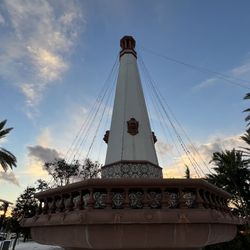
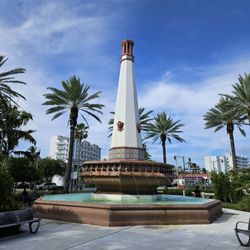
    Normandy Fountain - Benches everywhere

    Normandy Fountain

    4.8(4 reviews)
    22.0 km

    Everytime that I drive by Rue Vendome street, my eyes are pulled towards the Normandy Fountain…read more There is something about this structure that sits in the middle of the Normandy neighborhood in Miami Beach. I see people over there sitting on the benches or tourists taking photos. Usually on weekends there are community events taking place, like farmers markets, live bands playing, arts and crafts festivals, cultural events, and children's activities. Today, the South Beach Jazz Festival is performing. I hope these special events continue for many years to come.

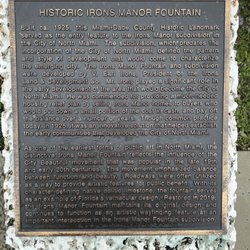
    Located on the plaza at Rue Vendome is the Miami Beach historic landmark, the Normandy Fountain…read more During Florida's land boom years in 1925, the fountain and four apartment houses were the first structures built on Normandy Isle by Henri Levy who founded the community. It had a French theme in homage to Levy's homeland. Levy made his fortune by building a chain of movie theaters in Cincinnati and subsequently moved to Miami Beach in 1922. Normandy Isle was created from Warner-Meade Island, a swampy land mass in Biscayne Bay west of 71st street. Levy dredged for 24-hours a day over a two-year period to create Normandy Isle. Levy also spearheaded the construction of the 79th Street Causeway. In 2014 the fountain underwent a $350,000 restoration and the interior plumbing, electricity, and concrete was repaired. Damaged and missing tiles were replaced and lighting was added to the fountain and surrounding walkways. Plumbing fixtures that weren't there were added so the water could run. Water flows out of the heads of the lions that adorn the outside of the fountain. The City of Miami Beach uses the plaza at Rue Vendome to stage city events in front of the Normandy Fountain. Past events have included concerts at First Fridays and the Normandy Village Marketplace. Currently the fountain is undergoing another renovations along with improvements to the plaza. Hopefully the improvements will ensure the historic fountain survives another 100 years.

    Photos
    Normandy Fountain
    Normandy Fountain
    Normandy Fountain

    See all

    Spanish Monastery & Gift Shop

    Spanish Monastery & Gift Shop

    4.1(21 reviews)
    18.6 km

    You won't find a European building this old in the Americas! Built in the 12th century in Spain,…read moreit was packed up and brought to Miami last Century. Peaceful grounds and remarkable antiquity, the Monastery offers a unique experience in Miami. 44 minutes is more than enough time for a self-guided wander across the grounds, but arrive by Noon for a guided tour (which I missed). Also, check the calendar on their website as they close for many private events.

    I came to this establishment because I greatly enjoy history and wanted to have the opportunity to…read moretake photos of the architecture and perhaps a video explaining what I've learned about this beautiful place. Unfortunately, the business that runs this monastery is predatory in nature. As it happens, my ancestor, William R. Hearst, was the original proprietor of the monestary when it arrived in the United States. They insist that photos can only be taken from Wednesday to Saturday, and you must schedule an appointment with a fee of nearly $400 to take portraits or photographs. The woman at the front desk was preventing us from entering the monastery without discarding any equipment that can be used for taking photos. I will add that she was extremely rude, yelling at me and my mother when we were clearly unaware of the rule. Don't come here; it's a complete waste of time; the history is very fascinating, and the building seems to be relatively well kept, but they not only charge you for entry, but additionally charge for you to take photos. $400 mandatory. There are many other beautiful historic places around Miami to visit; I would never recommend going here. Save yourself the $410 and go to the nearby lighthouse, or early 1890s church in Miami instead. The Art Deco District is also very nice. The fact that they charge an exorbitant fee to enter the premises for taking photographs is highly reminiscent of the exact reason why Martin Luther had nailed his list to the door of the Catholic Church. God frowns upon an institution that calls itself religious and charges up the wazoo for people to share information about it. To the people running this facility: do better. Be nicer. Let people explore and interact with this treasure.

    Photos
    Spanish Monastery & Gift Shop
    Spanish Monastery & Gift Shop
    Spanish Monastery & Gift Shop

    See all

    Sherwood Forest Indian Park

    Sherwood Forest Indian Park

    5.0(2 reviews)
    16.3 km

    Sherwood Forest Indian Park is a small park located in the charming El Portal neighborhood of…read moreMiami. El Portal means the gate in Spanish. At one time there was two huge wooden gates at the entrance to the village on Northeast Second Avenue but they were taken down in the 1940s. El Portal was annexed into the City of Miami in 1925 but with the arrival of the Great Depression, Miami gave it up its jurisdiction and El Portal was incorporated as its own village in 1937. Sherwood Forest refers to one of three divisions form the Village of El Portal along with El Jardines, and El Portal. In the Sherwood Forest subdivision is the Sherwood Forest Indian Park that lies a block west of an ancient Indian burial mound. An elevated circle is thought to be a burial mound for seventh-century Tequesta Indians. This Miami-Dade County Historic Site was believed to have once been the center of Tequesta life. The Tequesta who had lived in the area for thousands of years were wiped out by slavery and disease when the Spanish came to Florida in the 1500's. In the 1920's the mound was declared a historic site, the first such archeological discovery in the area to be protected with that designation. Today El Portal is known as a bird sanctuary and you can expect to find peacocks on the streets. If you come to the park you wont see much. There is a small trail, fountain, and benches. There isn't even a parking lot. The real worth of the land is in it's connection to a Pre-Columbian civilization.

    This is a really cute gem of an area, one way traffic, small roads, hidden away and is basically a…read moretree lined secret residential area. I will surely be back at some point to investigate this new found area of mine.Sherwood Forest Indian park is smack bang in the middle of this secret place Here is what I found out about it once iI was home, after being intrigued about it. The Village of El Portal is a secluded, modern Garden of Eden that encompasses barely a square mile. It was incorporated on December 6, 1937, A.D. at the residence of H. H. Filer. There were 25 homes that were included in this incorporation of El Portal. The Village was incorporated by 34 out of 41 votes. Mr. W.O. Robertson was appointed Mayor. The members of the Women's Club, formed by Dr. J. McCormick, was very active. They did many public affairs and administrative functions for the council who often were their husbands. Three divisions united to form the Village of El Portal: Sherwood Forest, El Jardines, and El Portal. Sherwood Forest --a section of El Portal that possesses the most naturally pleasing 75-foot tall oak trees, manatees, and exotic birds and reptiles. The initial vision of El Portal was to make it similar to Coral Gables. The Sherwood Forest House borrows its name from the surrounding subdivision developed by D.C. Clarke during the 1920's land boom. The Mound is known for the cave. It is debatable as to who built the cave. Some say the French Huguenots, some say the Tequesta Indians and others say a natural phenomenon. The cave had many uses during the years, including providing a cool place to sit during the summer days. The Indian Mound is one of the highest points in Miami-Dade and its history dates back to the year 600 when ancient Tequesta Indians migrated and settled at the Mound while passing by on the Little River. The Mound was one of the few areas above Water. It was actually six to eight feet higher than it is presently. Miami-Dade County declared the Indian Mound a historic landmark in the 1920s. It was the first such archeological site to carry this honor in the County. El Portal is a Bird Sanctuary. The many trees provide a large canopy that the birds enjoy. Many exotic bird species have been sighted including the peacocks that may be seen on any given day. The Radar Memorial United Methodist Church is located on 87th Street and NE Second Avenue. It was formed in 1923. It is one of the oldest churches in Miami-Dade County. An Arch, known as: "the gate," may have stood at 85th Street and NE Second Avenue. It was made out of wire and wood and had two Robin Hood type figures on each side. The oldest home in El Portal is truly a formidable sight to behold. It was moved from its original location off of Biscayne Boulevard in 1910. This house had several uses over the years from entertaining to acting once as a medical clinic back in the 1930s. Trailblazers in El PortalClerow "Flip" Wilson was a well-known comedian and actor. Mr. Wilson became famous while serving in the United States Air Force. He was asked to tour military bases to cheer up other servicemen. His barrack mates gave him the nickname "Flip" stating that he was always "flipped out". Garth Reeves was the owner of the newspaper The Miami Times. His home was always known for its beautiful landscaping. Betty Wright is a soul and R&B singer. Her mother: Rose, her sister Jeanette and brother Phillip are longtime residents of El Portal. The part of Ms. Betty Wright's song that mentions her mom saying, "I know that you're not going to sing that song" ("Tonight is the Night") occurred while Ms. Betty Wright was at home in El Portal. Recent History In December 2002, the Village of El Portal voted to change from a council form of government to a Council-Manager form of government. On January 28, 2003, the Village Council voted unanimously to appoint Newall Daughtrey as its first Village Interim Manager.The beautiful Village of El Portal values nature and takes pride in being diverse and peaceful. As we move forward, in the 21st century, we're preparing to face the challenges of a small village and at the same time remain connected to our past and true to the values that make El Portal--"The Gate".

    Photos
    Sherwood Forest Indian Park
    Sherwood Forest Indian Park
    Sherwood Forest Indian Park

    See all

    Haulover Sandbar

    Haulover Sandbar

    4.6(29 reviews)
    21.8 km

    Legend has it the name Haulover came from a fisherman named Philip Edward Baker (1832-1898) who…read morewould haul his sponge boat from Key Biscayne over the dunes by cutting a path through the mangrove forest. An area on the maps marked it as Baker's Haulover in 1823 which people then called Haulover as other generations of fisherman continued the practice. During the Prohibition era, boats would arrive from the Bahamas to deliver whiskey. Alcohol would be to be hauled over the beach to the bayside where speed boats would take it north up north up the Intracoastal Waterway. The inlet where Haulover is located was created in 1925 to increase access to the Atlantic Ocean. The Haulover sandbar was created as the tide rolled in and out over the north end of Biscayne Bay in Miami. The sandbar had a sand shoal that surfaced during low tide. It was as if there was an island oasis in the Bakers Haulover Inlet. When the weather was good, the sandbar was highly visible. Hundreds of boats would converge to enjoy floating concession stands and people would hang out and party on the clean sand left behind by the inlet currents. Alas the Haulover Sandbar is no more. It was dredged in 2021 by the US Army Corps of Engineers who felt it was blocking boat traffic and that the beach-quality sand could be put to better use by shoring up nearby Bal Harbour Beach. Thanks for the great memories and RIP Haulover Sandbar.

    Gorgeous sandbar with plenty of nice people to meet. My friends and I spent nearly the entire day…read morehaving a blast at this sandbar yesterday. There are people who sell food, treats, and can also help you book fun water activities. There's so much space so you're able to dock your boat anywhere and just enjoy! Very relaxing. Can't wait to go back.

    Photos
    Haulover Sandbar
    Haulover Sandbar
    Haulover Sandbar

    See all

    Barefoot Mailman - Close up of marker..  faces the water

    Barefoot Mailman

    4.5(2 reviews)
    21.7 km

    The Barefoot Mailmen were US postal workers who delivered the mail in South Florida from 1885 to…read more1893 by walking barefoot on the beach from Palm Beach to Miami. Before the mailman started to route, a letter from Lake Work to Miami could take anywhere from 6 weeks to 6 months to arrive and would be routed through Cuba. The annual salary of a Barefoot Mailman was $600 a year. The trip started on Monday and took three days to get to Miami, Then they would turn around and come back for a round trip of 136 miles. Eighty miles were walking and fifty six miles were by boat. You can find statues and markers dedicated to them all down the coast from Lantana to Miami. My favorite statue is located at the base of the Hillsboro Lighthouse where James "Ed" Hamiliton mysteriously vanished in 1897 while crossing the Hillsboro Inlet. The three day trek down the coast was not without it's danger. This sign dedicated to the mailman is located on Haulover Beach in Miami. The Miami portion of the trip took place on Wednesday when the Barefoot Mailman was transported by boat down the New River to its inlet and then walked down the beach until reaching Baker's Haulover Inlet at the north end of Biscayne Bay. .The mailman would then sail across Biscayne Bay to deliver the mail in Miami. The return trip would begin early on Thursday. Look for the Barefoot Mailmen at the edge of the sidewalk in front of the Lifeguard Station. There is no parking in this area unless you are handicapped. It was quite amusing trying to find it but if you know where to look it is not hidden at all.

    I'd first heard about the Barefoot Mailmen in Fort Lauderdale. Then later I saw a statue and heard…read more"his" story in Hillsboro near the lighthouse there. There were about 15 of them over the years from 1885 to 1892, that were contracted to deliver the mail between Hypoluxo and Miami. They traveled by boat and by foot on the beaches. This historic marker on Haulover Beach is dedicated to one of the stops here on the mail route. I'd read about the marker. We drove to the approximate address and tried to find it. There isn't really public parking there -- mainly handicapped spots and places for the coast guard station employees. At the first stop, I got out of the car, but didn't see it. We took the next turn in to the beach. I walked over the sand back to our original stop. I should have kicked off my sandals. There was the marker in the sand facing the beach, a little worn for wear from the ocean breezes and the blowing sand. There's a little mystery to the legend about the last mail man disappearing. It makes a good romantic Florida story. This mail service ended when a newspaper owner/real estate promoter built a "road" to connect the southern end of the Lake (Lake Worth) to the bayside where a pioneer community called Lemon City (later Miami; now Little Haiti in Miami) was located. He also started a "stage line" on his road and took over mail delivery.

    Photos
    Barefoot Mailman - From the beach....

    From the beach....

    Barefoot Mailman

    See all

    Biscayne House of Refuge - 2/25/2026

    Biscayne House of Refuge

    4.0(2 reviews)
    22.7 km

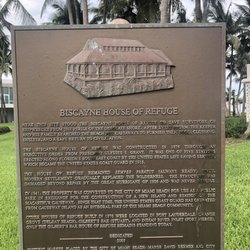
    The Houses of Refuge were federally operated life saving stations that were built on the beach so…read morethat the keeper could rescue ship wreck victims during a time period when the main form of travel and hauling goods was by ship. The houses were spread along Florida's coast and were often very isolated. The Orange Grove House of Refuge was the last place barefoot mailman Ed Hamilton spent the night before he disappeared forever into the Hillsboro inlet. What exactly happened to him is a mystery that has never been solved. The House at Gilbert's Bar in Stuart was one of ten built on the coast of Florida and the only one to remain in existence. The Biscayne House of refuge was founded in 1876. William Fulford, a ship captain received an appointment to become the keeper of the house. There weren't any ship wrecks to contend with so he along with his wife hosted guests at the house and it became a hotel of sorts. The House of Refuge became in effect, the first hotel in Miami Beach. Ten miles from the House of Refuge Fulford spotted a ridge of land that he wanted to homestead. He was eventually granted 160 acres of land. 30 years later the land was the town of Fulford which then became Fulford by the Sea. In 1927, the name of the town was changed to North Miami Beach. The Biscayne House of Refuge was damaged beyond repair by the Hurricane of 1926. In 1941 the land was turned into a park. Where the Biscayne House one stood a marker resides commemorating it's existence.

    There's not much to see here. It's just the historical marker. But it's such a part of Florida's…read morehistory, that if you're in the area, you should take the time to stop and read it. You can park on the street across the way and walk over. I'm familiar with the Houses of Refuge because of the one that had been located in Fort Lauderdale (Birch State Park then later near Bahia Mar). But I didn't realize there were 4 others -- in Delray, Stuart, Ft Pierce and this Biscayne one in Miami-Dade County. In 1876, President Grant ordered that these houses should be built along the SE coast of Florida. It was erected by a group that would later become the US Coast Guard. Florida's southeast was a pretty desolate area then. The idea was to look out for sailors and survivors of shipwrecks after storms. It remained at this location where it stood until it was damaged by a hurricane in 1926. The property later went to Miami Beach to become a public park. It's a park now. Sadly, all the other Houses of Refuge no longer exist, either, except for the one that was located in Stuart, Florida.

    Photos
    Biscayne House of Refuge - Marker

    Marker

    Biscayne House of Refuge - Historical marker

    Historical marker

    Biscayne House of Refuge

    See all

    Sunshine State Arch - landmarks - Updated June 2026

    Loading...
    Loading...
    Loading...