Cancel
Open app
Search
Sign Up
Log In
Nearby
Bookmarks
Start a Project
Add a Business on Yelp
Add Review
Directions
Start your review...
Get app
15 years ago
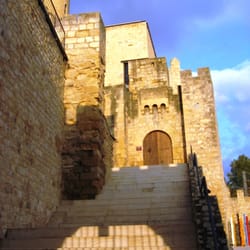
Very nice Castle with beautyful cliffs. Sarah conner gots married in this Castle with marc teranzy . read more
Passeig del Limònium 24
43008 Tarragona
Spain
Hours
What time does Tamarid Burg open?
What time does Tamarid Burg close?
Get access to customer & competitor insights.
What a special find... an amphitheater from the 2nd century. It's gorgeous overlooking the…read moreMediterranean Sea.
I toured the Roman Amphitheater during the hottest part of the day and still enjoyed it immensely…read more It was built at the end of the 1st century AD and the start of the 2nd century, AD. It has a long rich..dark history. It was incredible to be able to walk around and experience something from so long ago. I spent about an hour here and learned a lot.
See all
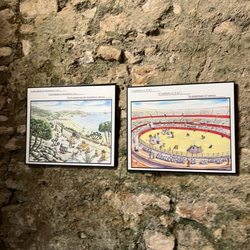
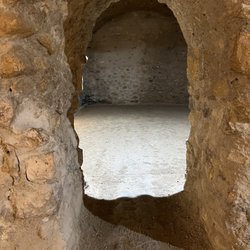
This site is open air and underground ruins of a Roman chariot racing track, circus area and a…read moretower. It was built in the 1st century AD and probably used through the 5th century. There are long underground tunnels with rooms leading off of the tunnels and lots of stairs going up to the tower area. Plan on walking a lot. It is an amazing site that is in great shape for being so old.
Very nice place to visit - be prepared to walk and climb steps! It costs 1.70€ if you are a…read morestudent, double for non-students. You essentially walk in tunnels underground of what used to be a Roman circus (think more chariots rather than ferris wheels) and there is information in English about what you're looking at. It's self guided and you can take as much time as you need. We spent probably an hour or two walking around and reading. The views from climbing the steps (or taking the elevator) of the town are beautiful! You can see the Amphitheatre and the beach from the top of the lookout. If you're in Tarragona, this is a must see site.
Placa de la Font, is the main square at the foot of the old town in Tarragona, Catalonia, Spain…read more Close to Rambla Nova, the Town Hall can be found at one end. The outer are edges of the square are adorned by a variety of reasonably priced restaurants including a Chinese, Galateria and various Pasta and Paella restaurants, with seating inside or out, beautiful on a balmy evening. A word of warning, avoid Rufi Restaurant, poor quality food, terrible facilities shared with a constant stream of drug users. The staff are disinterested and unkempt. Hygiene problems are a definite issue in this establishments.the toilets have to be visited to be believed, not clean Placa de la Font Hostal Noria., El huevo Frita, Rufi, cappuccino, Bardela font, Fruit and Veg shop, Tabac, Dancing Shop, Chinese, Toasted sandwich shop, Pharmacia, Gift Shop 2 mins to old town and amphitheatre
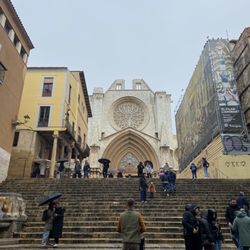
Great place for pictures on top of a small hill. The architecture in Spain is magical and this…read morecathedral is nothing less than spectacular.
We are cathedral buffs, and we enjoyed the "no rush" style of the self run tour. Usually, with a…read moreguide, we feel rushed and therefore enjoy it less. Overall, an excellent experience.
The views are amazing. Don't necessarily need to hit the beach to enjoy the negative ions. Just…read moreenjoy it right from where you stand.
The Balcó del Mediterrani, or "balcony to the Mediterranean," is one of Tarragona's iconic tourist…read moredestinations. It is located at the end of the The Rambla Nova and It showcases amazing coastline. 300 meters long promenade built over the railway on 23 meters cliff offers the best views in town. The vistas overlook the sea, the Roman Amphitheater and kilometres of beaches. Grab the food or at least fresh squeezed orange juice from the restaurants close by and enjoy incredible vistas as long as you can.
Monument Roger de Lluria
Cherub & goose fountain
Mar Mediterrania
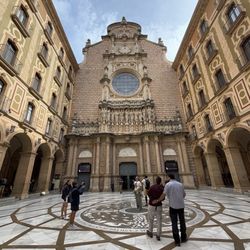
Beautiful monastery, located against the backdrop of the Montserrat mountain where the peaks are…read moreliterally surrounding the monastery. The Cathedral that is at the heart of this monastery is very ornate and gorgeous with classic European craftsmanship from an age gone by clearly visible throughout the cathedral. As beautiful as the monastery is, the elevated views from this location are drop dead gorgeous and worth the trip alone. Unfortunately, on the day we visited, there was a mass going on where they closed viewing of the black Madonna for the day to not be in conflict with the mass which is standard practice. So you need to keep an eye on this if you plan to visit this site. The other negative thing is that the place was slammed with tourist and I felt that the outlying buildings were completely commercialized to sell trinkets to the tourist that visit. I personally am not a fan when places of worship do this, but I do understand that this type of operation probably funds the maintenance and operation of monastery year-round and is probably a necessary evil in this case. All in all, this is one of the main attractions in the Barcelona area and should be included on any itinerary during your visit here. Opportunities to see beauty like this along with it's historical relevance are far few and in between and should be taken advantage of anytime you're given this opportunity.
Quite the journey but makes a great day trip outside of the city. Although it can get very crowded…read moreup there, it's still relaxing and surreal. Book tickets in advance as they sell out, especially the choir which is the highlight of the day. They perform at 1:00pm sharp.
Courtyard
Inside the church
Abbey
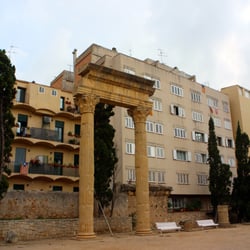
This was the main commercial Forum during the Roman period, and consisted of an impressive…read moreporticoed square containing rows of shops, taverns and other commercial buildings. Today, the site includes some impressive columns, and several arches which would have contained shops and taverns. Around these are the rather more basic remains of houses and other buildings, with features such as water cisterns, olive and wine cisterns and other features of domestic life. The site is situated in the western half of the modern city, close to the railway station and is surrounded by incredibly dreary blocks of flats, separated from the remains by an ugly concrete screen. The site is split in half by a modern road, which you cross by a small footbridge.
Absolutely breathtaking! A must visit when in Tarragona if like ancient roman civilization.read more
This was one of my favorite sites in Tarragona. There is a small entrance fee and bathrooms…read moreavailable. In the 2nd century B.C. a wall was built around Tarraco. The wall originally ran around 3,500 meters and about 1,100 remain. It borders present day Tarragona's Old Quarter and is the oldest Roman construction still conserved outside of Italy. The walls were reinforced in the 16th and 18th centuries. There are shaded gardens, beautiful sculptures, cannons, and historical signage throughout the site.
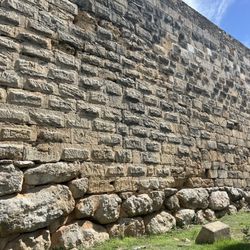
The best preserved part of Roman Tarragona are the walls which still encircle the old town, and a…read more1.5km section has been landscaped and is open to the public as an archaeological walk. The lowest layers of the walls consist of large rough-hewn boulders, which survive from the Iberian period. These include two impressive but primitive doorways, which contrast with the more sophisticated Roman walls above, which date from the 3rd century BC and are up to 15m high. This makes them the oldest preserved Roman remains outside Italy. The walk also takes in a number of the bastions built by the British in 1707 during the Wars of the Spanish Succession, complete with cannons, as well as elements from the mediaeval period. Half way along there is a display housed in several vaults describing the history and development of the walls from Roman to modern times. The walk provides good views over the northern half of the modern city and the hills beyond. The walls form part of the Tarragona UNESCO World Heritage Site.
Situated on an impressive and commanding site at the northern end of the Parc de Foix, with superb…read moreviews over the impressive Foix reservoir, the Castle of Castellet dominates the small (and rather well-to-do) settlement that has grown up around it. The castle, heavily restored, is famous for its attractive grouping of square and round towers, and the adjacent (and separate) hillside chapel. Built in the 10th century, it is first referred to in a document dated 977AD, although most of what you see today is the result of a series of mediaeval rebuilding, reflecting its major strategic importance during the period of the reconquest of Catalonia by the Christians from the Moors, when it was owned by the Counts of Barcelona, and through the mediaeval period (when it was a possession of the joint Catalonian and Aragonese Crown) until the 16th century. Thereafter, the castle slowly fell into ruin. Restoration began in the 1920s and 1930s, but what you see now is essentially the result of its acquisition in 1999 by the Albertis Foundation, itself sponsored by the large Spanish infrastructure group of the same name, which acquired the castle as a home for its research work on the environment and transport. The renovation has produced a thoroughly modern corporate presentation inside while respecting the fabric of the original castle. It's not an approach normally adopted in the UK, but it at least ensures a safe future for the building. The most notable features are its oval 10th century tower and walls from the 15th century. The castle itself is only open for guided visits on rather limited hours around lunchtime at week-ends. Inside, there is a small museum of the site's history. There's a small car park next to the castle, with a rather larger car park at the foot of the hill. Slightly closer access can be had by parking close to the village's classy restaurant, although this is reserved for patrons when the restaurant is open. Alternatively, the castle lies on a number of long distance footpaths between Sitges, Vilanova i la Geltrú and Vilafranca del Penedès.
Brands by name
Articles by date
Small but perfectly formed, this tiny castle in the centre of la Geltrú was rebuilt between the…read more12th-15th centuries on the base of an earlier 11th century fortification, documented in 1080. It was restored in 1919 by the architect Jeroni Martorell and, after a spell as the town's museum, is now used by the Generalitat Government of Catalonia as an archive. The building preserves lovely decorative elements from the gothic and renaissaince periods in its window and door detailings, especially in the small inner courtyard.
On my first field trip outside of Barcelona after more than a year... where did I decide to go?…read more A Sanatorium! And what a jewel of a building! Designed by the fabulous Domènech i Montaner, this is the epitome of Art Nouveau aka Modernisme. If you're ever out in Reus, you must visit this place. The audio tour is chock-full of interesting information, and basically lasts about 30 minutes. And at only 5 euros, how can you go wrong? I still can't believe this was a sanatorium... If you got the right room, you can get views of the city and the sea... Of course only the men's wing was built in this style... The tiles! The built-in furnishings! Everything about the design and architecture was thoughtful, gorgeous and amazing.