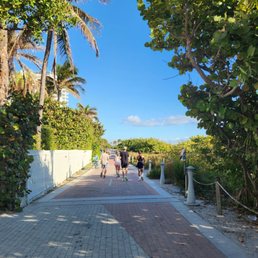
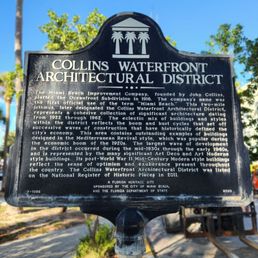
The Florida Historical Marker Program is one of the Division of Historical Resources' most popular and valued public history programs. It raises awareness of Florida's cultural history while enhancing the enjoyment of historic sites for residents and tourists. The blue historic markers tell the stories of the people and places that were important to Florida's history and they can be found in front of churches, schools, roads, archaeological sites, battlefields, and historically important buildings. I discovered this marker in the 36th Street Park providing information on this historic district in Mid Beach in Miami Beach.
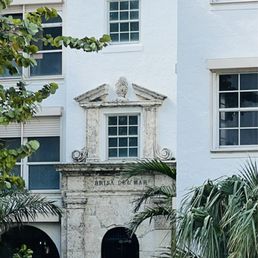
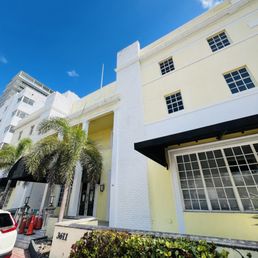
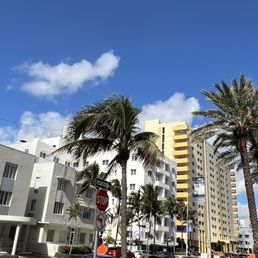
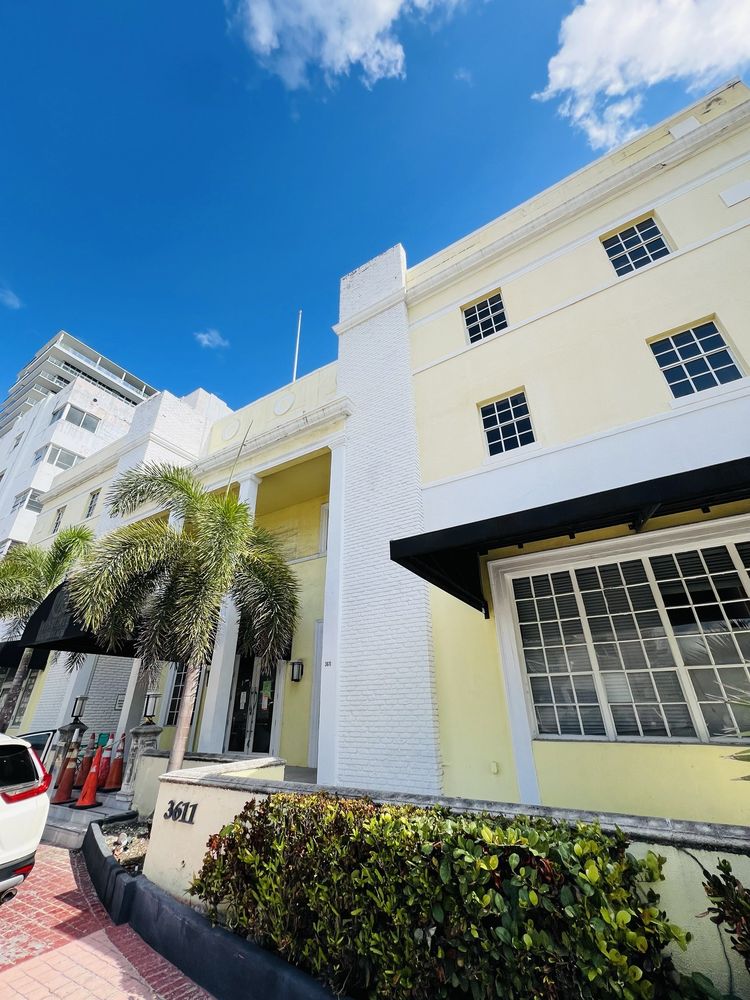
In 1916 the Miami Beach Improvement Company, founded by John Collins, platted the Oceanfront Subdivision on a two mile isthmus. The Company named the area Miami Beach. Today the Collins Waterfront Architectural Historic District includes 110 buildings and structures near Collins Avenue. The earliest dates to 1922 and the majority were built in the late 1940's, 1950's and 1960's. Architectural styles include moderne, Art Deco, Mediterranean Revival architecture, and the local Miami Modern style called MiMo, a type of mid century modernism architecture style that developed after WWII from the 1940's to the 1960's. Its hallmark is modern simplicity of form influenced by South Florida. Many of the buildings in this district are large resort hotels. The district is defined by the Atlantic Ocean on the east and 24th Street, Indian Creek Drive, Pine Tree Drive, and the Collins Canal.
The Collins Waterfront Historic District was placed on the National Register of Historic Places on November 15, 2011. Buildings on the National Register of Historic Places in this district include the Casa Faena, the Cadillac Hotel, designed by Roy France, and Ocean Spray Hotel. read more