Long before European settlers arrived, the area was inhabited by Native American tribes such as the Keyauwee, Cheraw, and Tuscarora. Archaeological finds along the Yadkin and Pee Dee Rivers suggest that indigenous peoples lived, hunted, and traded in the region for millennia, leaving behind a legacy of earthen mounds and artifacts that hint at a complex and vibrant culture.
The county itself was officially formed in 1841, carved out of the western portion of Montgomery County. It was named after John Stanly, a prominent politician from New Bern who served in both the North Carolina House of Commons and the U.S. Congress. Interestingly, Stanly had no direct ties to the region, and his name was chosen more for political favor than local connection. The county seat, Albemarle, was established in 1857 and named after George Monck, the Duke of Albemarle, a nod to colonial-era traditions.
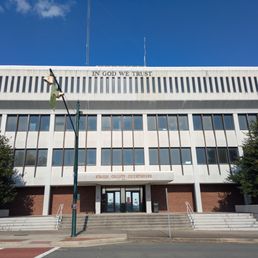
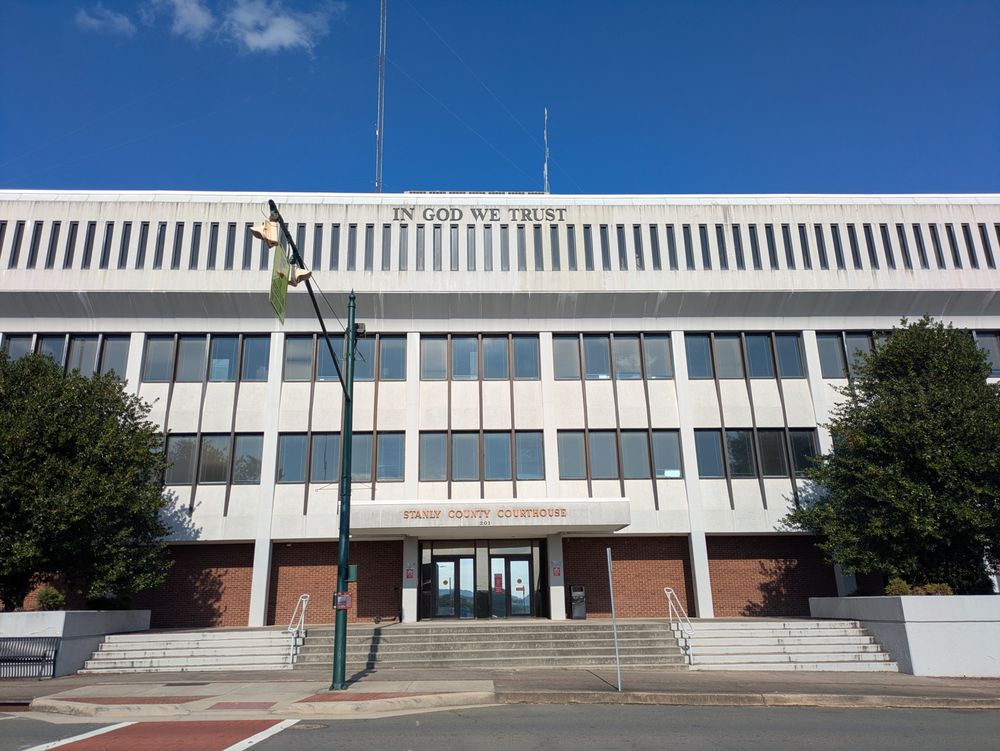
The county courthouse a four story white colored concrete and glass structure where the west-facing fourth floor projects outwards a bit. It is a distinct "modernist" style, completed in 1972 and designed by Williams & Associates. The rectangular footprint that emphasizes clean lines and functional design over ornamentation. Inside, the courthouse lobby includes a county seal embedded in the floor, a symbolic gesture that ties the building's modern form to its civic purpose. The structure also houses subterranean vaults for public records and features a tunnel connecting it to the county jail, designed for secure prisoner transport.
There are public lots and street parking all around. I had no problem walking the grounds and taking photos today.
[Review 733 of 2025 - 4165 in North Carolina - 24293 overall] read more