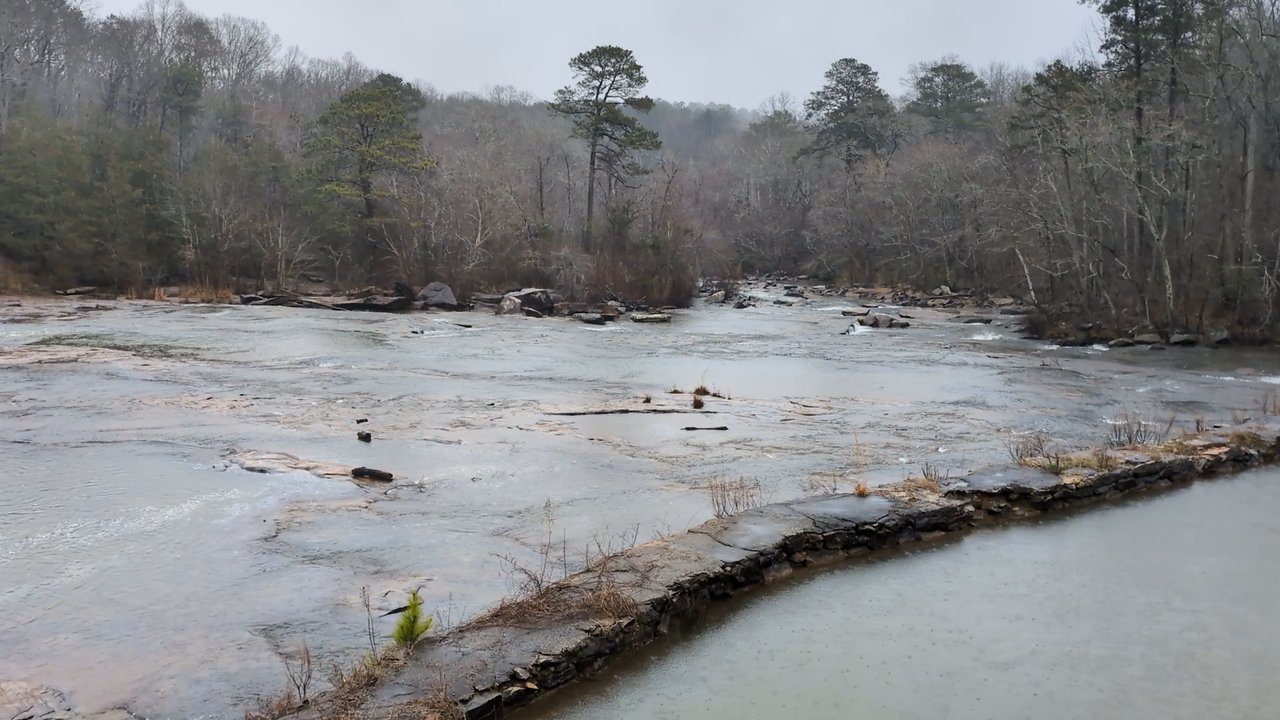
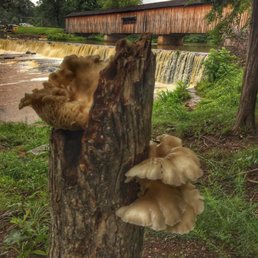
On this rainy and chilly Sunday morning the park felt almost suspended in its own quiet, the kind of stillness you only get when the weather keeps everyone else home and you end up with the place to yourself. No one was camping or fishing or wandering the grounds (though I did see one park ranger pickup truck on patrol), which meant I had time with the real centerpiece of the park, the Watson Mill Covered Bridge, and the soft sound of the river underneath it carried farther than usual in the damp air.
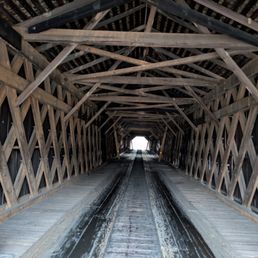
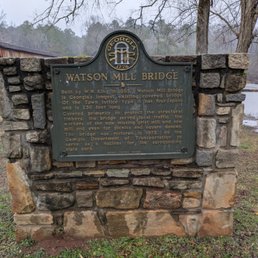
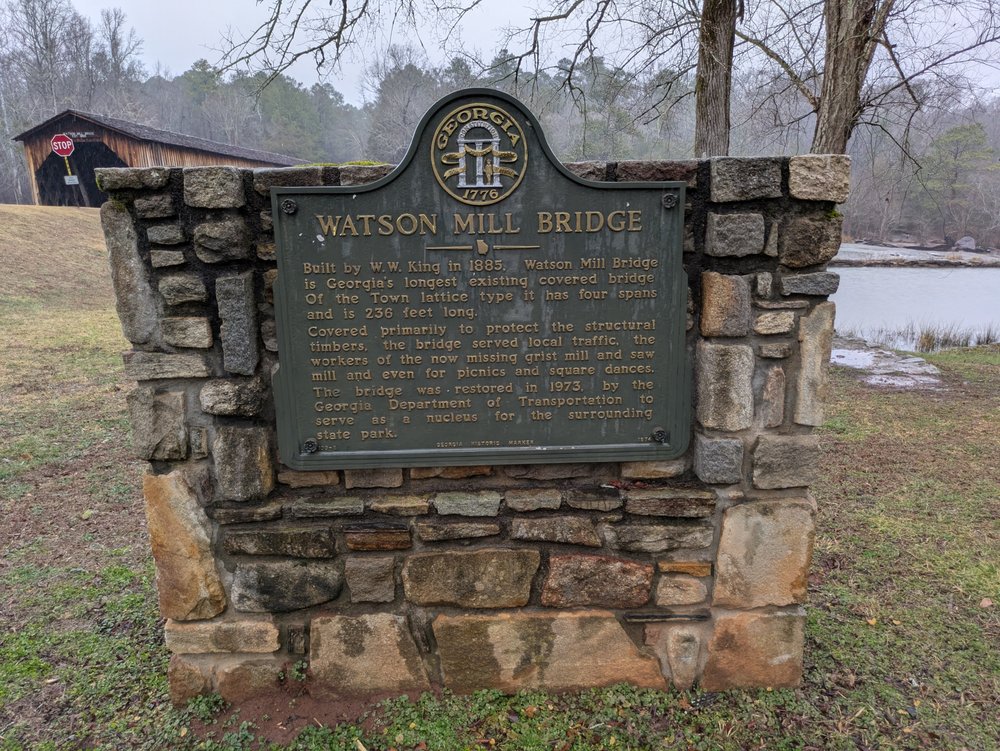
The bridge was built in 1885 by W. W. King, one of Georgia's most skilled nineteenth century bridge builders, and it remains the longest existing covered bridge in the state at 236 feet. It uses the Town lattice truss system, a design patented in 1820 that relies on a crisscross pattern of planks secured with wooden pegs, and Watson Mill is one of the best surviving examples of that method in the Southeast. The bridge once served the workers of the grist mill and sawmill that stood nearby, and it doubled as a community gathering place where people held picnics and even square dances. The Georgia Department of Transportation restored it in 1973, and the bridge became the anchor for the surrounding state park, which preserves both the structure and the landscape that supported it.
The posted clearance was too low for my Sprinter van so I walked the length of the bridge instead, letting the boards creak underfoot and taking in the smell of wet timber that always feels older than the structure itself. There is no dedicated pedestrian lane, but the interior is wide enough that I could step to the side when a car approached, and the drivers moved slowly enough that it never felt unsafe. The combination of the rain, the quiet, and the long wooden tunnel made the whole experience feel like stepping back into the late nineteenth century for a few minutes.
[Review 245 of 2026 - 942 in Georgia - 25434 overall] read more