Rome may not have been built in a day, however you can sample some of the best in Italian cuisine…read morein just one afternoon. Secret Food Tours offers three-hour long tours that take you on a gastronomical adventure throughout the heart of Rome. This experience is more than just delicious food, which is what makes Secret Food Tours so unique. The tour explores Piazza Navonna, a city square ripe with history, as well as the Campo Dei Fiori Market, offering sightseeing as well as culinary escapades.
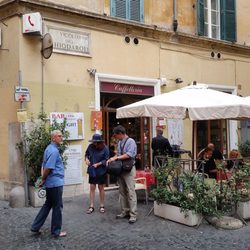
Along with four other visitors, we embarked on a daytime tour, which started at an intimate café in Piazza Novanna. Our tour guide Tomasso was a local Italian and incredibly knowledgeable about the city square and its rich background. Here, he introduced us to the finest Italian coffee, freshly brewed for our group. I sipped a cappuccino, which alerted my taste buds with rich, full-bodied flavor and an airy foam. I was awake and eager for the next stop.
While enjoying three different types of real Roman style pizza at Forno Campo de Fiori, our tour guide made us feel so welcomed. He took great pride in his city, and it showed in his passion for both the locales and the food. Next we stopped at a specialty shop, known for fried balls of risotto, called Suppli, which basically solidified my trust in anything this delicious city had to feed me. Crispy on the outside, warm and creamy on the inside.
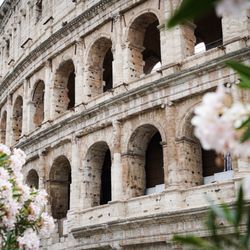
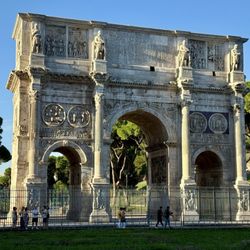
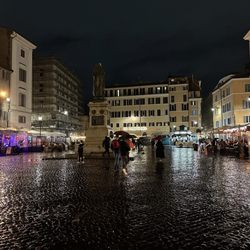
I was excited to visit the Campo Dei Fiori Market, which as our guide informed us is the oldest market in the town. With so many fresh and beautiful vegetables, it's easy to see why the food in the area is incredibly tasty. I was pleasantly surprised to do some sightseeing during the tour, as we got to see some of the Roman ruins that dot the city and here a few stories of the many narrow streets.
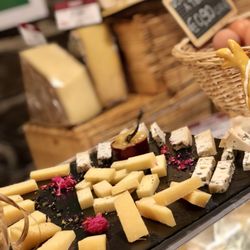
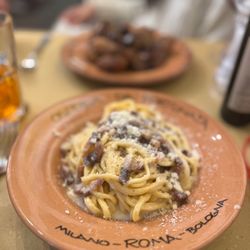
Whether it was Carbonara near the Jewish Ghetto, amazing cannoli at a legendary bakery, and salty Italian hams, salamis, and cheeses at 'Beppe', our guide always made us feel like locals. We ended on a sweet note with the most refreshing gelato. Our tour guide was so fun and friendly, and the food was exquisite. A real "taste" of Rome.