Cancel

    Open app

    Search

    Chiesa di San Ferdinando

    5.0 (1 review)

    Chiesa di San Ferdinando Photos

    Chiesa di San Ferdinando - Esterno - Churches Near Me - Naples, NA
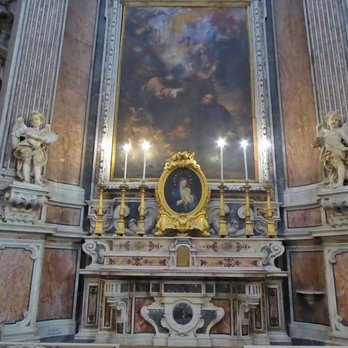
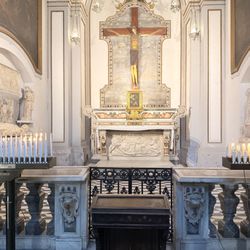
    Chiesa di San Ferdinando - Altare della Vergine addolorata.Le messe di requie che si celebrano in questa cappella, liberano dal Purgatorio l'anima per cui si applicano - Churches Near Me - Naples, NA
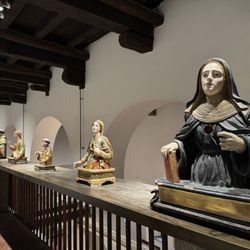
    Chiesa di San Ferdinando - Presepe con gli artisti napoletani - Churches Near Me - Naples, NA
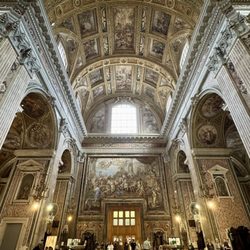
    Chiesa di San Ferdinando - Gioco di archi - Churches Near Me - Naples, NA
    Chiesa di San Ferdinando - Peaceful - Churches Near Me - Naples, NA
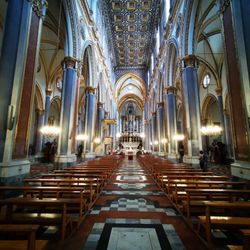
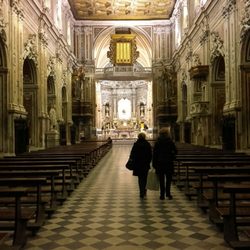
    Chiesa di San Ferdinando - Navata - Churches Near Me - Naples, NA
    Chiesa di San Ferdinando - Churches Near Me - Naples, NA
    Chiesa di San Ferdinando - Churches Near Me - Naples, NA
    Chiesa di San Ferdinando - Churches Near Me - Naples, NA

    See all

    Chiesa di San Ferdinando - Churches Near Me - Naples, NA

    Chiesa di San Ferdinando Reviews in Other Languages

    Verify this business for free

    Get access to customer & competitor insights.

    Verify this business

    Duomo di Napoli - The lights make it feel like the statues are glowing

    Duomo di Napoli

    4.6(19 reviews)
    1.9 kmCentro Storico

    For the casual tourist, while not necessarily the largest cathedral, the Duomo di Santa Maria…read moreAssunta, aka Duomo di Napoli, aka Cattedrale di San Gennaro--still presents a visual feast for the eyes. For the spiritual visitor, this cathedral is the city's central catholic parish, seat of the Naples archdiocese, dedicated to the city's principal patron saint. San Gennaro (Saint Januarius)*, was a bishop martyred in 305 AD under Roman emperor Diocletian, later buried here. While little is known about his life, his body was transferred a few times, lastly in 1497 to Naples. This was at the behest of Cardinal Oliviero Carafa, where his remains were kept in the Succorpo, a richly decorated crypt constructed for this specific purpose. The most notable religious relics housed here include: 1) ampoules of the saint's blood that supposedly liquify three times a year in a miracle to show the favor of the saint upon the city, and popes that visit. For this reason it's become a pilgrimage site for those hoping to witness the miracle of liquefaction. It's debated what type of liquid is contained within the hermetically sealed vials, though scientific evidence is scant considering the contents cannot be removed in fear of damage to its contents. 2) the treasure of San Gennaro (for which a separate ticket must be purchased €13) consists of the many works bestowed upon or donated to the cathedral over seven centuries from royalty and lay persons, as signs of devotion. Paintings, busts, ex-votos, objects made with precious metals and jewels are included in this collection. While there are a few sections of the cathedral that are currently not open regularly to the public, including a) the Santa Restituta, where the Baptistery of San Giovanni in Fonte is located (part of the church built earlier in the 14th century--you could peak in from the side though couldn't enter), b) the Chapel of the San Gennaro Treasury, c) the Minuto Chapel, --the parts the were open were very impressive. In the cathedral, highlights include the colorful soaring dome, golden coffered ceilings, and the decorative statue "Assumption" at the main altarpiece by Pietro Bacci (1739). Mid-afternoon lighting thru the windows cast a bright warm glow making the statue look like it was shining. The Succorpo was also one of the most ornate crypts I've ever seen. Open daily 9:30am-17:00pm, general admission is free and there are tours available with advance booking required (€10 adult, €8 student, €6 6-15yr olds, €0 for 5 and under and those with disabilities.) Tickets for rooftop access are €6. Good-sized gift shop. For more info - their website is very informative about the duomo's history and visiting details: https://duomonapoli.it/en/ *This is the same saint for which an annual festival Feast of San Gennaro is held.

    Spiritually Full and Completely in Awe…read more Duomo di Napoli took my breath away the moment I stepped inside. I can't even fully put it into words... the calmness that washed over me was unreal. My heart felt full... my spirit felt fed... and I could've stayed there for hours just soaking it in. The architecture is beyond anything a photo can capture: the detail, the artistry, the reverence in every corner. You feel the history... the faith... the devotion... all around you. If you're visiting Naples, do not miss this cathedral. It's not just a tourist stop... It's an experience for your soul. Absolutely beautiful.

    Photos
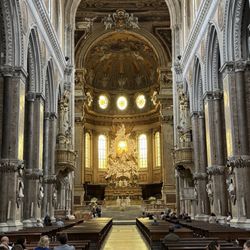
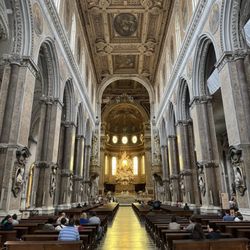
    Duomo di Napoli - Central nave

    Central nave

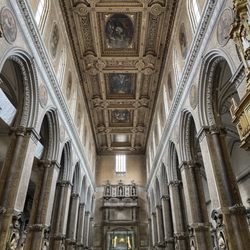
    Duomo di Napoli - View towards the doors

    View towards the doors

    Duomo di Napoli

    See all

    Chiesa del Gesù Nuovo - Closer look at the main altarpiece in the front

    Chiesa del Gesù Nuovo

    5.0(7 reviews)
    1.1 kmCentro Storico

    Naples has no shortage of historic basilicas and church buildings and this is one of the most…read moreimpressive in the city. Highly recommend to drop by for a look as admission is free (donations accepted), and they are open later until 7pm so it's convenient to swing by before heading to dinner. On a cloudy day in April apparently many like-minded visitors had the same idea as it was fairly busy, though not extremely crowded. Located on the western edge of the Centro Historico district, the "New" in its name distinguishes it from another existing church of the name Gesu Vecchio. Initially the palace residence built in 1470 for Roberto Sanseverino, Prince of Salerno, political divisions led to his son and heir Ferrante Sanseverino being exiled and property confiscated, and this property sold to the Jesuit order. In 1584 construction began, led by appointed architect Giuseppe Valeriano, to convert this aristocratic palazzo to Jesuit church. The palace's unique facade was the only remnant left, with its bugnato (rusticated) grey volcanic-stone punta di diamante (diamond point) protrusions. What's even more intriguing is that this facade, designed by original palazzo architect Novello da San Lucano, who was also a composer, incorporated musical notes in Aramaic letters incised into the stone, which has been interpreted by musical historians as sheet music. The music has been named "Enigma" and you can find it played on YouTube. Other scholars interpret these symbols to be related to alchemy and esoteric practices popular in the day. This building passed between different hands thru the centuries though in 1900 definitively returned to the Jesuits. Nowadays it's known for the vast number of artworks that line its ceilings and chapels. They were certainly awe-inspiring to see! I spent about 30-45 minutes walking around, this is a functioning parish so administrative offices, prayer sections, a shop for purchasing ex-votos and souvenirs, and other functional facilities are also present. Hours: 8am-12:45pm, 4-7pm daily.

    What a big surprise! There's a hidden gem behind that palace facade. You enter through the Baroque…read morelooking entryway at the Piazza of the same name. We were totally amazed at what we saw inside this church. I would have never known based on its exterior. It's immensely grand and ornate as you walk inside. The ceiling and chapels are covered in Italian Baroque art from famous artists such as Francesco Solimena and Luca Giordano. There are alters made of precious stones and marble statues. All of which are saintly and historical. I didn't realize it at the time, but people do go there to be healed. There is a chapel dedicated to a Naples doctor & saint named Giuseppe Moscati. His tomb lies under the chapel altar. He is known for taking care of the sick and the poor. There was a line of people waiting to enter a part of the church that houses his personal quarters and belongings. We didn't get to see it, so I can't comment on it. It's just something to consider seeing while you're there. This whole area is full of historical churches. I mean, you could visit churches all day long if that's your thing. This is a great option if you only have time to visit one, and it's free to the public. They accept donations as most churches do.

    Photos
    Chiesa del Gesù Nuovo - The Chapel of St. Francesco

    The Chapel of St. Francesco

    Chiesa del Gesù Nuovo - Looking towards the entrance

    Looking towards the entrance

    Chiesa del Gesù Nuovo

    See all

    Santa Chiara - Remains of part of the original church after fire

    Santa Chiara

    4.4(14 reviews)
    1.2 kmCentro Storico

    A must see in Napoli. Don't miss the museum - it's worth it. an plan enough time to sit, see and…read morerelax

    Known for its tiled cloister garden, it's actually two monasteries, one for Franciscans monks and…read moreone for Clarisses (nuns). This monastery originated in 1310 and was constructed between 1313-1340, commissioned by Queen Sancia of Majorca and her husband Robert of Anjou (who inherited the throne, and later became King of Naples), and was where both were eventually interred. Since Sancia's brother Phillip of Majorca had joined the Franciscan order, he petitioned to have Santa Chiara built, though he wasn't alive for much longer after it was completed. The Gothic complex underwent major renovation in 1742-62 transforming the interior with Baroque style frescos in the church nave and along the portico arcade walkways surrounding the cloister garden. Additions of the colorful majolica tiled pillars and benches were added then; floral designs adorn the octagonal pillars, and the paintings on the benches depict landscape and scenes from the 18th century. The main church facade sits opposite the Chiesa del Gesù Nuovo (see my separate review), though the visitor entrance is around the side. This is where you can purchase tickets €7 general admission or €5 for students and seniors. They do not participate in city/museum passes. For the size of the complex, there's a fair amount to check out, aside from the cloister garden (of which part was under restoration April 2026), there's a museum detailing the history of the building, with sacred artworks and requilaries, ruins of a Roman bathhouse that's excavated next to/under the church, a one-room gallery of local contemporary religious artworks, an 18th century nativity scene (this tradition is very strong in southern Italy!), a small library and quite a large gift shop. For some reason I didn't go into the church nave itself, I'm not sure if it was open at the time? What was terrific was the accessibility of the descriptions for items on display, many had English translations. There was also a free audio guide available via QR code though you have to use your cell phone. This can be a bit challenging on battery life so I didn't scan it, found the printed placards to be plenty. I spent about 45 minutes inside. For more info: https://www.monasterodisantachiara.it/en/

    Photos
    Santa Chiara - Gift shop - they have a large selection of

    Gift shop - they have a large selection of

    Santa Chiara - Library

    Library

    Santa Chiara - Reliquary statues

    See all

    Reliquary statues

    Basilica di San Paolo Maggiore

    Basilica di San Paolo Maggiore

    4.5(2 reviews)
    1.7 kmCentro Storico

    San Gaetano (Saint Cajetan) was a priest who lived and worked in Naples from the late 15th to mid…read more16th century and co-founder of the Theatine Order. Then over a hundred years later in 1671 he became canonized as one of the catholic saints associated with Naples. As the patron saint of the unemployed, job seekers, gamblers, and good fortune, he was known for creating an interest free bank to help the poor and disadvantaged, that later became the Bank of Naples. Basilica di San Paolo Maggiore is where he is interred, and the piazza outside also bears a statue in his honor. While located on the busy street of Via dei Tribunali, right next to Sotterranea Napoli (see separate review) and across from Complesso Monumentale San Lorenzo Maggiore La Neapolis Sotterrata (another historic site worth exploring) I didn't see many tourists flocking to this church, probably since it's not on the list of popular sites around the city, and according to Gmaps only open Fri-Sun. Probably also a good thing since it's a functional local parish too. Inside the ceiling nave is covered with colorful frescos, many of the damaged though appears to be extensive work restoring what portions remain. Sections depict the life and miracles of Christ while others depict life and miracles of Saint Cajetan. The walls are also covered in frescos, beautiful marble of many red, green, cream, black tones and striations, and gold painted trimmings. The domes are on the smaller side but are very ornate. Downstairs the crypt holds the remains of the Saint.

    Photos
    Basilica di San Paolo Maggiore
    Basilica di San Paolo Maggiore

    See all

    Chiesa di San Ferdinando - churches - Updated June 2026

    Loading...
    Loading...
    Loading...