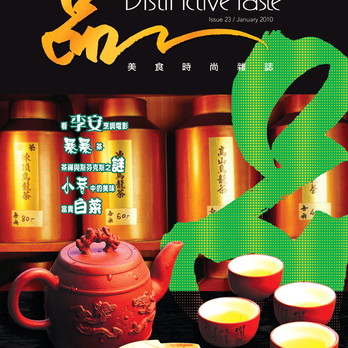
"Bun" in Cantonese, "Ping" in Mandarin, or simply Distinctive Taste magazine, is a mostly all in Chinese circulation, (more importantly FREE, they make money from advertising) and can be picked up at your SF, Peninsula, East Bay 99 Ranch markets, Sheng Kees, and various bookstores or restaurants.
What's unusual about this circular, is that it seems to be the new version of "East West" (another free circular with numerous articles about fine dining) except Distinctive Taste magazine's articles are WRITTEN MOSTL BY BY A$N WOMEN, even the editor in chief is female (versus all dudes with East West....I know I know, EW sounds like some A$N male chauvinistic pig rag which it is not, considering one of the $hames to A$N Americans being put out every year is that dreadful East Meets West A$N bikini clad calendars, which I dare say many of those models are probably on Yelp too)
Now before you criticize and say, what do these people know about food?
I'm leafing through the April 2009 copy of the rag. They don't start reviews with "wow" and never use the words "yummy". These women are real seasoned pros and know what they are talking about.
It's great slack time reading nonetheless. Here are some articles they wrote
- eating fugu (blowfish) at the source in Shimonoseki (southern Japan). The author even ate a TOFU made of fugu, with the fish grounded into a paste then molded and crafted into tofu form.
- ok while not original material, another author discusses the point of view of Japanese cuisine from a blogger based in Beijing. OK so what merit does this guy have? He says that miso soup in the US, is store bought paste, hot water, tiny cubes of tofu, scallions, and called a done deal. In Japan this is a more meticulous prep, with additional ingredients ranging from konbu, daikon and some may go as far as to add hamaguri (clam), oysters, fish, vegetables. The really good places will make their own miso paste and not rely on outsourced or store bought.
My favorite is the paragraph about Japanese sushi vs American sushi.
Japanese sushi is about elegance, attention to detail, refreshing and simple taste, and quality ingredients with original taste. Unlike American sushi where the rainbow colors are all over the place, the rolls look explosive, the sauces can be upwards of 5 to 6 colors alone.
- Singaporean Chinese woman writes about SE A$N curry, too complicated for me to absorb in one sitting
- a local female writer describes the Ohagi at Shuei-Do Manju Shop in San Jose. Ohagi is red bean paste on the outside, sticky rice on the inside. Recently seen at the Hokkaido Food Fair at Mitsuwa late last year.
Decent free reading. Can't complain. read more