Cancel

    Open app

    Search

    Goodhue County Historical Society

    4.0 (1 review)
    Closed • 10:00 am - 4:00 pm

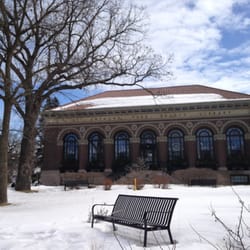
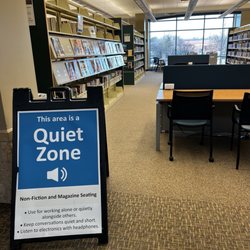
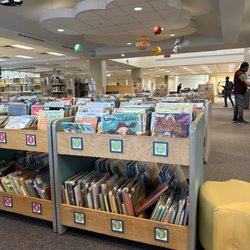
    Goodhue County Historical Society Photos

    More like Goodhue County Historical Society

    Recommended Reviews - Goodhue County Historical Society

    Your trust is our priority, so businesses can't pay to alter or remove their reviews. Learn more about reviews.
    Yelp app icon
    Browse more easily on the app
    Review Feed Illustration

    11 years ago

    Helpful 0
    Thanks 0
    Love this 0
    Oh no 0

    Ask the Community - Goodhue County Historical Society

    Verify this business for free

    Get access to customer & competitor insights.

    Verify this business

    The Claypits Historical Marker - The Claypits Historical Marker, Goodhue

    The Claypits Historical Marker

    3.0(1 review)
    8.7 mi

    The sign along Hiawatha Pioneer Trail pointed out that there was a historical marker ahead and with…read moreenough time, I was able to slow and pull in. There's a decent sized parking lot here though it's cracked and has seen better days. The marker as well is faded and peeled but it still tells the industrial story of the area. It reads, "The growth of vegetation, home, construction and landscaping makes it difficult for the visitor of today to envision that the surrounding area was once used for the mining of clay. The pottery industry, that had its founding with John Paul, was made possible when the surrounding area was purchased for the purpose of suppling the necessary clay. "The clay was found at a depth of four feet and continued down to twenty-five feet or more. There were three grades of clay. Number 1 which was gray in color, had no impurities and was limited in quantity. No. 2, also gray in color, was the most commonly found; and No. 3, a brown colored clay, with small amounts of sand, shale and gray clay which was used for the production of sewer pipe. "Mining involved clearing the topsoil, digging out the clay and loading it by hand; this was eventually replaced by the use of steam powered drag-lines. The clay was at first hauled by horse and wagon to Red Wing and then a rail spur was laid to the pits. Built by the Duluth Red Wing and Southern Railroad Company, the line was operated from 1892 until it was abandoned in 1936. Thousands of car loads of clay were transported to Red Wing for the production of stoneware and sewer pipe. "Over the following years the pits closed and reopened. Pits were opened in other bear-by areas, diesel replaced the steam powered equipment and trucks replaced the trains. By the 1970s mining and pottery operations had ceased. What had been an industry that employed many men and women over the years, had provided many newly arrived emigrants, mostly Scandinavian, their first jobs during the early industrial development of the county, and had brough recognition and fortune to the area, is now just a memory." The marker was erected in 1996 by The Red Wing Collectors Society Inc. and The Cannon Valley Red Wing Collectors Club. [Review 20717 overall - 129 in Minnesota - 1699 of 2023.]

    Photos
    The Claypits Historical Marker - The Claypits Historical Marker, Goodhue

    See all

    The Claypits Historical Marker, Goodhue

    Alexander Ramsey House - Elk given to Governor Ramsey by Governor Sibley.

    Alexander Ramsey House

    4.0(7 reviews)
    38.2 mi•West Seventh

    My wife and I hit a new pub in St. Paul called the Blue Door before touring this cool old Victorian…read morehouse of one of the first governors of Minnesota. We had some awesome burgers and beer before our free tour the Historical Museum was giving of its properties this weekend. We entered the house feeling full and happy from a couple of Surly Furious pints and signed up for our tour. We entered the house with a great guide dressed in a top hat and suit of the 1800's when Ramsey would have lived in the house. The house was one of the few in old time Minnesota with gas lighting and running water. There was a bathtub and even an indoor water closet. It was interesting that there were chamber pots around the house because women did not like to remove all the bussels and stuff. They showed the bells and talking tubes for the servants to be called upon. They showed the kitchen and offered baked cookies from the oven. The children's' rooms were well adorned and Ramsey had a play room for the children up in the attic along with the servants' rooms. The whole layout was perfect, great character actors as guides and pretend servants. Even though they had a lot of people taking the tour, they kept it well run and you quickly became envious of such a large, cool house. Highly recommended for a crummy day outside when you're looking for something to do. Hey, and it's educational!

    I had a bizarre experience here today. I walked into the Gift Shop and hung out looking at stuff…read morefor 20 minutes while people were talking in the back. I wanted to pay admission and walk around the house. Finally, I peeked in the back and some lady said, "are you Dustin?" Huh? When she saw I was just a member of the public she hurriedly hustled me out the door and told me they were closed for staff interviews and did I not see the sign, etc. I did see a small, handwritten sign on a dry erase board, but I was confused about why the gift shop would be wide open, lights on and merchandise unattended if the entire place was closed down. All the sign said was that there were no tours, not that the entire building was closed. I thought it was possible to take a self-guided tour even if staff were "busy." Honestly I haven't been to very many historical sites where self-guided tours are forbidden. Basically, the point of this weird experience is that whatever non-profit is running this place is extremely disorganized and unable to communicate something as basic as being closed to the general public, not to mention the fact it can't even secure its premises. It's pretty irresponsible to leave the front door open and an entire gift shop unattended. I could have walked off with half of their stuff and no one would have been the wiser. On her way to rushing me out the door, the lady acted very annoyed and mumbled something about what they can't do because of budget cuts, even as she was discouraging me from making a purchase from their gift store. To me, this illustrates exactly why non-profits are in dire straights. They want charitable donations from everyone even while turning down opportunities to become more self sufficient. A similar thing happened a week or so ago when I attended an evening lecture on 19th century spiritualism with a friend at the Ramsey House. We arrived late and didn't have the chance to pay for our tickets until it was over. I had to ask three people how and where to pay. No one made any effort to bother us for money, and had I not been extremely proactive, it would have been free for my friend and I, but not for the taxpayers. This is ridiculous, and perfectly illustrates why non-profits do not deserve financial support. This place can't even manage to collect money from people attending an event. It isn't like we slipped in quietly or secretly either. To many organizations, "non-profit" doesn't simply mean they don't make any money, but that they actively throw it away.

    Photos
    Alexander Ramsey House - Neat old paintings all around the mansion.

    Neat old paintings all around the mansion.

    Alexander Ramsey House - Outside on the lawn, looking at the carriage house and museum shop.

    Outside on the lawn, looking at the carriage house and museum shop.

    Alexander Ramsey House - The parlor.

    See all

    The parlor.

    McGilvray Seven Bridges Road - Van Loon Wildlife Area - The trail narrows...

    McGilvray Seven Bridges Road - Van Loon Wildlife Area

    4.0(2 reviews)
    71.6 mi

    Nice trail, but unfortunately flooded due to the rain so could only see 0.2 miles of it.read more

    Anyone who tackles this trail must be…read more.. A) A historic bridge enthusiast and fan of engineering design B) The second coming of Aldo Leopold C) Someone off their nut D) A&C E) B&C F) All of the above. Okay, seriously, this is a a fascinating area and quite a trail for nature lovers. Alexander McGilvray saw an opportunity in 1854 and launched a ferry across the Black River. In 1892, the county built a steel bridge across the river, ending the ferry service. Since McGilvray Road went through backwaters of the Black River and a slough, six wooden bridges were built. The moist environment wrecked wooden bridges quickly, so between 1905 and 1908, a series of five bowstring truss bridges were built with one wooden bridge left behind. The road was closed in 1948 due to flooding, and in 1954 the steel bridge was removed. The five bowstring truss bridges remain in place and a fifth pony truss bridge was relocated here to replace the wooden bridge. The maintenance of the old bridges is accomplished with volunteer labor, the Friends of McGilvray Road in partnership with the Wisconsin DNR. Bowstring trusses, one time plentiful, are now rare and only eight examples remain in Wisconsin - five of those eight are on McGilvray Road. As for the hiking, well, nature has pretty much consumed McGilvray Road, popularly known as Seven Bridges Road. It is a hiking trail, being slowly developed by the Friends of McGilvray Road. You can take the 1.8 mile hike to the Black River and experience a piece of La Crosse County history yourself. Dress appropriately and wear good hiking shoes.The day I visited McGilvray Road, I met a couple on the trail. He was wearing sandals. Not smart. She was wearing cross trainers, still not very smart. Both were wearing shorts - really not smart as the mosquitoes were matched in size and maneuverability to a P-38. No motorized vehicles, in fact, no vehicles at all, including no bicycles. As a hiking trail, two stars. As a great example of private and public sector cooperation, four stars, as an example of historic preservation, five stars. Net result - four stars. I'd go back - would you like to join me?

    Photos
    McGilvray Seven Bridges Road - Van Loon Wildlife Area - The further you get from the trailhead, the more coarse the course becomes.

    The further you get from the trailhead, the more coarse the course becomes.

    McGilvray Seven Bridges Road - Van Loon Wildlife Area - National Register of Historic Places and Wisconsin Historical Site plaques.

    National Register of Historic Places and Wisconsin Historical Site plaques.

    McGilvray Seven Bridges Road - Van Loon Wildlife Area - Bridge

    See all

    Bridge

    Goodhue County Historical Society - museums - Updated September 2026

    Loading...
    Loading...
    Loading...