Mauna 'Ala is a state monument and part of the Department of Land and Natural Resources (DLNR), and…read moreis described on their website, "The Royal Mausoleum State Monument is the burial place of Hawaiian royalty. It includes members of the Kamehameha and Kalākaua Dynasties with their retainers."
The property is taken care of by kahu (keepers/ caretakers) a few that were descendants of Hoʻolulu, chosen to help bury King Kamehameha I's remains. Kamehameha I is not buried here as his body was hidden by his friends Hoapili and Hoʻolulu to preserve the sacred mana (power). This is one of the only places where a Hawaiian flag is flown by itself.
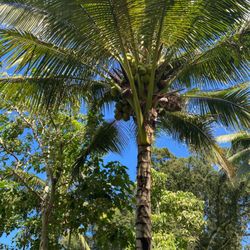
There's a tree next to the gate out front which we were told they've tried to cut down a few times, but it keeps growing back. So now it's a fixture. Along the drive way there are palm trees planted that we were told represent a Hawaiian monarch. On the property there are different tombs, crypts and a chapel.
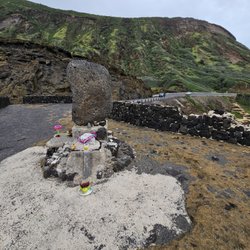
In front of the tombs are two golden globes on sticks. These are pūloʻuloʻu or "kapu sticks" used to symbolize forbidden areas (burials, heiau/ temple, residences of royalty), sacredness, and no trespassing. It also symbolized mana, authority and the deceased ancestors of Hawaiian royalty (ali'i). Traditionally they are filled with mementos of ancestors (bone, hair, teeth) wrapped in kapa (mulberry) cloth. These golden globes do not contain mementos and are decorative and symbolic.
The first tomb we saw was of John Young 'Olohana who came from Britain. He became an important military advisor to King Kamehameha I. Which helped him unite the Kingdom of Hawaii. He also served as the Governor of Hawai'i Island when King Kamehameha was away. He's the grandfather of Queen Emma.
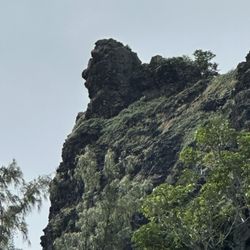
We stopped by remnants of a chain used to secure European cannons that Kalanikūpule (King of Oahu and Maui) used to fight Kamehameha I Kalani Paiʻea Wohi o Kaleikini Kealiʻikui Kamehameha o ʻIolani i Kaiwikapu kauʻi Ka Liholiho Kūnuiākea for the title of kingship of all the Hawaiian Islands (Aliʻi Mo'i). Kalanikūpule had gun ports cut along Nuʻuanu Pali's mountain ridge. Kamehameha's warriors pushed on until Kalanikūpule's men were cornered by Pali Lookout. The cannons led to a stalemate and Kamehameha has some of his men climb the Pali to go around and attack the cannons from behind. This surprise allowed Kamehameha's men to take control. Leading to 'The Battle of Nuʻuanu'. Where Kamehameha's men forced Kalanikūpule's men off the Pali cliff dropping down 1000 feet. Kalanikūpule was captured and sacrificed to Kūkāʻilimoku, the god of war.
The next tomb was The Kamehameha Dynasty tomb. It holds Kamehameha II to V and their family members. This includes King Kamehameha IV Alekanetero ʻIolani Kalanikualiholiho Maka o ʻIouli Kūnuiākea o Kūkāʻilimoku (anglicized as Alexander Liholiho) and Queen Emma Kalanikaumakaʻamano Kaleleonālani Naʻea Rooke. Both of which chose this site for Mauna 'Ala and are the founders for The Queens Medical Center (1859). Their mission was to provide healthcare to all Native Hawaiians and to the people of Hawai'i. Their son Prince Albert Edward Kauikeaouli Kaleiopapa a Kamehameha is listed as "Kahaku o Hawaii" on the tomb. A name given by the Hawaiian people. Haku meaning "boss", he was the "little boss". A few of us offered ho'okupu (flower, lei, gifts) to show respect.
Next there is a Charles Reed Bishop monument. His ashes are buried in the Kamehameha tomb. He was the husband of Bernice Pauahi Pākī Bishop (her mission was to provide education to Hawaii's children), a major donor to the Kamehameha Schools, founder of the First Hawaiian Bank and the Bernice Pauahi Bishop Museum.
Further down there's the Wiley tomb. This tomb houses Robert Crichton Wyllie, the Minister of Foreign Affairs. Queen Emma's birth parents, High Chief George Naʻea and High Chiefess Fanny Kekuʻiapoiwa Kailikulani Leleoili Kulua Kekelaokalani Young Naʻea. And her hānai (adoptive) parents Dr. Thomas Charles Byde Rooke and Grace Kamaʻikuʻi Young Rooke.
The last royalty to be buried here is Princess Abigail Kinoiki Kekaulike Kawānanakoa. We were allowed special access into the Kalākaua Crypt and the Chapel. Both of which required shoes to be taken off. These areas are not usually open to the public.
Overall, it was a very interesting experience learning about the Hawaiian monarchy and culture. I had the privilege of touring Mauna 'Ala, the Royal Mausoleum to celebrate Heritage Day 2024. On the tour we discussed how it's important to know where you come from, in order to know where you're going. It's a very profound experience and reminds us to be in the moment. To give respect, appreciation, and gratitude to those that came before us. To connect ourselves to our ancestors, to the land, and to the community.