Henry William Harrington Historical Marker Photos
More like Henry William Harrington Historical Marker
Recommended Reviews - Henry William Harrington Historical Marker
Start your review...



10 months ago

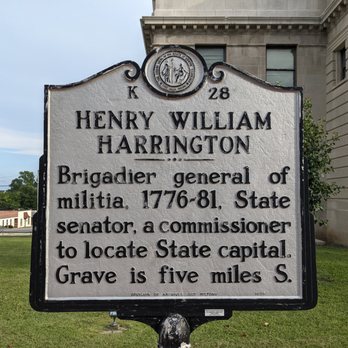
Located in front of the Richmond County Court House, this marker points out a local hero of the Revolutionary War. The marker reads, "Henry William Harrington. Brigadier general of militia, 1776-81, State senator, a commissioner to locate State capital. Grave is five miles south." This is another instance where there is some distance from the site being pointed out to here where the marker is located. There is more information online. "Henry William Harrington, Revolutionary War political and military leader, was born in London in 1747. He immigrated to Jamaica in the 1770s, but left after a short time for South Carolina, where he settled along the Pee Dee River. At the outbreak of war in 1775, Harrington accepted a captaincy in the South Carolina militia. The following year he married Rosanna Auld, the daughter of a prominent Anson County militia officer. The couple moved to North Carolina, settling in part of Anson that became Richmond County in 1779." "Harrington was elected colonel of the Richmond County militia in November following their arrival and briefly commanded a militia regiment in Charleston, South Carolina, in 1780 before returning to serve in the General Assembly. In the summer of 1780 he was called upon to accept a temporary position as the brigadier general in command of the Salisbury District militia while Griffith Rutherford was serving in the Camden expedition." "After the conflict [a British raiding party attacked his home in January 1781] Harrington represented Richmond County in 1783 and again in 1785. In 1784 he was appointed a trustee of Salisbury Academy, and five years later became a trustee of the University of North Carolina, a post he held for six years. He also served as one of the commissioners that approved of placing the state capitol at Raleigh. In the latter 1790s Harrington retired to his plantation. He died on March 31, 1809, and is buried in the family cemetery overlooking the Pee Dee River." [Review 15474 overall, 978 of 2021, number 3017 in North Carolina.] read more
More info about Henry William Harrington Historical Marker









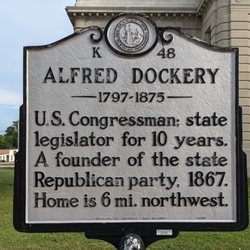






Henry William Harrington Historical Marker - landmarks - Updated September 2026
Best of Rockingham
People found Henry William Harrington Historical Marker by searching for…
Things to Do in Rockingham, NC
Plantation Tours in Rockingham, NC
Public Services & Government in Rockingham, NC
Places to Take Pictures in Rockingham, NC
Roman Catholic Churches in Rockingham, NC
Fishing Spots in Rockingham, NC
Historical Sites in Rockingham, NC
Religious Organizations in Rockingham, NC
Courthouse Wedding in Rockingham, NC
Hiking Trails in Rockingham, NC
Walking Trails in Rockingham, NC
Scenic Overlook in Rockingham, NC
Trending Searches in Rockingham, NC
Apple Picking near Henry William Harrington Historical Marker
Archery near Henry William Harrington Historical Marker
Barbershop near Henry William Harrington Historical Marker
Consignment Shops near Henry William Harrington Historical Marker
Corn Maze near Henry William Harrington Historical Marker
Dance Wear near Henry William Harrington Historical Marker
Eyelash Extensions near Henry William Harrington Historical Marker
Formal Wear near Henry William Harrington Historical Marker
Kids Birthday Party near Henry William Harrington Historical Marker
Landmarks & Historical Buildings near Henry William Harrington Historical Marker
Makeup Artists near Henry William Harrington Historical Marker
Mens Suits near Henry William Harrington Historical Marker
Photo Spots near Henry William Harrington Historical Marker
Places To Take Pictures near Henry William Harrington Historical Marker
Private Schools near Henry William Harrington Historical Marker
Pumpkin Patches near Henry William Harrington Historical Marker
Scenic Overlook near Henry William Harrington Historical Marker
Waterfalls near Henry William Harrington Historical Marker
Western Wear Stores near Henry William Harrington Historical Marker
Browse Articles
Browse Nearby
BEST of Rockingham, North Carolina Restaurants near Henry William Harrington Historical Marker
BEST of Rockingham, North Carolina Things to Do near Henry William Harrington Historical Marker
BEST of Rockingham, North Carolina Coffee near Henry William Harrington Historical Marker
BEST of Rockingham, North Carolina Photo Spots near Henry William Harrington Historical Marker
BEST of Rockingham, North Carolina Museums near Henry William Harrington Historical Marker
BEST of Rockingham, North Carolina Hotels near Henry William Harrington Historical Marker
BEST of Rockingham, North Carolina Breakfast near Henry William Harrington Historical Marker
BEST of Rockingham, North Carolina Campgrounds near Henry William Harrington Historical Marker
Browse Brands
Related Searches in Rockingham, NC
Best Fun Things to Do in Rockingham, North Carolina
Best Things to Do on a Rainy Day in Rockingham, North Carolina
Book Engaging Historical Tours in Rockingham, North Carolina
Discover Charming Historic Homes in Rockingham, North Carolina
Discover Famous Monuments in Rockingham, North Carolina
Discover Popular Photo Spots in Rockingham, North Carolina
Discover the Best Planetarium Shows in Rockingham, North Carolina
Enjoy Arts & Entertainment in Rockingham, North Carolina
Enjoy Hiking Adventures in Rockingham, North Carolina
Enjoy the Best Walking Trails in Rockingham, North Carolina
Experience Stunning Sunset Views in Rockingham, North Carolina
Explore Beautiful Botanical Gardens in Rockingham, North Carolina
Explore Beautiful Castles and Landmarks in Rockingham, North Carolina
Explore Beautiful Parks and Green Spaces in Rockingham, North Carolina
Explore Children's Museums Near Rockingham, North Carolina
Explore Family-Friendly Zoos and Wildlife in Rockingham, North Carolina
Explore Free Things to Do Around Rockingham, North Carolina
Explore Fun Activities to Do in Rockingham, North Carolina
Explore Fun Field Trips in Rockingham, North Carolina
Explore Popular Scenic Overlook Points in Rockingham, North Carolina
Explore Popular Scenic Views Near Rockingham, North Carolina
Explore Popular View Points Around Rockingham, North Carolina
Explore Secret Spots Worth Visiting in Rockingham, North Carolina
Explore Top Art Galleries Located in Rockingham, North Carolina
Explore Venues & Event Spaces in Rockingham, North Carolina
Explore the Best Swimming Holes Around Rockingham, North Carolina
Find Exciting Tours to Take in Rockingham, North Carolina
Find Fun Things to Do With Kids in Rockingham, North Carolina
Find Parks and Recreation Activities in Rockingham, North Carolina
Find Top Art Museums in Rockingham, North Carolina
Find Top Libraries to Visit in Rockingham, North Carolina
Find Top-Rated Waterfalls in Rockingham, North Carolina Now
Find the Best Bridge Spots in Rockingham, North Carolina
Find the Best Playgrounds to Visit in Rockingham, North Carolina
Fun Indoor Activities to Try in Rockingham, North Carolina
Fun Rainy Day Activities to Try in Rockingham, North Carolina
Fun Teen Activities to Do in Rockingham, North Carolina
Fun Things for Kids in Rockingham, North Carolina
Must-See Tourist Attractions Around Rockingham, North Carolina
Perfect Spots to Watch Sunset in Rockingham, North Carolina
Popular Fishing Spots to Explore in Rockingham, North Carolina
Popular Outdoor Activities to Try in Rockingham, North Carolina
Popular Places to Take Pictures in Rockingham, North Carolina
Popular Things to Do in Rockingham, North Carolina
Secure Convenient Parking Options in Rockingham, North Carolina
Top Hiking Trails to Explore in Rockingham, North Carolina
Top Things to Do With Kids in Rockingham, North Carolina
Tour Famous Lighthouses Located in Rockingham, North Carolina


