Holy Cross Church Photos


Recommended Reviews - Holy Cross Church
Start your review...



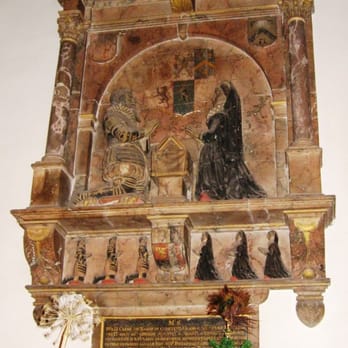
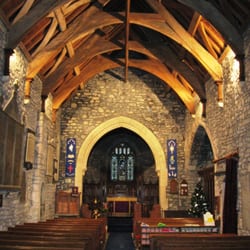
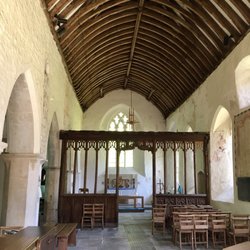
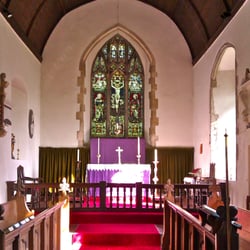
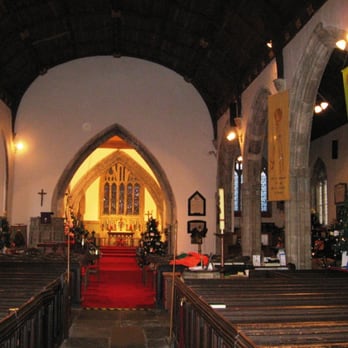
Cowbridge is a small, prosperous market town, roughly half way between Cardiff and Bridgend. Although there is some evidence of Roman occupation, a mediaeval walled town was founded by charter in 1254 within the older parish of Llanblethian. The centre of the town still retains its mediaeval street plan, including the South Gate. Church history The parish church was originally built as a Chapel of Ease of the parish church in Llanblethian, and was probably founded along with the town. Until the 20th century it was dedicated to St Mary. Although the church contains elements from the 13th century, the most remarkable feature is its semi-fortified tower, built around 1300. The church was extended in the 14th and 15th centuries, and restored restored by John Pritchard 1848-53 and George Pace in the 20th century. A recent grant from Cadw, the Welsh Historic Monuments agency, has restored the tower to its mediaeval appearance, complete with external rendering. The building is listed at Grade 1. The building The church is tucked away off the High Street, a short walk from the old grammar School and remaining south gate. From Church Street, the building is dominated by its massive, squat, tower: hugely buttressed and with a projecting staircase, it is surmounted by an octagonal battlement. Other notable external features are the substantial south aisle, almost as large as the nave, and a large north chancel chapel, now used as a vestry. Inside, the combination of the nave and south aisle make for a spacious interior, with an arcade of elegant clustered piers separating the two. There is no crossing as such, the space under the tower leading to the heavily-Victorianised chancel. The south aisle retains its 15th century wagon roof. The most notable fittings include a very fine Jacobean memorial to William Carne, Lord of the Manor of Nash, and his wide Elizabeth, located in the South Aisle, together with their three sons and daughters, the women in black, the men in armour; and a fine 17th century memorial to the family of David Jenkins (d. 1664) in the nave. Both nave and aisle are filled with low (and apparently very uncomfortable) mid-Victorian box pews, although some of these have been removed in the nave and there are plans to remove even more. While this creates a large flexible space, I am less sure about the choice of bright red for both seats and carpet, which for me rather jars with the mediaeval and Victorian fabric. On a jollier note, the church was filled with Christmas trees on my visit, each donated by a different group or institution, as part of a Christmas festival. The church is the centre of a very busy parish life, which encompasses a total of eleven churches. read more