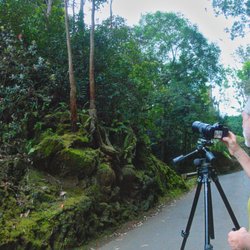
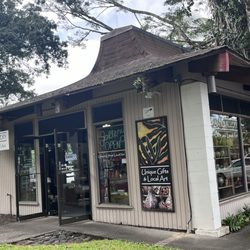
The Mauna Kea Visitor Information Station, located at an elevation of 9,200 ft above sea level, is…read moremanaged and operated by the University of Hawai'i. Currently, the University of Hawai'i Institute for Astronomy also co-manages Mauna Kea Observatories.
Mauna Kea Observatories is a group of ten independent astronomical research institutions. These non-profit institutions from various nations operate telescopes atop Mauna Kea on the Big Island of Hawai'i.
~ ~ ~ ~ ~ ~
ASTRO DAY 2026
Presented by Mauna Kea Observatories
10am-4pm on Saturday, May 2, 2026
At Prince Kuhio Plaza
I seriously became immersed with interest and curiosity for over 2+ hours, visiting nine of many participants spread throughout the plaza. I started at 9:40am and ended well past noon.
Interacting, watching demonstrations, speaking to passionate and knowledgeable individuals. To actual professionals of the industry, with students and volunteers as well. In full awe and amazement, learning as an adult alongside kids who were with their parents. I couldn't have asked for a better Saturday.

~ ~ ~ ~ ~ ~
W.M. Keck Observatory explained how infrared astronomy allows their telescopes to see through cosmic dust and gas found in galaxies. I watched as infrared radiation or heat was shown on their tablet through a demonstration.
I selected a galaxy print that was carved out from a calendar as it was quickly transformed into a button by members of the Mauna Kea Visitor Information Station.
Personalizing a bookmark from the International Gemini Observatory, the meaning of this educational material was shared to myself and others with astronomical and Hawai'i values combined.
Hawai'i Volcanoes National Park had me view ash and Pele's hair through a magniscope, residue from an actual volcanic eruption on our island. I also saw a camera which got too close to the heat of magma and melted.
Shared surface = shared energy by the University of Hawai'i Department of Physics & Astronomy. A cool and effective demonstration with metronomes.
I was told Snoopy went onboard the NASA ARTEMIS I mission, and was given a NASA Solar System activity pack from the Onizuka Center for International Astronomy. I remember vividly the visit to my school by Hawai'i astronaut, Ellison Onizuka.
~ ~ ~ ~ ~ ~
I spoke to a Hilo High School student about their robotics team and how they build, code and operate robots for official competitions. I watched a robot controlled + in-action by those who built it.
A student at the Hawai'i Science Tech Museum table explained to me the difference between VEX IQ, VRC and VEX V5 robotics material systems used for different age groups. Similar to BattleBots on TV, I cheered with the crowd as two grade school students went into robotics combat.
From various sponsors including Imiloa Astronomy Center, I received a commemorative Mauna Kea coin featuring a winning design by a Pāhoa student. Before leaving, Thelma Parker Memorial Public Library from Kamuela offered me a NASA@My Library packet.
It brought me joy to see our community in a purposeful gathering, united by a goal to build relationships and exchange knowledge. Connecting expertise of all levels, a diverse group of participants and attendees of all ages fostering a collaborative environment.
~ ~ ~ ~ ~ ~
As a supporter of astronomy in Hawai'i, I have a deep appreciation for Mauna Kea Observatories. As a current resident who was born and raised on the Big Island, there's also respect for the rich culture of Hawai'i and for Mauna Kea. A dormant volcano and sacred mountain that has meaning to many, standing 13,796 ft above sea level.
I believe balance is possible, a compromise moving forward. For the cultural significance of Mauna Kea connecting with science and technology. Respectfully, in harmony.
To an industry that has a huge economic impact to this island, to our State. Positive and empowering. Giving back, inspiring and educating the community in more ways than ASTRO DAY 2026.