1. Indian Steps Museum

1. Indian Steps Museum

0

Airville, PA

Cancel

Open app

Search

Indian Steps Museum

4.6 (7 reviews)
Closed • Closed

Indian Steps Museum Photos

You might also consider

Recommended Reviews - Indian Steps Museum

Your trust is our priority, so businesses can't pay to alter or remove their reviews. Learn more about reviews.
Yelp app icon
Browse more easily on the app
Review Feed Illustration

Reviews With Photos

Angela A.

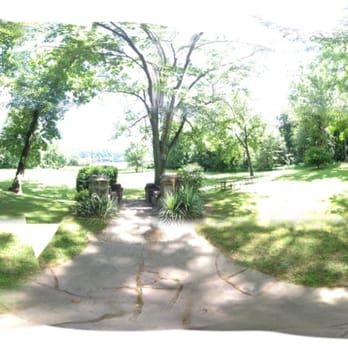
This little treasure is in the coolest location. It's all nestled in amongst huge trees right along the beautiful riverside. I love driving down the winding roads to get there. The museum is pretty decent. There are various Indian artifacts and artwork throughout. It's pretty small, but there's a lot jammed in. There are also fun activities in the summer to watch out for.
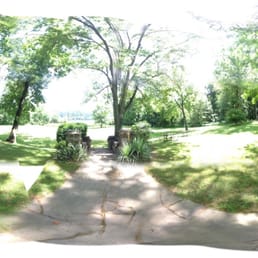
This panoramic photo does not do justice to Indian Steps. It's a must-see if you're in the area.

See all

3 months ago

Helpful 0
Thanks 0
Love this 0
Oh no 0

3 years ago

Helpful 0
Thanks 0
Love this 0
Oh no 0

8 years ago

Helpful 1
Thanks 0
Love this 0
Oh no 0

15 years ago

Helpful 1
Thanks 0
Love this 0
Oh no 0

13 years ago

Helpful 1
Thanks 0
Love this 0
Oh no 0
Photo of James S.
29
65
15

7 years ago

Helpful 0
Thanks 0
Love this 0
Oh no 0
Photo of Alan V.
133
5
3

10 years ago

Helpful 0
Thanks 0
Love this 0
Oh no 0

Ask the Community - Indian Steps Museum

Verify this business for free

People searched for Museums 355 times last month within 15 miles of this business.

Verify this business

1719 Museum  - The Lancaster Longhouse at the 1719 Museum

1719 Museum

4.8(8 reviews)
10.1 mi

Why is the Hans Herr House significant and who the hell was Hans Herr?…read more The house itself is significant as it is the last remaining structure that is still standing from the original group of Mennonites who came to the Lancaster County area to escape religious persecution from their native Switzerland. The house is also significant in that it is the oldest structure in Lancaster County and likely the oldest remaining Mennonite meetinghouse in the Western Hemisphere. The original group traveled from Switzerland to Germany to escape religious persecution then after a governmental regime change they were forced from Germany to England where they met with William Penn who allowed them to colonize a portion of what is current day Lancaster County or when they arrived in 1711, the extreme most western frontier of Pennsylvania. One interesting piece of information is that the house did not belong to Hans Herr as it was built by his son Christian which is why his initials are over the doorway along with the inscribing mark of 1719. On the tour you are told why the name remained(s) Hans Herr House versus Christian Herr House but honestly I forget why. Maybe something just deferential from Christian towards his father or because of his father's status with the original group that came to the area or maybe everyone just liked the flow of the name more so it's based on tradition? The tour itself is around 40-45 minutes and it starts in the building which houses the gift shop and you are given a brief overview of the Anabaptist faith, the Mennonites who are direct descendants of the faith and a map which shows the route the initial settlers took from Switzerland to Pennsylvania. After that you are taken over to the house where you see the three rooms which make up the first floor (kitchen, bedroom and all purpose dining room-meeting room-family room) and the second floor which is where the eight children slept and finally the basement which is accessed from a side entrance outside of the house. You learn that the key to the home's design is that they didn't believe in wasting any space so every inch served a purpose such as not having hallways so as soon as you walk in the front door you're right in the kitchen. One thing worth noting, if you are someone who is hardcore hung up on only visiting historical places if they have lots of original items then this place might not be for you. There is not a whole lot original to the house that you can see with the exception of a piece of the ceiling insulation on the first floor (rye straw + manure + ??), the wooden crossbeam over the kitchen fireplace and the steps which go from the second floor to the third floor attic (obviously you can't use them). Past that I think most everything else was changed out in the 19th century when the house was still used as a residence or in the early 70's when the initial renovation occurred to make things into a tourist destination. If you want more original take a look at the bibles on display in the gift shop which are original to Hans and Christian. I wouldn't call the Hans Herr House a must see, but it's interesting enough and the tour is the right length to keep everyone interested along with being located close enough to most of Lancaster County's tourist elements. If you go: The 1719 Hans Herr House is open April 1 through November 30, Monday-Saturday, 9:00 AM-4:00 PM. Forty-five minute Herr House tours are offered at 9 a.m., 11 a.m., 1 p.m. and 3 p.m. This is not the tour information for their reproduction Native American Longhouse. That tour is offered at 10 a.m., 12 noon and 2 p.m and has an entirely different focus. Prices are currently Adults: $8, Children 7-12: $4 and Children 6 and under: free with a slight discount if you choose to tour both structures. There are also several special events that happen throughout the year and that information is available on their website.

I visited the 1719 Museum this past Saturday and really enjoyed the experience…read more The guided tour starts with a short film about the property that provides some great context for the rest of the tour. Then you leave the visitor center and walk over to the first structure of tour, which is a full-sized reproduction of a Native American longhouse. Longhouses (large multi-generational family homes made of logs, saplings, and tree bark) were once ubiquitous in Pennsylvania, including along the Susquehanna River. At the time the Hans Herr home was built, south-central Pennsylvania was home to several Indigenous tribes, including the Shenks Ferry, Conoy, Lenape, Mohawk, Nanticoke, Seneca, Shawnee, and Susquehannock peoples. The 1719 Museum collaborated with the Circle Legacy Center and members of the local indigenous community to build the longhouse reproduction in order to share the history of and honor Pennsylvania's native communities and educate visitors to the area. With your guide, you walk into the longhouse, where you sit down while the guide explains quite extensively about the Native communities in the area, the longhouse and its architecture, and the relationships between the indigenous people and the Mennonite people who made homes in the area. After the longhouse, the guide walks you over to the Hans Herr House. It was built in 1719 and is a 2-story, rectangular sandstone Germanic-style dwelling. It is the oldest dwelling in Lancaster County and the oldest Mennonite meetinghouse in America. The guide walks you through various rooms in the house and shares information about the Herr family as well as the larger Mennonite community in early Pennsylvania history. Our guide was Cindy, and she was incredible. I learned so much about the Native, Indigenous and Mennonite communities of 18th century Pennsylvania (and - in the case of the Native peoples - a much earlier history of their lives in Pennsylvania). She really educated us on a broad range of topics, while keeping the tour fun (I love fun education)! She made my tour extra special. If you're spending some time exploring Lancaster Counter, the 1719 Museum should definitely make your itinerary! In one place, you can learn a little bit about Pennsylvania's Native and Mennonite communities, and it's just a special place!

Photos
1719 Museum
1719 Museum
1719 Museum

See all

National Watch and Clock Museum - Part of the Engle clock

National Watch and Clock Museum

4.5(35 reviews)
13.8 mi

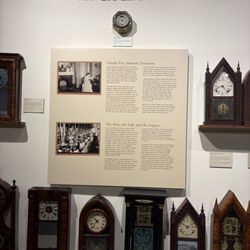
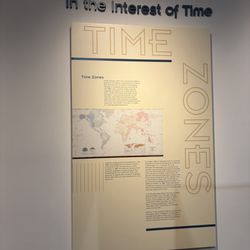
A great little museum ( not that little ) to spend a few hrs. enjoying . They have nice bathrooms…read moreand gift shop . The museum presents a historiclal showcase of the evolution of timekeeping . There are sections( clock) full of various timekeeping instruments . Grandfather Clocks , Asian Clocks , Nautical , Automobile , Airplane . Further on , are sections devoted to the advent of pocketwatches and wristwatches . Many countries are represented . Pocketwatches developed with the burgeoning railroad system . Wristwatches with the outbreak of the first great world war . The dawn of aviation spurred further innovation . As always ... " necessity is the mother of invention ." Highlights include the monumental "Engle" clock , which was like a vaudeville show all its own , with many miniature mechanical , performances . A staffer is there to answer questions , and a shows off all of the Engles , bells and whistles, hourly. The section dedicated to the iconic Hamilton watch factory in nearby Lancaster city ( sadly defunct and exists as Condominiums today ) and the James Bond tributes , made this a museum of interest to a diverse crowd .

My last stop on my weekend trip to Lancaster County this past weekend was at the National Watch and…read moreClock Museum in Columbia. I love a quirky, specific museum, and this museum was no exception. The museum is operated by the National Association of Watch and Clock Collectors and was founded in 1977. Its collection includes over 12,000 clocks and watches, with about 3,000 of them on display in the museum. The museum is large enough that they hand you a map when you walk in! To be honest, I don't know the first thing about the mechanics or history of watches and clocks - although I know much more after my visit to the museum - but I really enjoyed my stop at the museum! The museum might be a little dated (especially the "Learning Center," but there were signs saying they were working to upgrade that area soon), but they had some interesting and beautiful pieces, but whether you're a collector of watches and clocks or don't know the first them about them, the museum is worth a stop! I'd be happy to return for another visit with friends or family!

Photos
National Watch and Clock Museum

See all

First National Bank Museum

First National Bank Museum

4.0(1 review)
13.4 mi

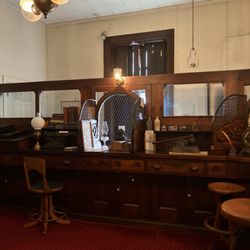
I visited the First National Bank Museum this past Saturday and had a great visit. The building is…read morelarge and historic - and it served as other things before the two front corner rooms became the First National Bank of Columbia in 1864. The bank rooms have been preserved, and you can see the walnut paying and receiving teller cages, the walk-in vault, and many tools used by employees of the bank. It was really cool to see and explore the bank. I learned about the history of the building, the bank, and Columbia through my guided tour of the museum. But what made my time at First National Bank Museum extra special was Nora. If you want to take a tour, you go to their website and send them an email requesting a tour. Nora is who will email you back to arrange a time for your tour. And she's great. Nora's parents bought the building when it was for sale back in the 1950s. Her parents knew that it was very likely the building would be torn down and the building lost to history, and so they took it on themselves to protect it. Nora grew up in the house (only the front two rooms served as the bank, but the rest of the building was a house or hotel at various times), and now she and her husband operate the museum and are continually taking care of restoring different parts of the building (right now, they're working on restoring the front doors). This personal story of a family's dedication to preserving history and sharing it with visitors to and residents of Columbia really moved me. Not only is Nora a very personable and knowledgeable guide around the small museum, the museum is her family's history and that makes it an incredibly personal tour. If you're in Columbia, I recommend trying to include a visit to the First National Bank Museum. It's a great way to learn about and explore Columbia and its history. And you'll get to spend some time with the lovely Nora!

From the owner: Come visit one of the most fascinating and "undiscovered" historical treasures in Lancaster County,…read morePA,... the First National Bank Museum, in the heart of downtown Columbia. Enjoy a private guided tour of an original bank from the 1850's and learn about this bank's role in the extensive development of the industries and transportation systems throughout this area along the lower shores of the mighty Susquehanna River. The First National Bank of Columbia was created in the front two corner rooms of a stately Federal-style townhouse, built in 1814 for James Wright, Jr. It survives in tact today because of the extraordinary guts and vision of the late Lloyd and Jean Motter. Their legacy continues through the ongoing restoration, maintenance, and loving care provided by their daughter, Nora Motter Stark, and her husband, Michael.

Photos
First National Bank Museum

See all

Historic Rock Ford

Historic Rock Ford

4.5(8 reviews)
11.8 mi

We had a wonderful visit to the Rock Ford Plantation. It was a quiet day and had our own private…read moretour. The guide was very knowledgeable and answered all our questions. This truly is a little hidden gem. The property is gorgeous and it's worth a visit.

I visited Historic Rock Ford on Sunday and learned so much. The house was built around 1794 for…read moreGeneral Edward Hand, an adjutant general to George Washington during the American Revolutionary War. Rock Ford is a Georgian-style mansion, where General Hand lived with his wife and children until his death in 1802. His wife passed away in 1805 and only briefly remained in the Hand family before becoming a home for tenant farmers for the next 150-ish years. The house was saved from destruction by the Junior League in 1958 and then renovated and restored to what it looks like now. I learned all this and more from our guide Priscilla, who was wonderful. She told us about the man, the family, and the house, as well as the enslaved people and indentured servants who are a part of the home's history, too. The tour lasted a little over an hour, so I didn't have time to find the John J. Snyder, Jr. Gallery of Early Lancaster County Decorative Arts, which is also on the property. The house was beautiful, and the information I learned from Priscilla about General Hand and his house was very interesting. If you're interested in history and historic homes, the Historic Rock Ford is worth a visit!

Photos
Historic Rock Ford
Historic Rock Ford
Historic Rock Ford

See all

Industrial & Agricultural Museum

Industrial & Agricultural Museum

4.4(9 reviews)
20.0 mi

As oxymoronic as this is going to sound, this place was educationally fun. But that's only if you…read morecan appreciate learning something that you didn't know before. As a head's up, I visited back in September and I was told that they were in the process of moving items to a new location. So my take on that is that a lot of what is here will be moved/moving very soon to a new location. Throughout my visit you would come across certain areas that were covered over in preparation for moving. Being a born and raised Pennsylvanian I had no idea how much of an impact York had on the nation in respect to advancements in industry and agriculture. To say that York played a part in a lot of things might be an understatement. When I say I learned something here, I mean it. I had no idea that York had it's own automotive manufacturing or that the huge ice machine was thought up and created in York. For this museum to focus on just the industry and agriculture, and to be able to fill three large spaces (enough to have to move) should be telling you something. York is not only known for some automotive manufacturing, but they also went back a bit further than that. Bicycles, horse carriages, to horse drawn sleds. You can throw in there some aquatic movement as well as trains and streetcars. When you enter the industry area, my best suggestion is to go up the ramp and then head down the ramp and take the stairs. You will go through eras of the area. Then you move into the agricultural side where you see many pieces of equipment that were used to farm the lands and produce the food. Also in this area you see that Rutter's (sorry, not my go to convenience store in PA) started out as a dairy farm. Who knew? Not me, but I am sure that people from York and surrounding areas knew. There is also a spot in here that you can kind of get the feel of what it would have been like to work in a barn/on a farm. As you make your way through the agricultural section you kind of go back into industry. Did you know that York made dental products. I mean like the false teeth that you might have to get one day in your mouth. Other things that I did not realize being made in York: barbells, pottery, and snowmobiles. Before heading out of this last section of this portion, be sure to stop and look at/interact with the siren. And take a good moment to play around at the telephone area. Rotary phones up to dial tones. You can call numbers that connect the phones and hear the rings of the phones. Then as you head upwards to the main level again, stop and take a gander at the 275 time capsule. The last portion of this place is gigantic in size. It has to be as they pieces in here aren't meant to be moved or displayed in low ceiling rooms. This is where you will see the ice machine, firetruck, and the huge electric sign. One last thing I want to touch on here was the staff. They were super nice and very informative of the museum itself. They were also very knowledgeable of everything else in York. I ended up chatting with the lady at the front desk for a bit. When I entered they were having a bit of trouble with their computer system and they were doing the honor system with me. I had to pay on my way out, don't worry, I checked back in and paid. It was nice of them to do that, or else I might not have had a chance to enjoy this museum.

They moved the museum into a new building a while back which greatly improved it. Clean all around,…read moretime consuming, interesting, and interactive. Would consider coming back.

Photos
Industrial & Agricultural Museum

See all

American Visionary Art Museum - Mary Proctor

American Visionary Art Museum

4.5(390 reviews)
42.2 mi•Federal Hill

Not your typical art museum and that is why it is a Five Star experience. Funky and fun (and…read morepoignant) art work by those who are not typically featured in a museum. This strikes me as somewhat similar to the two excellent Kohler Art museums in Wisconsin. Super interesting and thought provoking especially the stories of many of the artists accompanying their work. The main museum building is a work of art itself. The gift shop is a riot. Hands down the best and craziest museum gift store. Thank goodness my friend recommended this stop. Heads up on parking - the meters on the street are way way cheaper then the Rusty Scupper lot across the street. This place is a gem. Don't miss it!

I've lived in the Baltimore area for quite some time now and I can't believe I've never been to the…read moreAmerican Visionary Art Museum. I mean how can you pass by the mirrored egg or the golden hand and not think to find out what type of dope art is hidden inside. With so many unique pieces to look at I took my time leisurely strolling through the two buildings for the museum. Welcomed by a half naked mannequin with wings floating in the center of the stairs, you can't help but be intrigued to learn more about the artists work. There was so much to take in with every turn. I especially liked the homage to the staples of Baltimore's culture in the second building. And we can't forget about the gift shop that I literally could've spent hours in just rummaging through all the eclectic finds. I'm happy I finally bit the bullet to visit the American Visionary Art Musuem, and I look forward to a return visit to see all the things I missed.

Photos
American Visionary Art Museum - Gift shop

Gift shop

American Visionary Art Museum

See all

Wrights Ferry Mansion

Wrights Ferry Mansion

4.5(2 reviews)
13.3 mi

Hands down this was one of the best tours that I've been to! Our tour guide was amazing,she had all…read morethe history on the house as well as the beautiful antiques in the home. The tour took about an hour but what a wonderful was to spend an hour. Call find out the tour days and hours then run to be informed and impressed!

I toured the Wright's Ferry Mansion this past Saturday when I visited Columbia. In fact, I was in…read moreColumbia specifically to tour Wright's Ferry Mansion after a tour guide at another historic home told me it was an absolute gem in the area. I'm so glad she mentioned it to me; she was so right - it is one of the beautiful and best preserved/renovated homes I've ever visited. The home was built in 1738 by Susanna Wright (1697-1784). Susanna and her family were English Quakers that settled in the area in the early 18th century. Susanna was brilliant; known as "the Blue Stocking of Pennsylvania," she was a scholar, a poet, a friend of Benjamin Franklin, and so much more. The house is a two-story stone house - not large, but incredibly beautiful. I've toured many historic houses in the United States and abroad and, while I almost always enjoy a tour of them, I don't often think, "I want to live here." But as I walking around Wright's Ferry Mansion, I thought, "Oh, wow, I'd live here." It's just a gorgeous historic home - the wood, the colors, the flowers, the furnishings, the art... The Rasbridge family saved the house from scheduled demolition and lived in the house until 1973, when he sold it to artist, graphic designer, and art connoisseur Richard C. von Hess and his wife, Louise McClure Tinsley Steinman von Hess. They hired a celebrated preservationist (George Edwin Brumbaugh), and the four-year restoration of the house made it what it is today. I'm not exaggerating, it's one of the most beautiful historic homes I've ever toured. But I found arranging a tour to be more difficult than is typical for a historic home. You cannot pre-purchase tickets for a tour on their website. The website does provide the house of operation and states that tours are one the hour and that reservations are advised. There is a phone number that you can call to schedule a tour, but I didn't do that! They open at 10am, so I showed up right at 10am last Saturday. There was a chalk board on the door that says that tours are on the hour and that you may knock. I heard voices inside, so I knocked. I was told the 10am tour was full but that I could come back to at 11am. I came back at 10:50 this time, worried that the next tour would fill up (and this would be my last chance to take a tour during my visit to Columbia, as I had arranged other tours in the afternoon in Columbia and Willow Street). There were two other women waiting, too. Unfortunately, there's nowhere to wait except at the front door of the house, and there was no shade at all. It was a sweltering day, and I was immediately sweating through my clothes. It was 11, and no one had come to the door. We weren't sure if the tour had ended much earlier (since the house is on the smaller side, we did wonder if the tour was an hour or had already ended) or if it hadn't ended yet. Then someone came out with a fussy baby who didn't want to finish the tour, and we realized the tour was still going. I'd say we probably started around 11:10-11:15. That made my day really tight (I had somewhere to be at 1 and needed to have something to eat first), so I let our (very nice) tour guide know that I probably wouldn't be able to stay for the whole tour unfortunately. We finished the tour of the first floor around 11:50-11:55, so I called it at that point and now need to return to tour the upper floor. FYI: they don't allow photographs inside the house, so use your imagination (or check out their website), but I took plenty of pictures of the exterior of the house and the flower garden in front of the home. Susanna Wright was a fascinating woman, and the house is incredible. The tour is interesting; I learned so much about Susanna, the house, and Columbia. I wish I'd pay a little more attention to the fact that they recommend you scheduling your tour over the phone in advance, because the process of arranging the tour on the day of was a little difficult. So learn from my mistakes. Arrange your tour ahead of time to avoid a tour filling up and being turned away. Or - if you don't want arrange for a tour in advance, make sure your schedule is more flexible than mine was, so that you can come for the next tour if the tour you want fills up or if the tours don't start on the hour. This house is incredible. Since I shot myself in the foot by not pre-scheduling a tour, I need to go back to the do the tour again and see the second floor! But the house is so amazing, I'm happy to do it!


Photos
Wrights Ferry Mansion

See all

Indian Steps Museum - museums - Updated July 2026

Loading...
Loading...
Loading...