Kilmainham Gaol
By appointment only
Kilmainham Gaol Photos


Recommended Reviews - Kilmainham Gaol
Start your review...


Reviews With Photos


Kilmainham gaol was just as important to do while in Dublin as having a pint of Guinness! As a crime/jail junkie, I knew this tour would be a happy place for me and I was right! The tour takes about 1.5 hours, depending on how many questions your group has and how long you spend in the actual museum. Our tour guide was friendly, fun and super knowledgeable, and knew how to deliver the details of history to bring you further into the story. The tour takes you through both wings of the jail, along with the stone crushing yard. The most impressive part of the tour was certainly the large open space where the male prisoners were once held. We got to explore several open cells and got to see the actual cells where a few key leaders were held. Was really cool to be in the actual spaces. Overall, the tour is certainly worth it. So much history to hear and see!


Kilmainham Gaol is a former prison in Dublin, Ireland, now a museum, famous for its role in Irish history, particularly the struggle for independence. It housed many leaders of various rebellions, including the 14 leaders of the 1916 Easter Rising (and others during the Irish Civil War) who were executed there. Today, it is preserved as a national monument and one of Dublin's most visited historical attractions. The Kilmainham Gaol can only be seen via guided tours with tickets on sale 28 days before the one you might want. At the appointed date, I was online at 12:01 AM Ireland time to buy our tickets which sold out within minutes. Others might want to do the same. I've been to Alcatraz too, but this place has a little more blood on its hands. And it was so worth it! The generations of jail cells, the misery, the politics, the cruelty, the history, the executions, and all so well summarized and illustrated by our tour guide. All those years of history were so expertly portrayed in about an hour or so. I also remembered the scenes from "In the Name of the Father" (1993) that were filmed here. Other movies using Kilmainham Gaol as a set included: The Italian Job (1969), Michael Collins (1996), The Escapist (2008), and Paddington 2 (2017). I like a powerful reminder from a previous reviewer (Matt E.): The path to independence and freedom sometimes starts in dark, cold and miserable jail cells and not always on the battlefield.


A very interesting piece of Irish history. Must book this ahead of time as tickets sell out fast!! The guided tour lasted an hour. Our tour guide was fabulous (sorry, I can't remember his name) , he shared a wealth of Irish history with us, regarding the Gaol and the politics surrounding it. Very interesting .... Viewed a few cells and rooms, the living conditions, people that died.... Afterwards, we had access to the three floor museum, where you can dive deeper into history. Slightly complicated for me, but it gave me a better understanding. May spend some time in the museum... Restrooms and a cafe were available. The Gaol is well worth a visit.


So you cannot visit Dublin and not take a tour here. Our guide was fantastic! He was able to answer all our questions and was so knowledgeable. The preservation of this treasure is grand. I learned so much history and I felt a connection to the men, women and children who spent time there. I felt a deeper connection to Ireland after my visit here.


An unforgettable experience. Kilmainham Gaol (i.e. Jail) is a reminder of the struggles and tragedies necessary for the Irish people to gain freedom from British oppression. The imposing Gaol opened in 1796, built on top of the cheerily named "Gallows Hill". To really add to the general misery of the place, the prison itself was built from a local limestone that locked in the cold and damp. In addition to political prisoners the Gaol held children as young as 8 for the "grave offence" of stealing a piece of bread during the famine. The prison was closed for penal business in 1924 and is now open to the public by guided tour only. Our guide was wonderful as he made history come alive during the course of the one hour tour, which starts in the chapel and ends in the Bonebreakers Yard (where leaders of the Irish Revolution were executed). There are some stairs but the tour pace is relaxed so doable for most. Tickets are 6EUR each, purchased on the Gaol website exactly 3 months prior to the desired tour date/time beginning midnight Irish time. Tours sell out quickly so it's best to get online promptly. I've heard that additional tickets may be available each morning due to cancellations, but I reserved ahead to make sure.


I found Kilmainham Gaol absolutely fascinating. I knew very little about the history of the jail so it was very interesting to learn more about the Easter Rising and some of the Irish revolutionaries that spent time here. Our guide was extremely well informed and engaging. He thoughtfully interacted with our tour group and it was a nice blend of history and storytelling. The hour long tour flew by. We were lucky enough to get same day tickets but I know it's typically recommended to buy in advance. I'd definitely recommend this experience to anyone looking to learn a little about Irish history. The jail is located a little outside the city center but is easily accessible via public transport or a long walk, which is what we did.
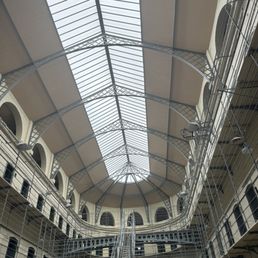

Full of history, Kilmainham is still perfectly preserved to contain and share all the stories of struggles of the Irish people. The guys are wonderful, have answers to so many questions, and help put you in the shoes of what this jail was like when it first opened. I would make sure to book a ticket in advance, unless you want to wait around the area and are open to any availability they may or may not have.


This place is historically interesting though I wish the tour guide hadn't been so sad because it made the tour boring. The big room is about the coolest thing here and the stories that are interesting but other than that you should be able to get through here pretty fast. Book a ticket in advance but they do release tickets for the day (for cancellations and no shows) in the morning around 9am to 930am.


This tour was great as was our tour guide filled with history & threw in some mirth that contrasted with the darkness of what really occurred on the grounds we walked through. Truly interesting stories of what went on until 1924 in this gaol. I would highly recommend this tour, but keep in mind uneven ground, stairs, and quite a bit of walking might make it difficult for some.


If you are going to Dublin then I would highly recommend starting your trip at the Kilmainham Gaol and doing the guided tour. The tour also gives you access to the museum, so if you choose an earlier time, you can visit the museum after. Although it was raining the day we went, it was very tolerable as most of the tour is indoors. Bring an umbrella for the outdoor part. Our tour guide was Andrew - he was great!! Very thorough, informative, funny and nice. The museum is indoors, making it a really great place to visit in the rain. It is multiple stories with tons of history about the Kilmainham Gaol and the Republic of Ireland.


Historical jail that's a short bus ride from the city center. Booked our tickets online in advance, as a tour is required (it does seems like it would be easy to get lost if you wandered by yourself). Our tour guide Jonathan was excellent - very knowledgeable and had good voice projection. Incidentally, he sounded a bit like Sean Connery to me. You check in at the door and wait until your group comes together before you start walking around. The tour was about an hour, and then you have a chance to wander on your own in the museum. There was a lot of history in the jail, and they did a really good job of providing context. There's a cafe as well as restrooms on the second level. It's a good spot for kids as well as big groups. If you come during the day, you could go for a stroll in the park afterwards.


Shoutout to both Ciara and Roy for making my experience at the Gaol possible. I emailed them with concerns about mobility, since I use a cane, and about being able to get a tour that fit my schedule. I met you, Roy, but Ciara, if you're out there... you started it all and made it happen! Many thanks for the opportunity! The Gaol reminded me much of my time when I worked at Eastern State Penitentiary in the States. Though the Kilmainham Gaol is far better maintained than most of ESP, I could not help but feel so many similarities to the stories of prisoner neglect, suicides, executions, and the horrible conditions that many of them had to endure. The history behind those hallowed halls can really be felt as you walk through the corridors and into the cells. Daniel, the guide for my particular group, was amazing at delivering information and bringing the group through with such fluidity. As I moved on through the building, I could see other tours simultaneously being brought through. They really do have the timing down to a T, which is why it is so important to be on time and why so many bookings sell out so quickly! I managed with my gammy old leg fairly easily, but you will be on your feet for most of it and unfortunately it does not appear that there is wheelchair access (except for the museum, also very interesting in and of itself). If you do have additional needs or concerns, I think you may email them, as they were very receptive to me.


Get your tickets in advance!!!! Everything I read online said you didn't need to buy anything in advance when visiting Dublin, but for this you must! The day we arrived, the week was nearly sold out. There were only three time slots left for the two days we were there. At least a week or two in advance you need to purchase tickets for the tour. This is a can't miss tourist attraction if you are visiting Dublin. So much history in one place. Very humbling to see the old parts of the jail. You get a complete tour that lets about an hour. So interesting and the stories of the prisoners is fascinating. At one point you can even step inside a cell to experience what it was like for past inmates. Dominic was a wonderful tour guide sharing stories of the inmates with emotion. read more


2 years ago


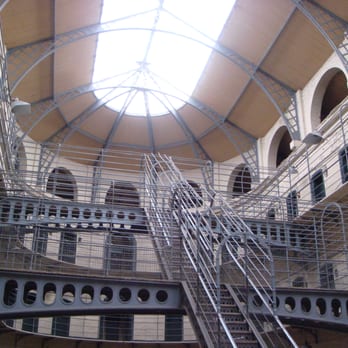
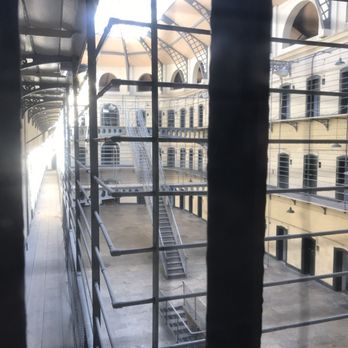
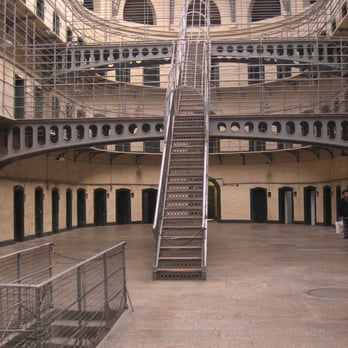
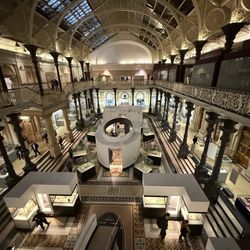
Dublin has its own Alcatraz attraction, and this is it as "gaol" is an Irish term for "jail". It hasn't been used as such since 1924, but the building retains the dramatic and realistic aura of a forbidding prison and gives you a sense of what it was like to have been confined in one of the tiny cells used for punishment and correction since 1796. For an admission fee of € 6, you get a guide who shares the alternately colorful and depressing history of the prison starting in the prison chapel where he tells the doomed romance between Irish nationalist Joseph Plunkett and Grace Gifford, who were married there in 1916 the day before he was executed and were allowed only an one-hour conjugal visit under the watchful eye of a guard. You also get to see the large room that held Charles Parnell, a popular 19th-century political leader and apparently the uncrowned King of Ireland, who was allowed to be surrounded by ornate furnishings from his home. The most impressive sight on the tour is the expansive Victorian Wing that honestly looks more like an empty resort hotel lobby with a central stairwell and elevated walkways (see photos). The 90-minute tour ends in the prison courtyard where you are a given a pardon to catch the next hop-on, hop-off bus. By the way, it was raining sheets the day I visited causing havoc with my portable umbrella, but somehow the storm just added to the already haunting atmosphere of the place. read more


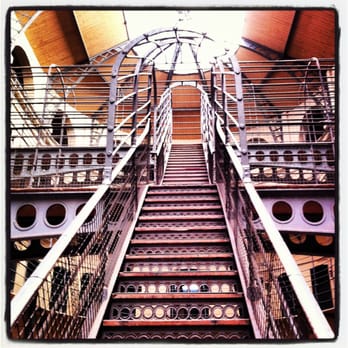


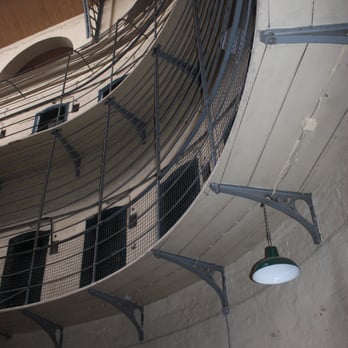

Note: all my recent vacation in Ireland Yelp reviews will have the same 1st paragraph preamble, for just the review itself skip to the 2nd paragraph. On a whirlwind 2 week vacation to Ireland, the girlfriend & I tried to see & experience absolutely as much of this incredible land as we could. We did not accomplish every last activity we wished we could have on our rather ambitious itinerary. Nonetheless, we did discover a land of numerous stunning & magical wonders. We did see a land of unending natural beauty. We did learn of a land with a monumentally long history of trials, tragedies & triumphs. We did get to meet many kind, humorous, warm & generous people. Our vacation to Ireland was just 2 weeks, but that was time enough to know this is a land easy to love & a land to be sorely missed. Kilmainham Gaol is a fascinating & significant piece of Irish history. Though this prison has seen many hardships & dark times, including the Great Famine, its role in the 1916 Easter Rising was the most momentous. A horrible place when it was in operation, the prison was completely neglected after it was abandoned but Kilmainham Gaol is now very well restored. There is a museum area that spans 3 floors & a tour winds through many historically important areas of the prison. Together, these convey a vivid sense of how bleak it once was inside & even outside the prison walls. When the tour I had taken concluded, I could feel the whispers of the start of something nearly a century before. This was where the spark that would eventually lead to the birth of a nation had been touched off. We all are, to some extent, a product of what came before us. To truly appreciate this land, a visit to Ireland would not be complete without going to Kilmainham Gaol. read more
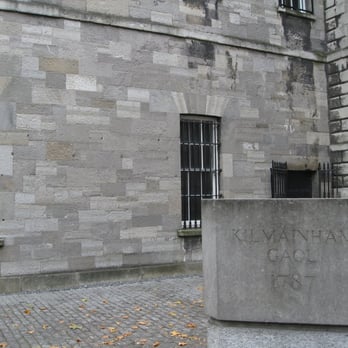

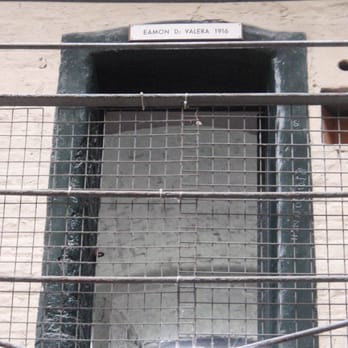
Outstanding historical site. Of course the facility itself is compelling, and both the guided tour and the exhibit space are excellent. The latter is very informative, covering various aspects of prison life as well as, on the second floor, a political history of the jail with a particular focus on 1916-1923. Similarly, the guided tour also concentrates on that span, from the Easter Rising to the end of the Civil War. This was unexpected but very welcome, as that period is so important to the modern Irish consciousness and represented a moderate fuzziness in my knowledge of Irish history. The tour guide provided a confident narration which did not seem overly polished or rehearsed. She highlighted several of the famous former inmates of the jail, such as Eamon de Valera and Charles Stewart Parnell, not to mention the ringleaders of the Easter Rising and the couple who wedded in the jail chapel just hours before the groom was hanged. This site is a little bit west of the city centre, but after the castles, cathedrals, and illuminated manuscripts, a visit to Kilmainham Gaol is a very meaty piece of sightseeing. read more





7 years ago
Definitely a must-see in Dublin if you are interested in Irish history and the sociopolitical struggles of the last two centuries. I have taken the tour twice and learned so much each time. My teens loved it, too. A good bit of walking required as well as squeezing through doorways and narrow passages, so wear comfortable shoes. Book tickets in advance. read more

2 years ago

When I was abroad studying Modern Irish History during the Summer of 2009, my group actually almost missed out on the chance to visit Kilmainham. There was some sort of a misunderstanding on the part of our instructor and the Gaol reservation staff. However, they were able to fit us in with another group at the last minute. And I am so glad that everything worked out because...my trip to Ireland would not have been the same if I had not seen the Kilmainham Gaol. After all, how can you learn about all of the historic figures who fought so hard for Ireland's independence without seeing firsthand what suffering they endured for standing up for what they believed was right? While our tour guide was very informative, I almost feel like just walking through the gaol is informative in its own right...the quarters the prisoners were subject to, getting to see the small jail chapel, the execution grounds...it is almost even hard for me to really review. If you go to Dublin, you need to experience Kilmainham for yourself. Fun fact: Kilmainham Gaol has been featured in a bunch of different films. And because it has such a distinctive design, you'll instantly recognize it if you see it used as a film set. That winding staircase and straight diagonal staircase design in the newer wing is ingenious, and also served as a way to ensure that prisoners had a difficult time escaping. read more


4 years ago
2 years ago

4 years ago

Planning my trip to Ireland, this place was never on the itinerary. It was only upon hearing a suggestion from a cab driver that we decided to pay it a visit on one of our last days in Dublin. The tour is about an hour and a half. You learn a lot about the history of the jail, which was really fascinating to me. There's also ample time to cam whore during the tour. P.S. If you're a student (or even if you've long been out of college and bring your student ID and try to get away with using it like I did) you get to pay only 33% of the admission price! (2 Euros compared to the regular 6 Euros) Recommend! read more

9 years ago
"This is the death I should have asked if God had given me the choice of all deaths - to die a soldier's death for Ireland and for freedom. We have done right. People will say hard things of us now, but later on will praise us." - Patrick Pearse. One of the most significant monuments in Irish history (particularly modern Irish history) is Kilmainham Jail. It opened in 1796 and for most of its history it was just a regular prison housing inmates for petty crimes. For heinous crimes such as murder public executions were held in the front of the prison until 1865. Up until there was only one wing (the West Wing) where all criminals were held regardless of age and gender. Conditions were quite horrible - cells were cold and cramped, one small candle given to each inmate had to last for 2 weeks and the food was barely edible. The picturesque East Wing was built in 1862 with an additional 96 cells, built on the principles of Victorian philosophy regarding prisons and their role in rehabilitating the inmate. Unlike the West Wing the room was more lit, hoping that inmates would look upward to the heavens as their inspiration. The principles guiding rehabilitation were those of silence and separation - prisoners were isolated and forbidden to talk to one another. While the men could be housed in the East Wing, women were segregated in the West Wing until 1881, when it became an all-male prision. The prison became infamous for housing people that took part in the 1916 Easter Rising, which members declared Ireland a free republic, free from British rule. Back then this was a radical opinion as Britain was involved in WWI and most common Irish folk supported home rule - the notion that Ireland would be self-governed while being a part of the UK. The jail was reopened to house these people and most of the leaders of the Easter Rising (and all of the signatories of the Proclamation of the Irish Republic) were executed by firing squad outside. The executions made these people martyrs as public sympathy for the cause rose. *** My two most favorite museums/attractions in Dublin are close to each other and due to logistics I did them in one day. My #1 is Guinness Storehouse with Kilmainham Gaol being a close #2. If you're like many people who wish to combine both sights in one day it's obvious that the Storehouse is the later attraction but you should dedicate just as much time to this because of its significance in modern Irish history and like the Book of Kells, a chance to make "history come alive". Though not located in the central part of Dublin, it is a 25-30 minute walk, a short taxi ride and most hop on/hop off buses will stop here. ADMISSION €9. Access to the jail portion is only through guided tour. It's best to get your tickets online as the tours get quite popular during peak season and you aren't guaranteed a spot if you just walk in. It is also recommended to start early if you want to fully immerse yourself here and still have time to do the Storehouse later in the afternoon (with a definite reservation). Adam was my tour guide for the 12:30 tour. He is one of the best tour guides I've ever encountered. For someone that did not have European history during high school he made modern Irish history come alive for me as he detailed the experiences of the prisoners and humanized their struggles. He especially noted the stories of James Connolly (the wounded prisoner that had to be sent to Kilmainham to be executed) and the love story of Joseph Plunkett and Grace Gifford, who got married in the prison chapel just hours prior to Plunkett's execution. The prison itself is quite a marvel especially when you contrast the older West Wing with the new East Wing. The prison was abandoned for some time until the 1960's when an extensive restorative project converted the prison to its former "glory" to tourists. Names of prominent political prisoners are placed above the cells where they actually stayed and in the case of Grace Gifford's cell, you can actually peek into one of her murals of Madonna and child. A museum helps round out your experience here as it details life at the jail and Irish history during the time period of the jail's existence. My favorite part of the museum is the poignant dimly lit Last Words exhibit as it documents the literal last words of the 1916 Easter Rising political prisoners prior to their execution from the first execution to the last. My only regret is not spending enough time here - I wanted to learn more about these important figures. I highly recommend this place to experience a little piece of Irish history for yourself. Soak in all the information here then wash it away with a glass of Guinness several hours later. read more


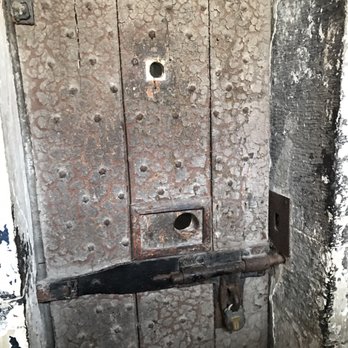

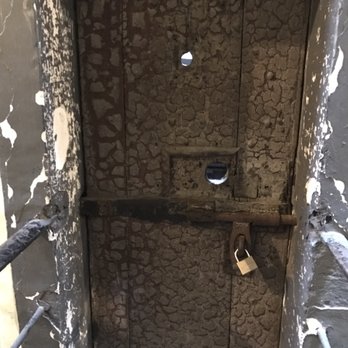


7 years ago
Must see! Even if just checking out the free museum is worth it to get a clear idea of local struggles and history. Planning to do the guided tour as well! Tickets run out quickly. read more
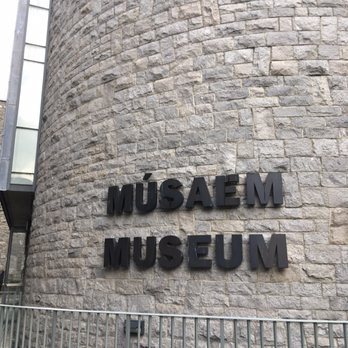


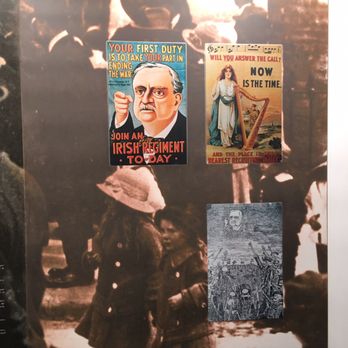

What an awesome tour! Ellen was our guide and it was a blast. We asked a lot of our friends who had been here before how it was and they all raved about it! And now so can we! Bring a jacket, it sure gets nibbly! And check out the streets for nearby parking. We ordered our tickets well in advance and had zero complications. The staff who greeted us were friendly and extremely helpful. They don't start the tours early, so they have a cafe with soup, salad, snacks, some juice beverages and coffee options. Coffee wasn't anything special but helped warm and wake us up for the tour. Our guide Ellen not only gave us plenty of history and stories to learn from, but knew facts about the stone, architecture, prison life, and spent just the right amount of time at each section of the tour so we didn't feel like it was dragging on. Learning about the inmates and famous men, women, and children who were housed in the prison, history on the three Irish rebellions, and lots of time for pictures. A beautiful piece of Irish history and a great way to get to know the culture. Definitely stop by! read more


4 years ago

4 years ago

Little did I know when I stepped into this tour that it would become one of my most memorable experiences in Ireland. I had not see mention of this prison in any of the recommended places to visit that I reviewed prior to our trip. I will admit that I knew very little about the Irish war for independence so I learned a great deal. During the tour I felt so many emotions and was ultimately in tears at one point. The tour guide tells the history as a story and it is captivating and sad. If you are in Dublin, I highly recommend this tour. For 10 euros, you won't be disappointed! read more


This was one of our favorite stops in Dublin. Purchase your tickets ahead of time because they are difficult to come by. Our guide was very passionate about the gaol and his storyteller technique was mesmerizing. I highly recommend the tour. read more


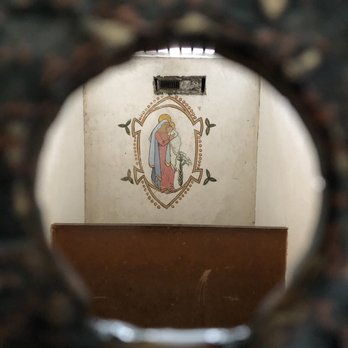


When people ask where to visit in Dublin, and you reply "the gaol!", they often look at you with bemused or puzzled expressions. However, Kilmainhaim Gaol is one of the best attractions to visit in Dublin (and no, you don't need to be arrested to visit). A fascinating tour round this historic landmark, the tour guides really bring the history to life, peppering the tales with lots of fascinating facts including how originally the conditions inside the gaol were so much better than outside that people kept trying to be arrested to be let in, the similarities between the architecture of the main part and Stephen's Green shopping centre, and of course the part it played in the Irish war of independence (as a Brit it seemed best to keep my accent hidden at times!). A couple of tips: 1. As a popular tourist destination be aware you may have to queue to get in (bring an umbrella!) 2. Free entry on the first Wed of the month (though reasonably priced the rest of the time) read more


This place is one of the few that needs a guide. We were lucky one to have a wonderful one. Knowledgeable, emotional and patriotic that brings visit to the Kilmainham Gaol to another level. We learned a lot of history of the jail, history of Ireland be Irish people. So glad that we included this attraction in our must see places during Dublin visit. read more



13 years ago
This tour and visit continues to stand out in my mind as one of the most meaningful and eye opening things I've done in Ireland. The tour guide we had was brilliant. She was passionate and well educated about the history. She answered any off script questions flawlessly, which was even impressive to my Irish history buff boyfriend from Dublin. I learned so much about The Risings and this country's story in an hour. I walked away wanting to learn more! I think if you come to Ireland to see the countryside, drink the pints, sit in the pubs, hear the music, and taste the food; you should also make time to know the history of it all. Don't miss a great experience: visit Kilmainham. read more

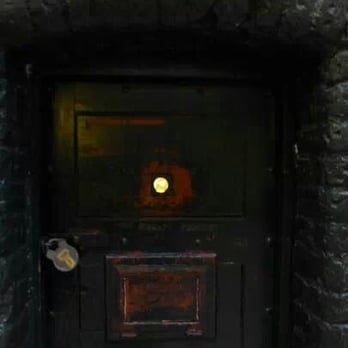


One of the top place tourists spots to go to. I had no idea what this place was about & I am very glad I was able to visit here & learn the history of it. It was quite eerie but still something one can never forget. They take you on a tour, talks about the famous people that has been locked up in Kilmainham Gaol & what they have done, they bring up the youngest and eldest prisoner that entered the prison. They take you to different sides of the prison and its very interesting. The guide is very informative and tells you a very colorful story about its past. A definitely must see! read more


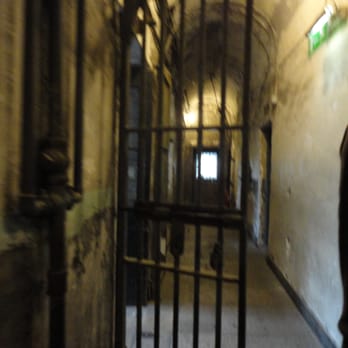

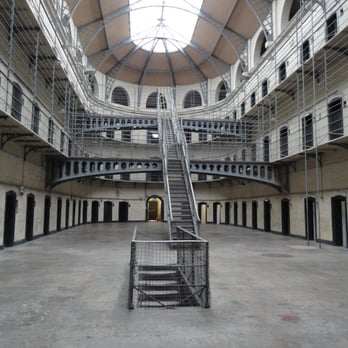
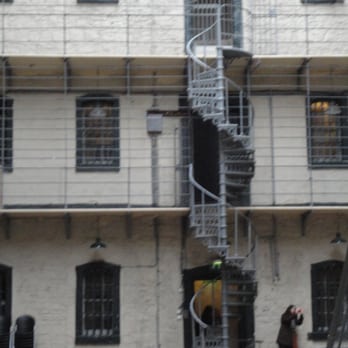
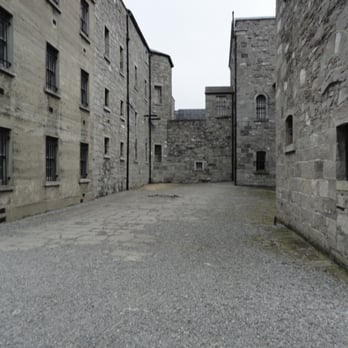


15 years ago

10 years ago
You should buy your tickets before you get here. We arrived before noon (on a Tuesday) and there was only 10 tickets left BUT only for the 30 minute 'highlights tour" (everything else was sold out) the tour was at 2:35pm so we had to wait around for almost 3 hours but we were very lucky to get these tickets. Also keep in mind this was September which is considered off season. People behind us on line were turned away! The cost for this tour was a very fair €3 per person. This was the 30 minute "highlight" tour so it was fast but the tour guide was great and kept talking away giving us so much information and we certainly didn't feel rushed. read more

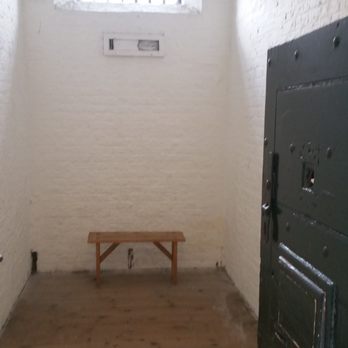


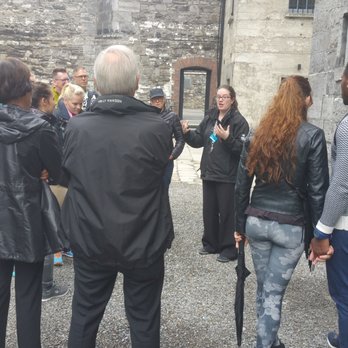

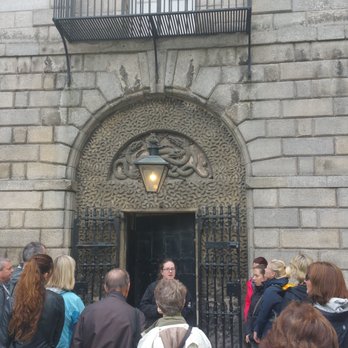

12 years ago
I hope you come to Dublin with more plans than just to visit all the local pubs in Temple Bar. When we decided to venture out a bit to see the major historical sites, Kilmainham was number one on our list. For 6 euro (2 with valid student ID), you'll get a guided tour which ensures you'll truly appreciate the significance of the many names you probably heard (or will hear) during your stay. While not a history buff, I enjoyed the 40-50 minute tour and the little museum at the start and recommend you take a visit! read more

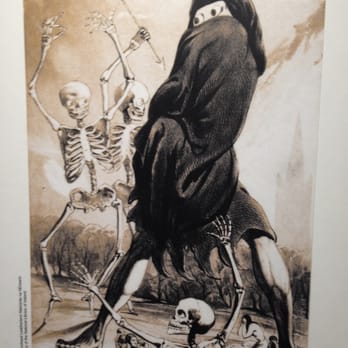

10 years ago
A whisper swept through our office a few weeks ago that there was free tickets going for Kilmainham Gaol. 5000 in all. They were testing their new online booking system. Who am I to argue with some free stuff. Free stuff is always welcome. By lucky coincidence we had some visitors to our fair city in a few weeks, so I took advantage and got four tickets for that weekend. I had been to the gaol before, when I was quite young, back in the 80s on a school tour. The only thing I could remember was there was a boat in one of the yards. This could be a figment of my imagination. But I'm fairly sure there's photographic evidence somewhere. But I digress. The tour at Kilmainham Gaol today is excellent. Sobering. But well worth going to. We arrived a little late for our tour slot, but the staff here were not upset with us, but went out of their way to get us to our group asap. Fair play to them. And I am really grateful to them for this. Our tour guide Adam was passionate about the gaol and became quite animated at some points. He managed to trigger my imagination when it came to describing how things were at the time the gaol was in use. The east wing was the highlight for me. Used in the original version of The Italian Job amongst other filming! Which I never knew. An excellent historic attraction. Well worth it. PS there is a car park directly across the road in the Hilton Hotel. read more


9 years ago
First of all. I wouldn't give 5 stars for this place. I give like 2.5 I would't even feel bad if I miss this tourist place. But all the 5 stars reviews leads us here. Now we became victims of car thefts. There's car thefts targeting tourists' rental cars, it happened really fast because thefts know it's one hour trip. Kilmainham Gaol has no it's own parking so you only park on the street. The whole street has no CCTV. Funny thing is the Police Station is just accross Kilmainham Goal. Might cost you half day to work with police with no results. Why not? First visiting Jail. Second Police Station. Feels like the same package. Don't go if you are using rental car. There's one Hop On Hop Off bus outside the jail. And you totally can miss it. Visited May 2017 read more


14 years ago
killmainham Jail was built in 1796. It is an historical building heaped in Irish Revolutionary history. It is located about 5 minutes drive from the Phoenix Park Initially I thought that the 6 euro charge was a bit dear. How wrong I was. You are given a ticket at the entrance which tells you when your tour starts. Tours starts every 15 minutes and you can explore the museum area beforehand which covers two floors , which gives you a history of the building and what it was like to be an occupant. There was about 40 people on our tour. It is a very well run and smooth operation Our tour guide was very passionate about telling the history of this site as he guided us through all the different parts of the gaol .Tour lasted just over 1 hour. It did not feel that long.Walking into the Womens Gaol is one of the most WOW moments I have ever had! Have pics to add !) read more


7 years ago

I really don't know how to rate this place. If you're a history buff, you're gonna love it. The city has remodeled it impecabbley and the stories behind it are incredible. There is a museum inside that really explains everything into depth and gives you a nice synopsis of what you're gonna see on the tour. My biggest concerns: 1) The tour was boring. It was cold outside and I stood outside shivering. I know this is my fault...but the tour itself was just simply boring. And there were too many people in my tour group. They split us in two...which helped things, but it didn't make up for the fact that I was falling asleep standing up. 2) One should book in advance. My hotel did not tell me that it was TOURS only...and they also said it was a 20 minute walk. Well, an hour and a half later, I arrived there only to find out you can only see the jail with a tour. Ok...cool...except I had to wait almost 2 hours for a tour. AND there is hardly anything around the area to keep one occupied. They do have a tea room there, but it was so crowded I had nowhere to sit...so it wasn't even an option. What I would suggest is if you love history and are a "touristy-tourist", it's a must see...but if you're more like me and feel like you learn more about a culture and place by the local bars and pubs...I would forego seeing this place. read more


3 years ago

16 years ago
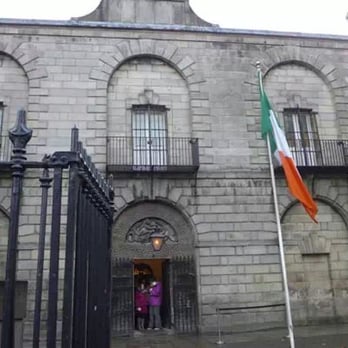
If you have a morbid curiosity or just enjoy local history Kilmainham is a must when visiting Dublin. I agree with other Yeplers, it's a bit like the Alcatraz tour, but without the breathtaking view of the bay. Though Kilmainham is far richer in history in my opinion that Alcatraz. The tour guide is very knowledgeable. He really needs some form of mic as the tour can have quite a few people and if you're near the back you probably wont be able to hear. And if you have a problem understanding the Irish accent be sure to stay near the front. The tour goes through the gaol and goes over a lot of history (the rebellion, people that were held, killed, even married there). My favorite part is the work yards and the walls people were executed by firing squad at. And ask about the ghosts, the tour guides will give you a few good stories. There's a decent size museum there too which is worth a viewing. I would definitely recommend this to people visiting Dublin. Be sure to take the bus as it's not the best place to walk from the City Centre. As you're leaving make sure to look above the door on the front of the building, the tour guide will explain why. :) read more


16 years ago

11 years ago
One of the most interesting and incredible places to visit in Dublin with a good museum, good tour and friendly staff. The tickets (guided tours only) sell very quickly during the summer however if your wait is 1-2 hours you can easily kill the time in the small cafe and spend a fair amount of time in the museum which covers the history of the jail, facts about jails in the past and the progression of the jails. For only 4 euros it is well worth the 30 minute public bus journey or if you are on the hop on hop off I think it takes slightly less time. Highlights are the east wing which has been beautifully restored - very spooky - but still has the engravings of old political prisoners. The tour guides are also fantastic with a vast knowledge of the history and the stories of the prisoners held there. Highly recommend! read more
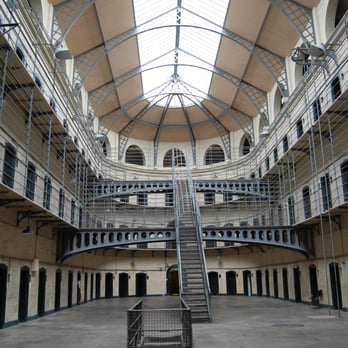

First of all, the word is spelled "jail" not "gaol." Now that we've gotten that out of the way.... A decent place to visit. Definitely one of the more interesting things to do in Dublin (which is not exactly saying a lot). I learned a lot about Irish history here, which was good. It's also fascinating to see how absolutely crappy the cells were... they make Alcatraz in San Francisco look like a palace. The tour ends on a fairly morbid note, showing you where the executed prisoners were shot. Pretty interesting stuff. It's a little chilly inside, so bring a jacket. read more
More info about Kilmainham Gaol
Inchicore Rd
Kilmainham, 8
Republic of Ireland
Island Bridge
Directions
(01) 453 5984
Call Now
Visit Website
http://kilmainhamgaolmuseum.ie
Hours
Services
Indoor Amenities
Other Amenities
Kilmainham Gaol Reviews in Other Languages
Review Highlights - Kilmainham Gaol


















Why does Yelp recommend reviews?
15 reviews that are not currently recommended
The reviews below are not factored into the business's overall star rating.

11 years ago

9 months ago

10 years ago

7 years ago

9 years ago

12 years ago

10 years ago

15 years ago

9 years ago
3 years ago

11 years ago
8 years ago
8 years ago
9 years ago
14 years ago
Kilmainham Gaol - museums - Updated August 2026
Browse Brands
Browse Articles
People who viewed Kilmainham Gaol also viewed

National Museum of Ireland- Archaeology
98 reviews
South Inner City

Dublin Castle
156 reviews
South Inner City

The Little Museum of Dublin
158 reviews
South Inner City

The Book of Kells
194 reviews
South Inner City

Leinster House
4 reviews
South Inner City

Drimnagh Castle
7 reviews
Walkinstown

Number 29 Fitzwilliam Street
5 reviews
Baggot Street

The Irish Rock 'N' Roll Museum Experience
29 reviews
Temple Bar

National Gallery of Ireland
90 reviews
South Inner City
€

EPIC The Irish Emigration Museum
85 reviews
IFSC