1. Meeting House Square

    1. Meeting House Square

    0

    Dublin, D

    Cancel

    Open app

    Search

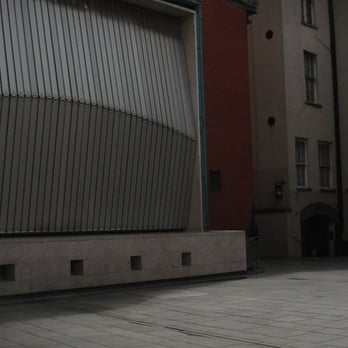
    Meeting House Square

    4.3 (9 reviews)
    Closed 5:30 am - 12:30 pm

    Meeting House Square Photos

    Recommended Reviews - Meeting House Square

    Your trust is our priority, so businesses can't pay to alter or remove their reviews. Learn more about reviews.
    Yelp app icon
    Browse more easily on the app
    Review Feed Illustration

    Reviews With Photos

    Rónán C.

    Meeting House Square is great when there's something on, however, the majority of the time you'll find it bizarrely quiet. Eery even. Still, when it's good it's great. Just check the ol'calender before making the trip.

    See all

    5 years ago

    Helpful 0
    Thanks 0
    Love this 0
    Oh no 0
    Photo of Annie L.
    3372
    1043
    1246

    16 years ago

    Helpful 4
    Thanks 0
    Love this 4
    Oh no 0
    Photo of Rob M.
    58
    351
    119

    17 years ago

    Helpful 0
    Thanks 0
    Love this 0
    Oh no 0

    17 years ago

    Helpful 0
    Thanks 0
    Love this 0
    Oh no 0
    Photo of Laura C.
    27
    359
    229

    17 years ago

    Helpful 0
    Thanks 0
    Love this 0
    Oh no 0

    12 years ago

    Helpful 0
    Thanks 0
    Love this 0
    Oh no 0

    14 years ago

    Can't wait for stuff coming up here... just need to get marketing of it, and utilise the space constantly

    Helpful 0
    Thanks 0
    Love this 0
    Oh no 0

    12 years ago

    Helpful 0
    Thanks 0
    Love this 0
    Oh no 0

    18 years ago

    Helpful 0
    Thanks 0
    Love this 0
    Oh no 0

    Verify this business for free

    People searched for Landmarks & Historical Buildings 313 times last month within 5 miles of this business.

    Verify this business

    Dublin Castle - Dublin Castle_Sanju-12

    Dublin Castle

    (156 reviews)

    South Inner City

    Dublin Castle was originally built in the early 1200s as a medieval fortress under the instruction…read moreof King John of England. For centuries, it was the headquarters of English (and eventually British) rule in Ireland. In 1684, a large fire destroyed a large portion of the castle. Instead of matching the original Gothic style, most of it was rebuilt using a Georgian style, similar to what you'd find in the French Palace of Versailles! It's quite the contrast. When you visit Dublin Castle, you can choose to explore it in two ways: with a self-guided tour to the state apartments or with a scheduled guided tour that visits the Viking Excavation, the Chapel Royal, and the State Apartments. When you first enter the courtyard, you'll immediately see the newer Georgian architecture in the neat red brick buildings surrounding the square. From the 13th century to the early 20th century, the castle was under British control. It served from being a royal palace and parliament to a prison. Dublin Castle was eventually handed over to General Michael Collins on the 16th of January in 1922. Collins was a soldier and a politician who lead the Irish people through their fight for Independence Dublin Castle plays a huge role in Ireland's history and a walk around the grounds is time well spent. Today the castle is a government complex and tourist attraction. Stroll through the famous Chester Beatty Library if time permits

    Nice stop for a fancy castle that doesn't take too long…read more Convenient free lockers upon entry. No lines & self guided. They did have audio tour I believe but we only had an hour to spare. Some cool history here w/ the monarchy here & some old pictures from centuries ago to compare. They could have a few more plaques with info in some of the empty rooms.

    The Four Courts

    The Four Courts

    (3 reviews)

    Smithfield

    Ireland's main court building contains the Supreme Court, High Court, Central Criminal Court and…read moreDublin Circuit Court - four of them, just like it says on the tin. Designed by James Gandon, the building was completed in 1796 and its green dome held aloft by marble pillars is one of Dublin's most familiar landmarks. Each court has a public area where you can sit and watch trials taking place, but you have to be very quiet or the judge will take offence and have you thrown out and/or arrested if you are particularly boisterous. This is purely a spectator sport - don't be tempted to chip in with your opinion, they hate that.

    How could you not give a building that was started in 1776, completed in 1796 and didn't fall prey…read moreto the great development boom of the recent Celtic Tiger anything less than 5 stars. The ghost of Gina past haunts these halls. Back in the day, I worked as a law clerk in Dublin and randomly wandered the halls of this grand old building day after day for about two years. While I would normally enter through the side door and into the back of the building to the Barrister's offices, occasionally, illusions of grandeur would overcome me and I would stroll through the grand front entrance hall under the Rotunda, my briefcase full of mundane papers (along the line of you owe me you wanker and you better pay up). And me...small and wan and countrified, dodging the swishing black cloaks and pompous white curled wigs of the brightest barrister minds of Irish law as they talked in hushed whispers with their anxious clients as they walk purposely through the halls of this magnificent building. Magnificent in its history of not only being a participant in the 1916 Rising, but also the scene of a great travesty in Irish records history in 1922 when toward the end of a takeover by Republican forces opposed to the newly formed Irish government and its alliance with Britain, the entire public records department encompassing a thousand years or more of historical documents was destroyed. (He said, she said kind of blame thing still going on there). As you walk up (and you will, because Dublin is a walking city)...take a wee bit of time to see the bullet holes which were deliberately left in its façade as a reminder to people of the past events that have taken place in this historical monument. The seizure in 1916 by Commandant Ned Daly's 1st Battalion during the Easter Rising and the aforementioned occupation by rebel forces in 1922. Walk inside the grand rotunda and inhale the oldness. Sneak your way into any of the in session civil law cases and try to make head or tail of what is going on. And afterwards....make your way across the bridge and sneak a pint at the more ancient Brazen Head pub.

    Molly Malone Statue - 9/2025

    Molly Malone Statue

    (74 reviews)

    South Inner City

    Known as "the Tart with a Cart," the bronze Molly Malone statue is located near the Temple Bar…read moreneighborhood. It depicts a fictional woman popularized by the song "Cockles & Mussels." The lyrics call her a fishmonger with a wheelbarrow who died of a fever, & now haunts the streets of Dublin. Legend has it that rubbing her chest brings good luck, which explains the fading on that part of the bronze. As a visitor to "Dublin's fair city," you'll no doubt spend some time in the vicinity of "sweet Molly Malone," but I wouldn't go out of my way for a photo op with a statue.

    While researching Dublin, this particular attraction pops up in every article/blog. at the end of…read moreGrafton St, near the famous O'neill's pub In 1988 as part of the Dublin Millennium celebrations a statue of Molly Malone was erected towards the end of Grafton Street at the corner of Suffolk Street. The statue of an attractive woman dressed in a revealing top with her wheelbarrow alluded to the common perception that Molly also worked as a prostitute. ofcourse there are a lot of stories (history?) associated with this famous statue... One is- there was a Dublin woman named Molly Malone, an attractive fishmonger who sold cockles and mussels from her barrow, which she wheeled through the streets of Dublin city. The ballad tells how the woman died of a fever and now her ghost haunts the city streets. At some point, someone (a tour guide, perhaps) said that 'touching' Molly's breasts was good luck, so it's not unusual to see tourists capture photos of themselves grabbing Molly's breasts. Look at how discoloured her breasts are - that shows you how much they've been rubbed. The Molly Malone Statue, along with the song, continues to keep Molly front and center in Irish history and culture. The story has been told throughout generations and I'm not sure anyone cares who exactly she was, or if she was a real person. It's all so very Irish.

    St Mary's Pro-Cathedral - Photo from website

    St Mary's Pro-Cathedral

    (3 reviews)

    North Inner City

    Although located on the grim skid-row of Marlborough Street, St Mary's Pro-Cathedral is an…read moreabsoulute gem of a building. Along with St Andrew's Church on Westland Row, the Pro-Cathedral is one of the finest modern church buildings in the city centre. The Pro-Cathedral is a fine example of a church built in the Classical Greek style, with large Doric cloumns on the inside as well as outside. The Pro-Cathedral was built early in the 19th century, and is modeled on the church of St Philippe-le-Roule in Paris. St Mary's Pro-Cathedral would not be the most frequented tourist attraction in Dublin, located off the beaten track as it is, but it only a minutes walk from O'Connell St, and it should definitely be part of your itinerary if you are visiting Dublin and old churches are your thing. I prefer the Classical style of St Mary's to the medieval Gothic of Christchurch or St Patrick's Cathedrals personally, and best of all, the Pro-Cathedral has no admission charge, whereas the other two have.

    Back in the early 19th century, when Protestants didn't care too much for Catholics, the idea was…read moremooted to put the Pro-Cathedral on O'Connell Street. However, such a flagrant symbol of Taigism was judged unwise, what with the Penal Laws and all their attendant imaginative punishments, so it was built on Marlborough Street instead. From the outside, its most distinguishing feature is its sea-green dome, whereas inside it is a mix of Greek and Roman architectural styles, (more white marble statues than you can shake a crosier at), beautiful stained glass and an amazing panelled ceiling - the inside of the dome. Strangely, the name doesn't mean that it has professional cathedral status - in fact, it isn't officially recognised as a cathedral at all.

    Meeting House Square - landmarks - Updated July 2026

    Loading...
    Loading...
    Loading...