MUVI Museo del Vidrio Photos


Recommended Reviews - MUVI Museo del Vidrio
Start your review...



2 years ago
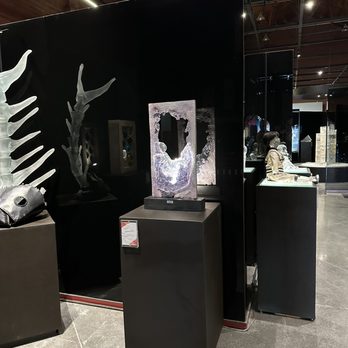
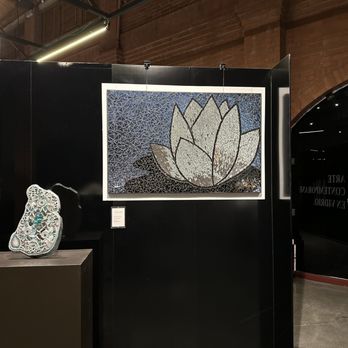
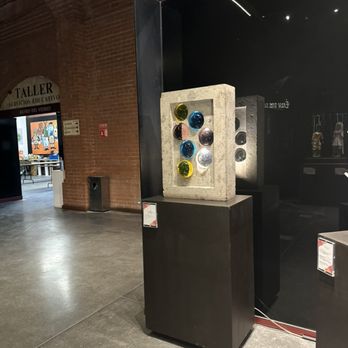
MUVI is run by the major glass manufacturer Vitro, and it's on the site of their original factory, next to one that is still working. It's situated in an industrial area of Monterrey, so getting there can get you a different view of the city. There is on-site parking, regular cars and buses, inside the security gate. Though if you park outside the gate, you should be fine, too. Check in with the guard at the street entrance, go through the parking area, and then enter the museum, where you check in again at the museum desk. When you enter the museum, you go through a temporary, rotating glass art exhibit, and then the permanent collection. The rotating exhibit when I was there was excellent. Glass mosaic work in two and three dimensional pieces. by Claudia Treviño. Her flower work was gorgeous. In the permanent collection, I was reminded just what glass can do with light and color. There are quite a few lovely pieces, traditional and contemporary, I was particularly stuck by a large piece called De Caceria (on hunting) by Raquel Stolarski. There were a couple of other zodiac-related pieces by the same artist. There was also a striking fused glass portrait called mujer con flor roja (woman with a red flower) by Maricela Alvarado Orozco. The way the light played with this piece in the dark factory-like space was striking. Another piece, ventana a la vida (window to life) by Diana Calvillo created a beautiful play with light and shadow. The pegasus piece in the permanent collection is a must. It is enchanting. It feels somehow free, even though it is tucked into a tight space. After viewing the art, a tour guide will take you outside. Remember you are on a working manufacturing site, so pay attention! You get.to see a cool, antique Ford fire engine, before crossing over to Vitro's original offices. In the office, you learn a bit about the history of glass-making, including its industrialization in Monterrey. There is also a lovely reimagined office with some belongings from one of the founders, and a rebuilt pharmacy that was moved into the second floor. The pharmacy is an interesting window in time that demonstrates just how much has changed and how the industrial manufacture of glass impacted pharmacists. There is also a display about how leaded glass windows were designed and how the colored glass for them was made. Throughout the building, there are display cases of historic glass and items manufactured by Vitro. These give a fun bit of beverage history - regional and North American. This is an excellent museum. Since the museum is tucked inside a manufacturing campus, it truly feels like a hidden gem. The museum may be fully funded by Vitro or an endowment as there was no charge. read more







More info about MUVI Museo del Vidrio





















MUVI Museo del Vidrio - museums - Updated June 2026
Browse Brands
Browse Articles
People who viewed MUVI Museo del Vidrio also viewed

Museo de Acero
1 review

Museo del Vidrio
3 reviews
Museo La Milarca
1 review

Centro de las Artes Pinacoteca de Nuevo Leon
1 review

Museo Regional de Nuevo León Obispado
2 reviews

Museo Estatal de Culturas Populares
2 reviews

Museo de autos y del transporte de Monterrey
1 review

Museo de Arte Contemporaneo de Monterrey
38 reviews
Mexican History Museum
1 review

Museo De de Dulce
1 review