Cancel

    Open app

    Search

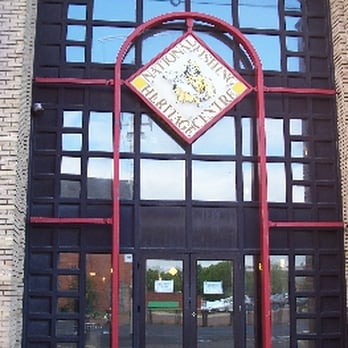
    National Fishing Heritage Centre

    4.0 (4 reviews)

    National Fishing Heritage Centre Photos

    Recommended Reviews - National Fishing Heritage Centre

    Your trust is our priority, so businesses can't pay to alter or remove their reviews. Learn more about reviews.
    Yelp app icon
    Browse more easily on the app
    Review Feed Illustration

    18 years ago

    Helpful 0
    Thanks 0
    Love this 0
    Oh no 0

    12 years ago

    Helpful 0
    Thanks 0
    Love this 0
    Oh no 0

    18 years ago

    Helpful 0
    Thanks 0
    Love this 0
    Oh no 0

    17 years ago

    Helpful 0
    Thanks 0
    Love this 0
    Oh no 0

    Verify this business for free

    Get access to customer & competitor insights.

    Verify this business

    Bishop's Boats - Part of the seal colony

    Bishop's Boats

    4.5(2 reviews)
    62.2 mi

    Boat trips to see the seal colony at Blakeney Point…read more This is a wonderful trip to make for nature lovers who love to see wildlife in their natural habitat. Although there are other companies who do these tours as well, I went with Bishop's Boats as they were running an evening trip at 6.45pm. I phoned to book 4 places and we were given instructions to pick up our tickets from Blakeney Quay, and from there we were directed to the village of Morston, to the marshes there. As we arrived, everyone was wearing welly boots and I had the impression that they all knew something I didn't, but after walking over boarded bridges to Morston Quay, wellies were not essential, but maybe I was just lucky that day! Arriving half an hour early at the landing stage, there were the 2 Bishop's Boats moored abreast into the mud and no sign of sea in sight......I couldn't imagine that there would be enough water to set sail in......but sure enough, it was there when we needed it. The 'skippers/guides' suggested that people with dodgy hips should go into the 2nd boat thereby avoiding the extra climb from one boat to the other. I chose not to take notice and went for the 1st boat and with dodgy knees, it was not the best of ideas, but getting off afterwards was much easier. As we set off, the skipper explained all the safety details, where lifebelts were and not standing on the seats etc.This was soon replaced with information about the wildlife and what to look out for and answering any questions we had. The sea was a bit choppy, so the video I tried to make just makes me feel sea-sick, and as the 'heavens opened up on us', my pictures are not the greatest, but they will give you an idea of how big the seal colony at Blakeney Point is. As we neared the island many seals were swimming about in the water and many more basking in the rain on land. We had a strange pre storm/sunset light in the sky which seemed to compliment the seal colours. The Common Seal is actually rarer than the Grey Seal and we were lucky to see both, it was truly an awesome sight. We were told that when the water is calm, seals will swim right up to the boats. Also, June is a good time for this boat trip as the seals will have all their baby pups with them then. This was a lovely trip despite the weather and one that I hope to do again sometime. It took around an hour and cost £8 per adult and £4 for each child under 14 *One day I saw a seal swimming around the pier in Cromer, a lifeguard had to warn the body boarders as they hadn't noticed and it could have bobbed up anywhere presenting a danger to both beast and man! You can see a slide show of my trip here:- http://blog.myspace.com/index.cfm?fuseaction=blog.Confirm&friendID=154279587

    my aunt and uncle own a cottage in blakeney and i would say woo hoo to anyone who was going it is a…read morelovely little village and the seal trip, and perhaps crab and river fishing :) is a must. But i do recommend taking wellies and a warm coat as when we went at the end of march it was snowing and hailing but still a very beautiful place.

    Photos
    Bishop's Boats - Seals at twilight

    Seals at twilight

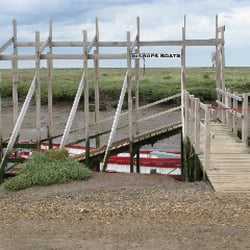
    Bishop's Boats - Bishop's Boats Morston Quay

    Bishop's Boats Morston Quay

    Bishop's Boats - Seals basking in the rain

    See all

    Seals basking in the rain

    River Trent - River Trent at Nottingham - photo courtesy of P Lamb.

    River Trent

    5.0(2 reviews)
    45.2 mi

    The River Trent is one of Britain's great rivers: at 185 miles the third longest after the Severn…read moreand the Thames, it was historically one of the great trading rivers of Britain and still carries a considerable amount of commercial traffic today, as well as pleasure craft. Boating on it offers great varieties of scenery, and for experienced crews, the chance to navigate the broad tidal stretches. History of navigation The history of navigation dates back at least to the Bronze Age, when it is thought to have been part of the route from Ireland to the Continent. The Romans built the Foss Dyke Canal to link Lincoln with the Trent in 120AD, and the Danes used it to attack the Saxons as far up as Nottingham. It remained the major transport route for the East Midlands until the 19th century. The channel was improved substantially between 1906 and 1926 with locks increasing the depth and navigability substantially, and it still carries a substantial traffic of gravel downstream of Newark. The Route Rising near Biddulph in Staffordshire, the river is joined by many tributaries that drain a huge part of central England, and which also give it its propensity to flood severely: its name is Celtic for 'flooding'. An attractive and winding river as far as Burton on Trent, thereafter it becomes wider and navigable, although for practical purposes most pleasure craft join at at the end of the Trent and Mersey canal at Shardlow. Between Shardlow and Nottingham, sections of the river have been canalised with locks, as at Sawley and Cranfleet. At Trentlock is a huge junction, where the Erewash Canal and river Soar join. The Trent at Nottingham is unnavigable, and boats must pass along the Beeston Cut and the pretty Nottingham Canal through the heart of the City. It goes without saying that there's plenty to keep you occupied here! Thereafter, the route widens again as it passes the National Water Sports Centre at Holmes Pierrepoint, and falls gradually through a series of impressive locks, built wide and deep enough for commercial traffic. These locks are mechanised, and have lock keepers to operate them, although out of hours they can be operated by British Waterways key owners. I must confess it's great fun to do this: it's like pushing the buttons in museum exhibits, but on a great scale! The usual care must be taken in locks, as these are particularly deep, and have large and impressive weirs alongside them. In times of flood, these can result in the river being closed for navigation. There are some great pubs as you go downstream - Gunthorpe village being particularly well blessed. Just before Newark, the river begins the first of its huge meanders, and the navigable section narrows through the town itself (the main river bypasses the town to the west). Newark is well worth a stop - lots of decent pubs, a castle, an impressive church and other historic buildings. Below Newark is the final lock, at Cromwell: it is huge, and also has the largest weir. (Passage should be booked in advance). From here onwards the river is impressively wide, but tidal and advisable only for experienced crews: boats must be suitable, with navigation lights, safety equipment and VHF radios. The banks are seldom suitable for mooring, and the large (and fast) gravel boats are an extra hazard, as are shallows (shoals) on some of the bends. (Pleasure craft must give way to them). On the plus side, the scenery is wonderful, the river is crossed by some impressive bridges, and the feel of boating on a major river, as opposed to a canal, provides a completely different experience. At Torksey there are moorings at the mouth of the Fossdyke (Lincoln) canal, and a couple of pubs, before the next town of Gainsborough. The latter also has some decent pubs and shops, and limited mooring. Below Gainsborough the river is now the responsibility of the Humber Navigation by-laws, administered by Associated British Ports. At this point, on certain tides, you can encounter the Aegir, or tidal bore. This can be between 1ft and 5ft (!), and is named after the Norse god of the sea. Shortly after Gainsborough is West Stockwith, its huge lock on the west bank the entrance to the Chesterfield Canal (lock-keeper operated - passage must be booked in advance). The canal has a large basin, and the village some nice pubs and an attractive church. Commercial boats downstream of here can carry well over 1,000 tons. The river now runs even broader and straighter through flat land to Keadby, where the South Yorkshire Navigation joins at Keadby Lock. Most pleasure craft stop here to join this canal: 24 hours notice is again required to the lock keeper. The next section runs to Trent Falls, where the river joins the River Ouse and becomes the Humber. This really is for very experienced crew only and for suitable boats - the tides and currents are formidable, most boats have to beach at low tide, and large commercial vessels abound. (Needless

    Great walks and wildlife along the trent , you can't beat itread more

    Photos
    River Trent - Approaching Holme Lock, River Trent - photo courtesy of P Lamb.

    Approaching Holme Lock, River Trent - photo courtesy of P Lamb.

    River Trent - Entering Stoke Lock, River Trent - photo courtesy of P Lamb.

    Entering Stoke Lock, River Trent - photo courtesy of P Lamb.

    River Trent - Trentlock - where the River Soar and Erewash Canals join the Trent. Photo courtesy of P Lamb.

    See all

    Trentlock - where the River Soar and Erewash Canals join the Trent. Photo courtesy of P Lamb.

    National Fishing Heritage Centre - fishing - Updated July 2026

    Loading...
    Loading...
    Loading...