Cancel

    Open app

    Search

    Okeechobee Waterway Bridge

    1.0 (1 review)

    Okeechobee Waterway Bridge Photos
    Recommended Reviews - Okeechobee Waterway Bridge

    Your trust is our priority, so businesses can't pay to alter or remove their reviews. Learn more about reviews.
    Yelp app icon
    Browse more easily on the app
    Review Feed Illustration
    Photo of Bruce K.
    2415
    25923
    75977

    11 years ago

    Helpful 8
    Thanks 0
    Love this 3
    Oh no 0

    Verify this business for free

    Get access to customer & competitor insights.

    Verify this business

    Confusion Corner

    Confusion Corner

    3.8(5 reviews)
    17.9 mi

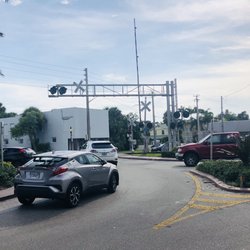
    Yikes! I'm living in Stuart over 2 years & this was the first time I was diverted to this crazy…read moreroundabout due to road closures, & yes - was thoroughly confused & highly intimidated by that railroad track being in the heart of it all! My IMAP stopped talking and if matters weren't bad enough, (when I decided which exit to follow after my brain finally unscrambled) some jerk started honking madly as I carefully drove straight ahead to reach US 1..It was unnerving at first but worth the adrenaline rush once I calmed down & laughed it off. Realistically though- future navigators -- please pay close attention to & avoid that RR track and ignore those nasty honkers!

    What makes Confusion Corner in historic downtown Stuart Florida so confusing? It is the eight…read moreroads! that come together in one intersection. Hold your breath and say a prayer as you attempt to make it safely through Flagler Avenue, East Ocean, West Ocean Blvd, Colorado Avenue, A1A both North & South, and Dixie Highway where they join in a roundabout, creating a Stuart landmark. If that wasn't enough, throw a train track in there too. How do you know you are at Confusion Corner? Stand in front of the April Daze boutique and watch the show. You will know you are in the right spot as you watch the cars swing around and hear the horns honking. If you have driven in downtown Stuart, you have passed through Confusion Corner. This intersection is so famous that the legendary Charles Kuralt came to Stuart in 1979 to film an episode for his popular "On the Road" series. There is even a song about it on You Tube by Clifford Buckosh & Okeechobee Records and if you survive the drive you can purchase a T Shirt to commemorate it at Harbor Wear. Despite all the confusion, the only deadly accident to happen there took place in the 1940's. So buckle up that seatbelt, as you swing yourself around Stuart's Confusion Corner.

    Photos
    Confusion Corner
    Confusion Corner
    Confusion Corner

    See all

    College Park Historic District

    College Park Historic District

    5.0(1 review)
    35.5 mi

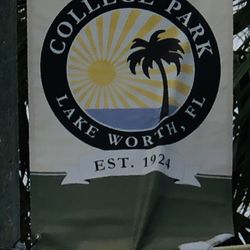
    I love a historical architectural tour and there is a great neighborhood on the northeast edge of…read moreLake Worth called The College Park Historic District, also known as College Park Residential Neighborhood. It was one of the first established neighborhoods in Lake Worth. Edgewood Realty Co. of West Palm Beach created the neighborhood in 1924 during Florida's land boom years in the 1920's. This subdivision was created by plats filed between December of 1924 and May of 1925. Within 3 hours 90 percent of the plats were sold. The developer wanted the neighborhood to be upscale so a minimum lot width of 50 feet was required and all new dwellings had to cost at least $5,000. The neighborhood is called College Park because the streets are named after a prominent colleges or universities like Harvard, Duke, and Princeton. Typical architectural styles are Mediterranean Revival and Mission style. The land boom ended in 1928 due to hurricanes and the Great Depression. The neighborhood saw another increase in construction after WWII when vets returned home and sought the warmer climate of Florida. Houses built during this time were single story, slab on grade masonry houses in Masonry Vernacular, International and Ranch architectural styles. John Price who served as county commissioner in Lake Worth was a resident of College Park. He was able to get the state and developers to donate more than 1,000 acres of land in the 1930's and 1940's which became John Prince Park, Palm Beach State College's Lake Worth campus, and the Lantana Airport. College Park was designated a U.S. historic district on February 9, 2001. Ninety historic homes and building reside in the boundaries of Maryland Drive, North Federal Highway, 19th Avenue North, and North Dixie Highway. Spillway Park located on the C-51 Canal is also located in this historic neighborhood.

    Photos
    College Park Historic District
    College Park Historic District
    College Park Historic District

    See all

    The Hurricane of 1928

    The Hurricane of 1928

    5.0(1 review)
    26.4 mi

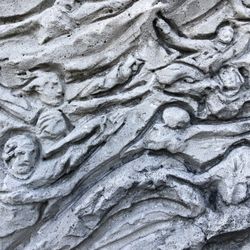
    The Hurricane of 1928 is the name of a 7.5 foot tall statue that is outside of the former library…read morein Belle Glade. It was created by renowned Hungarian sculptor Ferenc Varga as a memorial to the victims of the Hurricane of 1928. The art piece depicts a family trying to flee the hurricane. The father is holding on to his son while the mother clutches a baby to her chest. The base of the sculpture shows the flood waters washing away people and buildings. The 17,000 pound sculpture was commissioned by the Belle Glade Bicentennial Committee and dedicated on May 31, 1976. On Sunday Sept. 16, 1928, a category 5 hurricane came ashore near the Jupiter Inlet Lighthouse and swept across Palm Beach County, traveling west to Lake Okeechobee. If you visit the Jupiter Lighthouse you can still see the crack in the lens caused by the hurricane. The storm destroyed hundreds of buildings and caused millions of dollars in property damage. 2,500 to 3,000 people lost their lives, many of whom were black migrant farm workers and Belle Glades residents. It is the second deadliest hurricane in U.S. History after the 1900 Galveston Hurricane. The hurricane caused the Lake Okeechobee dike to collapse causing flooding at the south end of the lake. People clung to trees as they watched their homes wash away. Uprooted homes traveled through the flood waters for miles while some areas remained underwater for days. As bodies began to decompose it became necessary to bury them quickly and unidentified. 1,600 Glades residents were buried in a mass grave in the Port Mayaca cemetery in Martin County. This is a very powerful piece of art. You can see the terror on the faces of the people as they attempt to flee the storm and you can't help but think of what is what like for them. The hurricane ended the Florida real estate boom of the 1920s. The state was sent into a depression for more than a year and thenin 1929 the stock market crashed thrust the nation into the Great Depression. You can see the legacy of the hurricane all over Broward and Palm Beach county. Even though the Hurricane of 1928 was Floridas deadliest hurricane few people know about it today. It is memorials like this that serve to remind of the lives lost and to stay ever vigilant during hurricane season.

    Photos
    The Hurricane of 1928
    The Hurricane of 1928
    The Hurricane of 1928

    See all

    Old Floresta Historic District - Halloween 2025 Old Floresta.

    Old Floresta Historic District

    5.0(2 reviews)
    50.5 mi

    This neighborhood was designed by Addison Mizner in a Mediterranean style that you can see…read morethroughout the city of Boca Raton. It is located off of Palmetto Rd behind the Boca Raton Art Museum art school. The houses were designed for the executives of Mizner's company and one was for his brother the Reverend Henry Mizner who retired to Boca Raton. The Robinson Company were contracted to construct 29 homes in the neighborhood but they went bankrupt before they could finish. Architect Herman Von Holst from Chicago who owned the land foreclosed and along with investors he finished designing the subdivision and named it Old Floreresta meaning "a delightful rural place" in Spanish. The houses have certain characteristics in common, barrel tile roofs, wrought iron balconies, and Spanish style architecture. The homes are on narrow tree lines streets. Some of the notable homes in the subdivision are 888 Oleander St owned by Henry Mizner who lived in Acacia, 875 Alamanda St. was the home of Herman Von Holst and he named his home Lavender House. He went on to serve on both the Boca Raton town council and planning boards. The house is now on the National Register of Historic Places as is 801 Hibiscus St, it was owned by film producer and mayor of Boca Raton Fred Aiken. Other well known residents of the neighborhood were Thomas Fleming who founded Florida Atlantic University, Don Estridge who worked on the IMB personal computer, and Nathaniel Weyl who authored the book "Red Star Over Cuba" In 1990 Boca Raton named Old Floresta it's first historic district. The homes in the neighborhood are privately owned so you are not able to tour them. You are free however to drive through the beautiful neighborhood or even better bike it if you are able to do so. Although the homes I mentioned are not for sale a lot of other ones are. I saw quite a few for sale signs in the neighborhood. I am sure they are way out of my price range but it's free to dream.

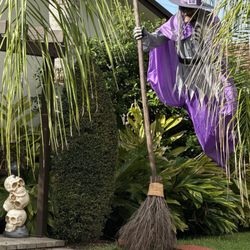
    Imagine my surprise to find a listing for the Old Floresta Historic District in Yelp. Like wow,…read morewhoever wrote this did a great service for helpers who seek out historic areas in Palm Beach county, areas which may be close to where they live or work. And this is OUR neighborhood. It's where we drive into and out of daily. It's where we walk our sato Bori. And where we drive friends around to show them the authentic ORIGINAL Mizner designed homes, as well as those which mimic the Mizner look. The streets are narrow, some cannot accommodate two cars going in either direction without riding up into someone's lawn. The foliage is heavy, very heavy. People who visit us or do work for us always comment that it reminds them of Coral Gables. As a historic district the City monitors carefully all renovations which affect the exterior in any manner at all, as plans must be reviewed by Historic division as well as City Code Compliance. Things like roof materials and colors, driveway design and materials, alterations to windows and doors or subtle things like the removal of a tree and its replacement. And that's all good! I love Old Floresta. I don't love the drivers who try through our area on the way to Boca Regional Hospital or anywhere else and roll through stop signs. I hope they get tickets when police set up traps. Our neighborhood is quiet, well preserved and a place where families walk with their children and their dogs and just chill. While not a gated community it is tucked away off Palmetto Park Road, east of 95 and west of Dixie, on the north side of the street. If you find the old Art School on the north side of Palmetto, you access Old Floresta on either Paloma or Cardinal (NW9). Drive slow when in our community. Or better yet, walk around. Oh by the way, on Halloween the homeowners really go craycray decorating their homes and thousands go trick treating.

    Photos
    Old Floresta Historic District - Halloween 2024. Is this supposed to be the doll that comes to life and does evil  things?

    Halloween 2024. Is this supposed to be the doll that comes to life and does evil things?

    Old Floresta Historic District - Halloween 2024. Three witches can cause a lot of trouble.

    Halloween 2024. Three witches can cause a lot of trouble.

    Old Floresta Historic District - Halloween 2024

    See all

    Halloween 2024

    Military Trail

    Military Trail

    5.0(1 review)
    22.4 mi

    Few people who drive down Military Trail today stop to think about it being an actual trail for the…read moremilitary. Jupiter erected a marker in front of the clock to remind everyone how this road came to be. The marker was placed by the Jupiter Town Council and the Florida Department of State in 2008. Military Trail was carved out during the Second Seminole War (1835-1842). At the time the military was trying to round up the Seminoles as part of the Indian Removal Act to send them on the Trail of Tears out to Oklahoma. The Seminoles knew the terrain better than the army and proved difficult to catch. After the second Battle of the Loxahatchee on January 24, 1838, Colonel Jessup ordered Major Lauderdale who the city of Ft. Lauderdale is named for, to take his Tennessee Battalion of Volunteers and cut a trail from Fort Jupiter all the way down to Fort Dallas in Miami. Major Lauderdale also brought along a regiment of soldiers commanded by Lt. Robert Anderson who were in charge of constructing trails and defensive works. Along the way he was instructed to catch any of the Seminoles who had escaped the battle of Loxahatchee. To avoid swamps they kept the trail to the higher coastal ridge and made a stop at Fort Lauderdale before going on to Fort Dallas. The volunteers were able to cut through 63 miles in only four days. The route was first named Lauderdale's Trail and was used through the Third Seminole War in 1858. It was eventually named Military Trail which today is a major thoroughfare. Twenty two years after cutting Military Trail, Anderson was in charge of U.S. soldiers in Charleston, South Carolina. After South Carolina seceded he withdrew the troops into Fort Sumter which was attacked by the confederates. Anderson surrendered the fort which kicked off the Civil War. As for the Seminoles, 200 were able to hide in the Everglades and avoid capture. They are the only tribe to never sign a peace treaty with the United States government and they currently own the multi million dollar Hard Rock empire.

    Photos
    Military Trail

    See all

    St. Lucie Nuclear Power Plant

    St. Lucie Nuclear Power Plant

    5.0(2 reviews)
    26.5 mi

    The energy center has lots of information and cool demonstration "toys"…read more The power plant provides clean energy in "bulks" compared to solar or wind energy.

    It's obvious that every source of electrical power generation has advantages and disadvantages, yet…read morethe generation of electricity remains one of the most controversial topics of our times. Whether these concerns are over global warming and its impact on the environment for future generations, the immediate risk and safety concerns of the surrounding communities or simply the cost justifications behind regulation or deregulation. There are groups on both sides of these arguments working tirelessly to justify their convictions for it or against it, but both sides can agree it's a vital part of our existence. In the case of nuclear power those advantages are both a clean and environmentally friendly method of electrical generation that's affordable, safe and reliable. The St. Lucie Power Plant located off of A1A on Hutchinson Island approximately 8 miles southeast of Fort Pierce, has been producing safe, reliable and low-cost electricity since 1976 when its first nuclear reactor was put online producing about 1 megawatt of electricity (1 megawatt = 1 million watts) of electricity -- enough power to supply the annual needs of more than 1 million homes. The second unit of equal size began operating in 1983 doubling the capacity of this generating station. This location was chosen because of its low-risk seismic zone, although St. Lucie is located in the lowest hazard zone for earthquakes according to the (USGS) this facility was constructed to withstand earthquakes and other natural events stronger than ever recorded in the region. The plant is elevated 20 feet above sea level to protect against flooding and extreme storm surges and successfully withstood the back- to-back impact of two hurricanes in 2004. This nuclear-power plant was built to withstand winds in excess of 195-mph and also the effects associated with these types of events with an abundances of redundant controls and emergency power supplies. This facility has been rated as one of the top performing U.S. nuclear power plants and has maintained a reasonable safety record since its commissioning. Although we would like to assume there are no inherent risk, in this industry it's more about how these risks are managed and the over-sight by a variety of agencies that fully understand the complexity of this technology and assumes responsibility to protect people and property. This plant is one of the many reasons Floridian's have some of the lowest cost per kilowatt hour in the country and a record of reliability that rivals more regions in the U.S. In order to educate the public this plant operates a visitor center, called the Energy Encounter, it allows visitors to experience interactive exhibits on electricity, nuclear energy and the environment and the admission is free it's open to the public Tuesdays & Thursdays 11 a.m. - 4 p.m. a visit here may put your mind at ease and certainly give you a better understanding of the demands facing the country's energy producers in today's world, who doesn't expect the lights to come on when we flick the switch, it's not magic you know it requires a never ending commitment by the men and women living in our community that work in this demanding industry to provide this service for all of us, the most privileged people on earth.

    Photos
    St. Lucie Nuclear Power Plant
    St. Lucie Nuclear Power Plant
    St. Lucie Nuclear Power Plant

    See all

    Historic Banyan Trees

    Historic Banyan Trees

    5.0(1 review)
    26.6 mi

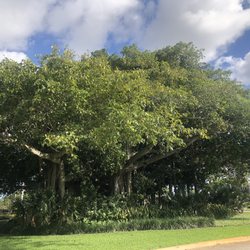
    The founder of the City of Palm Beach Gardens was John D. MacArthur…read more When he created his new community he wanted it to have a garden theme with streets named after flowers and trees. In the late 1960's MacArthur heard about someone who was going to cut down a banyan tree that was damaging her home. MacArthur arranged to have the tree moved to his new city new and pl;anted at the intersection of Northlake Boulevard and MacArthur Boulevard, formerly Garden Boulevard. Since the tree weighed 75 tons and was 60 feet high the city needed six months to prepare the tree for the move to its new location. On the morning of April 26, 1961 the tree was ready to be transplanted. Two cranes on two cargo trailers were sent to bring the tree to it's new home five miles away. Unfortunately disaster struck when a feed mill truck burst on the road cleared for the tree. Ten thousand gallons of molasses were dumped raising the height of the roadway. As it traveled the tree snapped several railway signal lines causing crossing gates to close. While the tree was crossing the train tracks one of the cables supporting it snapped. Workers had to saw off limbs of the tree to allow the blocked 1:30 train to get back on it's way. Just after 2 PM the tree was dropped into it's prepared hole. The Rev. A. P. Snyder of St. John's Evangelical Church said a prayer over the tree and MacArthur threw the first shovel of dirt over the roots of the tree. The entire process cost $30,000 and 1,008 hours of manpower. One year later, a second forty ton tree was moved from Lake Park next to the first tree. When people criticized Mr. MacArthur for spending so much to move the tree he replied "I can buy anything but age. This tree will be the centerpiece of our entrance, and while we could plant a little one there, I wouldn't be around 80 years from now to see it as it should be." Moving the tree gave MacArthur the nickname Banyan Mac. Although he was a developer, MacArthur was able to claim that "I built Palm Beach Gardens without knocking one tree down, I moved the biggest tree ever moved in Florida." MacArthur would go on to eventually move more than 200 trees including a sixty foot Norfolk pine that he replanted at the Colonnades Hotel on Singer Island and four more banyans which he floated on a barge from West Palm Beach. Today the landmark banyan trees have a limb span of half an acre. The trees are featured on the Palm Beach Gardens city shield. In 2007 Alexandre Renoir, a great-grandson of artist Pierre-Auguste Renoir, presented the City of Palm Beach Gardens with a painting of the trees. A historical marker was installed across from the trees in 2011.

    Photos
    Historic Banyan Trees
    Historic Banyan Trees
    Historic Banyan Trees

    See all

    Okeechobee Waterway Bridge - landmarks - Updated June 2026

    Loading...
    Loading...
    Loading...