Cancel

    Open app

    Search

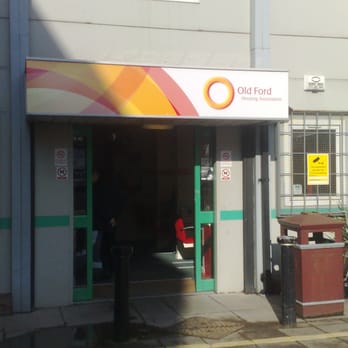
    Old Ford Housing Asscociation

    3.0 (1 review)

    Old Ford Housing Asscociation Photos

    Recommended Reviews - Old Ford Housing Asscociation

    Your trust is our priority, so businesses can't pay to alter or remove their reviews. Learn more about reviews.
    Yelp app icon
    Browse more easily on the app
    Review Feed Illustration

    18 years ago

    Helpful 0
    Thanks 0
    Love this 0
    Oh no 0

    Verify this business for free

    Get access to customer & competitor insights.

    Verify this business

    Queen's House - The Great Hall

    Queen's House

    (16 reviews)

    Greenwich

    The Queen's House is located near the National Maritime Museum and the Royal Observatory. It is a…read morebeautiful 17th century house that has been home to a number of queens. Again, like most of the London area museums, admission is FREE. We took a self-guided tour of the house. We visited in October (off-season) and the house was not crowded nor did we need tickets in advance. I'd suggest, however, that during the busier summer season you might want to make reservations. The furnishings and art are stunning. The decor is beautiful. We spent about an hour in the Queen's House.

    This isn't the name of a gay nightclub just in case you were wondering. This museum is in Greenwich…read morebetween the ferry pier and the Royal Observatory, and it would be a damn shame if you bypass this gorgeous 17th-century Palladian-style manor. Admission is free, so you really have no excuse. It was originally built as a present from King James I to Danish-born Queen Anne. Apparently the king uttered profanities in front of her when he accidentally shot one of his favorite hunting dogs. Wow, she sounds like a real Meghan Markle. Royal guilt must be in the bloodlines. The resulting house has been refurbished many times over, and it's quite nice with each room featuring a dizzying array of art from traditional portraits of Elizabeth I to an arresting Kehinde Wiley painting called "Ship of Fools" (photo: https://yelp.to/u5cl20xBM2). All the furnishings were impressive, but the architecture is what resonates the most starting with the Great Hall with its geometric black-and-white marble flooring. However, the Tulip Staircase was definitely the main attraction. It was the first geometric self-supporting spiral staircase in Britain and quite the architectural statement...don't you agree? (video: https://yelp.to/wjykuYT3IU) RELATED - Exploring London? Here's my collection of places I've visited and reviewed: https://bit.ly/3zFACrx

    Tower of London - Composite armor for man and horse

    Tower of London

    (853 reviews)

    Aldgate, The City

    The Tower of London was founded in 1066 due to the Norman Conquest of England. The Duke of…read moreNormandy, William the Conqueror, had amassed thousands of troops and hundreds of ships and landed in southern England. In October 1066, the reigning Harold II died during the Battle of Hastings and was succeeded by William the Conqueror as king. A series of further victories had cut London's supply lines, and its leaders had surrendered the city. William then initiated an extensive program to fortify the city, which included the construction of the Tower of London in 1066. From then, the Tower had continued to play a significant role in England's regal history. For centuries, monarchs would begin processions at the Tower to Westminster Abbey for their coronations. However, during the Tudor period, the Tower declined in its use as a royal residence. The castle would also serve as a prison for those considered politically undesirable. Under the order of King Henry VIII, the execution of Anne Boleyn occurred at the Tower in 1536. Her daughter, Elizabeth I, was also imprisoned there before she became queen under the order of Queen Mary I. Today, the Tower of London is a popular tourist attraction in the country. Its proximity to Tower Bridge and other attractions along the Circle and District Underground lines help in bringing in many visitors. There is no need to purchase admission if one is walking beside it to view its walls. Fortunately, there are outdoor signs available to learn a little about the history of what you're looking at.

    When I visited London earlier this month, it was the first I'd been in London for almost 20 years…read more I don't remember if I went to the Tower of London when I was in London in 2007, but I do remember that I went on my very first trip to London when I was a little girl. I was heavily into my King Henry VIII phase then, and I wanted to see the site where two of his queens lost their lives. Visiting as an adult was interesting. Some things I remembered and some things I didn't. There's no question that this is an incredibly historic site. The site dates back to 1066, and then William the Conqueror built his castle, the White Tower, in 1078. Then the site was expanded by the kings that followed. The purpose of the site changed over the centuries: armory, treasury, menagerie, Royal Mint, public record office, home of the Crown Jewels... For a few centuries, it was the place the next king would spend a few nights leading up to their coronation. And under the Tudors, it became what I knew it as when I was in my Tudor history phase - a prison. Guy Fawkes was tortured at the Tower in 1605. Anne Boleyn was held and executed at the Tower in 1536. Henry VIII's fifth wife was executed at the Tower in 1542. Lady Jane Grey was executed at the Tower in 1554. Queen Mary I imprisoned her sister Elizabeth, later Queen Elizabeth I, in the Tower for two months in 1554. It's a large site with several different buildings that explain and cover different eras and aspects of the Tower's history. Although I suspect the Crown Jewels are the highlight of many people's visit to the Tower, I really enjoyed and learned the most from the Medieval Palace (which has been preserved/reconstructed to demonstrate the palace where Henry III, Edward I, Eleanor of Provence, and Eleanor of Castile lived); the Chapel Royal of St Peter and Vincula (the final resting place of many prominent prisoners who were executed at the Tower); the Tower Hill Execution Memorial; the Bloody Tower (the tower tied to the imprisonment and disappearance of two young princes in 1483 and Sir Walter Raleigh); St John's Chapel inside the White Tower; and the Tower's ravens (legend says that the kingdom will fall if the resident ravens ever leave the Tower). It's a large property, and the map they provide is pretty terrible. So we just wandered and wandered. You need some time to do this, because there are towers and nooks and crannies - and every little corner of the property has something to teach visitors. I might be a little past my Tudor phase, but a visit to the Tower of London can still thrill this history nerd. A must include on an itinerary for a trip to London.

    Sky Garden - Sky Garden_Yelp_Sanju-2

    Sky Garden

    (362 reviews)

    Aldgate

    This is London's highest public garden that has 3 restaurants,2 bars and a gift shop…read more There is no admission fee but you must get a free ticket online.Tickets are available up to 3 weeks in advance of your visit and available time slots are listed. Arrive about 15 minutes early as you have to go thru security screening. Once thru security you take the elevator to the 35th floor. The views are amazing as are the gardens. Plenty of seating is available and there are public restrooms.

    We snagged sunset tickets to Sky Garden. I logged in shortly after tickets were made available…read moreonline three weeks prior and was able to book tickets for one of the nights of our trip. I would have preferred an earlier evening time slot, but they were not available. They are quite strict about going in at your designated time slot and they let people up in the elevator only when its your time. We were actually waiting in the lobby of an adjacent building where there was lots of seating, not realizing that the line formed on the *other side* of the building so beware. We lined up, went through security, went up the elevators, and then had an unlimited time up in Sky Garden. Since we already ate dinner, we didn't buy any food or drinks. The enclosed rooftop space is really quite breathtaking. There are all walls on all four sides which makes the views just unbelievable. There is a balcony as well, but it was closed at the time of our visit (at night?) From the "front" lower side, you can see River Thames and the Tower Bridge/Tower of London. From the back, there are amazing views of The Gherkin. Up at the higher side, there is more space and some platforms to sit. However, it was really hard to be on the stairs going up and down because it was so congested. As you can imagine, the photos out the windows are amazing because the views are amazing. However, it's impossible to get photos of your party because there will be tons of people around you. The whole space is just packed with tourists. I was glad to have experienced it once, but I don't ever plan on returning and would try a viewing area that is less touristy. It's worth a stop but not worth taking a huge chunk of time from your day if it doesn't slot in naturally.

    Crossbones Graveyard

    Crossbones Graveyard

    (5 reviews)

    Borough

    This little garden was on a list of strange/offbeat attractions to see on my trip to London because…read moreof the dark history around it. It's basically a garden grown atop a mass grave for poor, unmarried women, sex workers, and children. Small but lovingly cared for by volunteers, it is only open from noon to 3PM on weekdays during the summer. There is some artwork and little memorials. It's a little out of the way, but if you're in the area it's a nice quick stop to pay tribute to the forgotten women and children.

    Another Halloween visit? This one holds a celebration here…read more Cross Bones Graveyard was a mediaeval burial ground, situated in St Saviours parish, now Redcross Way SE1. There is a long established tradition that it was a final resting place for Winchester Geese, ie prostitutes, from the legalised brothels or 'stews' of Bankside. This dates back to the days when the Bishop of Winchester ran Bankside and licensed the Geese. Recent archaeological digs for the Jubilee Line extension have uncovered evidence of a highly overcrowded graveyard where bodies are piled up on top of each other and tests have shown that many of the bodies are women and children with diseases ranging from smallpox, TB and pagets disease to osteoarthritis and vitamin D deficiency. This is Cross Bones, an unconsecrated graveyard going back to medieval times. The Tudor historian John Stow refers to it as a burial ground for 'single women' - a euphemism for the prostitutes who worked in Bankside's legalised brothels or 'stews'. In his 1603 Survey of London, Stow writes: 'I have heard of ancient men, of good credit, report that these single women were forbidden the rites of the church, so long as they continued that sinful life, and were excluded from Christian burial, if they were not reconciled before their death. And therefore there was a plot of ground called the Single Woman's churchyard, appointed for them far from the parish church.' The burial registers of St Saviour's parish don't distinguish between burials in Cross Bones and those in the churchyard adjoining what is now Southwark Cathedral. However, the long-established local tradition - that Cross Bones was a prostitutes' graveyard - is restated in the Annals of St Mary Overy (1833): 'There is an unconsecrated burial ground known as the Cross Bones at the corner of Redcross Street, formerly called the Single Woman's burial ground, which is said to have been used for this purpose' Such women were condemned to be buried in unhallowed ground. Yet many were actually licensed by the church. For some 500 years, the Bishop of Winchester exercised sole authority within Bankside's 'Liberty of The Clink', including the right to licence prostitutes under a Royal Ordinance dating back to 1161. These women became known as 'Winchester Geese'. Cromwell and the Puritans shut down the Bankside pleasure quarter, with its bear-pits, theatres, taverns and stews. By Victorian times, the area around Cross Bones was known as The Mint - an overcrowded, cholera-infested slum, and a notorious thieves quarter. When William Booth was conducting his survey of poverty, his researcher George Duckworth described it as: ' a set of courts and small streets which for number, viciousness, poverty and crowding, is unrivalled in anything I have hitherto seen in London.' Duckworth walked around The Mint with a policeman who told him: 'Police don't go down here unless they have to, and never singly.' Around this time, Cross Bones witnessed many a pauper's burial. It was also the haunt of body-snatchers, seeking specimens for the anatomy classes at nearby Guy's Hospital. The graveyard was finally closed in 1853, on the grounds that it was 'completely overcharged with dead' and that 'further burials' would be 'inconsistent with a due regard for the public health and public decency'. In 1883, it was sold as a building site, prompting Lord Brabazon to write to The Times: ' with a view to save this ground from such desecration, and to retain it as an open space for the use and enjoyment of the people.' (10th November 1883) The following year the sale was declared null and void, under the Disused Burial Grounds Act (1884). Subsequent attempts to develop the site were fiercely resisted by local people. The land was briefly used as a fair-ground until an action was taken against the showmen for abatement of the nuisance caused by steam organs and noisy music. Apart from these minor intrusions, the graveyard slept peacefully and unmolested for the best part of a century. Then, in the 1990s, London Underground built an electricity sub-station to supply power for the Jubilee Line Extension. Prior to the work, Museum of London archaeologists conducted a partial excavation of the site, removing some 148 skeletons. By their own estimate, these represented: 'less than 1% of the total number of burials that were made at this site.' Some were exhibited at the Museum's 1998 London Bodies exhibition, including: ' a young woman's syphilitic skull with multiple erosive lesions, from Red Cross Way, Southwark, 18th century'.' 'For tonight in Hell, they are tolling the bell For the Whore that lay at The Tabard And well we know how the carrion crow Doth feast in our Cross Bones Graveyard.' They have since conducted many rituals and community events at the graveyard. The rituals are simple, inclusive and non-dogmatic, emphasising respect for 'the Ancestors', and honouring the spirit of

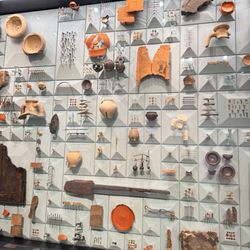
    Temple of Mithras - Artifacts found at the site

    Temple of Mithras

    (5 reviews)

    The City

    In 1954, after the Blitz in London, Roman temple ruins were discovered. The ruins dating to 400…read moreA.D. were painstakingly preserved and studied. Today, this underground museum houses the ruins and artifacts found and is opened free to the public. (The Museum is beneath the Bloomberg Building). We ordered free tickets on line, but most people show up without tickets and get in fine. They run the tours every 20 minutes or so. On ground level is a display of the artifacts found at the site. We were surprised by the sophisticated workmanship. A theater describes the people, temple and their devotion to Mithras, a sun/star-type deity. Visitors descend into the area of the temple ruins and experience a virtual program of the temple as it might have appeared 2000 ago. After the brief program, visitors can walk around and take photos. The museum is remarkably well done and I was fascinated by the experience and thinking about these early inhabitants of the region. The staff is friendly and knowledgeable. Donations are encouraged. Restrooms are available. The entire museum is accessible. Plan a short 30-45 minute visit.

    The Temple of Mithras - known also as the London Mithraeum - are the remains of a temple dedicated…read moreto the Roman god Mithras, in the city of London, underneath an office block built for Bloombergs in 2012-14. During construction, the Temple was moved to its original position and this visitor centre was constrcuted to house it and enable the public to have regular access. The mithraeum was built here, on what were then the banks of the Walbrook river, around AD 240, in the middle of the Roman city of Londinium, which became the site of the present-day London (and of course gave us the city's name). The worshippers in this temple were members of an all-male cult that spread across the Roman Empire in the first four centuries AD. By the later 5th century AD, following the departure of the Roman legions from Britain in 410AD, Londinium had been effectively abandoned, and the temple had been abandoned with it. The site became buried and the medieval and then the modern city of London evolved above. The remains were unearthed during World War II, when bombing destroyed much of the area on and around the site, and a subsequent archaeological excavation here revealed the ruins of a Roman building. The excavation was open to public display and generated a great deal of interest at the time. On the last day of the excavation, a sculpted head of the god Mithras was uncovered, confirming the identity of the building as a mithraeum. In response to public interest, the temple remains were dismantled and reassembled nearby, and remained on view until the early 2000s. The redevelopment of the site has enabled the temple to be returned to its original location, and additional remains were also found. It was decided at the time that the remains should form part of a small museum open to the public, providing interpretation of the site. This has included the development of a multi-media interpretation in which light and sounds are used to give an impression of the building as it was originally constructed and used. You enter at ground level, where this is a display of some of the many and impressive objects discovered during the 2012-14 excavation. Sadly, the interpretation is rather limited, but they includes coins, surgical and grooming instruments, pottery, keys, jewellery, footwear, a paddle and even (rare) surviving part of a Roman panelled door. (It's actually an impressive collection of everyday objects that would be very welcome in any museum.) You then descend to a lower floor where there is an audio loop about the site and the cult of Mithras, and some more limited interpretation on interactive computer screens. This is interesting but there need to be more screens for the number of people visiting. (You had to queue up to read them.) Then, every 20 minutes, access is provided to the remains of the temple itself, where there is a sound and light show. We also found this a bit disappointing: it would have been an ideal opportunity to explain all about the building and how it was used, instead of which everything was focused on creating "atmosphere". But visitors are able to remain behind for a short while to take photographs. So all in all, an interesting diversion for 30 minutes, but it could have been better presented. Entrance is free, but it is best to book as space is limited and entry is controlled to 44 people an hour (11 people every 15 minutes). Access is via stairs or a lift to all floors (but the main entrance door is not automatic). There are toilets. Note the light show includes periods of very low lighting and rumbling noise, so may not suit everyone.

    Old Ford Housing Asscociation - realestate - Updated September 2026

    Loading...
    Loading...
    Loading...