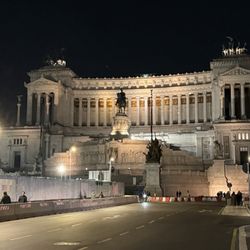
Being located in front of Saint Peter's Basilica and the Vatican Museums, the cobble stone square…read morein front of this massive structure matches its grandeur of scale. 140 saints from the Catholic tradition, sculpted from travertine ranging from 10 to 11 feet in height, encircle the piazza as part of Bernini's Colonnade.
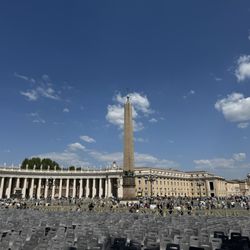
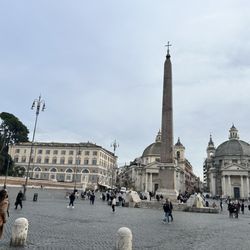
The red granite obelisk jutting out in the center is much older than all the structures surrounding it, originating around 1900 BCE in Egypt, traveling to Italy and then to Rome in 37 CE, finally moving most recently to its present position in 1586. This massive feat to move the 330-ton tower of stone 260 meters to the center of the square required 900 men, 75 horses and complex, engineered crane systems.
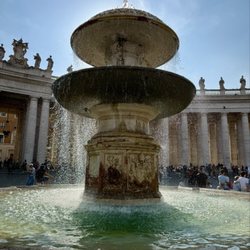
Two granite fountains--one north of the obelisk, one south--were signatures left by the master architects of St Peter's. The north one by Carlo Maderno, who designed the monumental facade and nave and the other by Gian Lorenzo Bernini who designed the Piazza San Pietro with its colonnade of saints.
On any given day prior or during a mass, there are 20,000 chairs set up in a space that holds 60,000 people comfortably standing though history has known crowds of up to 100-130K.
Tickets are free for papal audiences though need to be booked in advance for seated sections.
There's not much "to do" per se, though walking here (and in many places in Rome), once you look past the hoards of visitors it's awe-inspiring to contemplate the history that's taken place here, and take a break from your Vatican exploration.
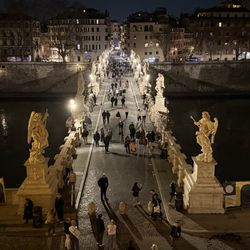
From the piazza, a pleasant, less crowded stroll east down Via della Conciliazione (which has obelisk-shaped street lampposts) brings you to Castel Sant'Angelo, a 2nd century fortress with a museum inside and beautiful panoramic views of the city.