Pinkasova synagoga Photos



Recommended Reviews - Pinkasova synagoga
Start your review...


Reviews With Photos


Visiting this place will make you realize the extent of the victims' deaths. Very sad to see the names on the walls and the children's paintings throughout the area. This is a significant part of the history while visiting Prague and should not be missed. It felt weird walking through the cemetery but that's part of the tour. It's a walk around the entire cemetery which I didn't like because I felt like I was intruding but it's one way and it's tough to leave from the middle: only one exit and another side for entrance. You can get the tickets all together for the Jewish area: it covers the Synagogue, cemetery, ceremonial hall etc. If you have a Prague card it's included in your Prague card purchase.~


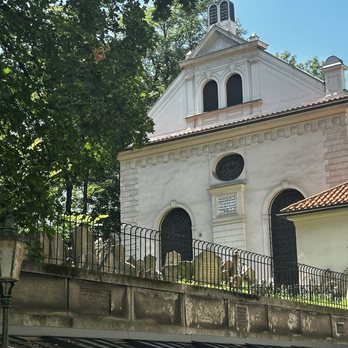
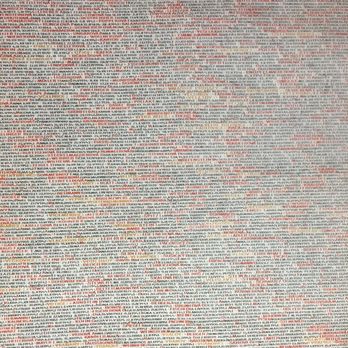
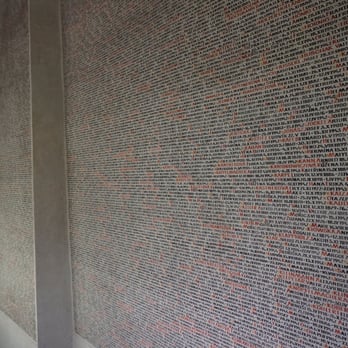
I feel odd rating a memorial and cemetery like this, but it is a visitor's attraction, so I guess it makes sense. The museum is just a short walk away from the Spanish Synagogue (which is the route we took the day we visited). You have to walk through a small courtyard - where there are one or two stalls set up for tourists - to get to the ticket booth before they'll let you in to the memorial itself. Note - men are required to cover their heads. They provide loaner yarmulkes at the gate, or they allow you to wear hats, scarves or hoodies. Just please don't be that obnoxious ass who thinks you don't have to observe their rules. It's a sacred place, you can cover your head for the 45 minutes you're inside. /endrant The memorial is powerful. It strikes you the second you walk through the doors, and see the walls absolutely covered with the names of the over 70,000 Nazi victims. It may take a minute for your mind to process what it's seeing - you go from white walls to walls that are covered with red and black ink. You stop to stare, then maybe you pick a point on a wall, and step up to take a closer look. You get there, and even though you're closer and the text is clearer, it still takes another minute to digest - these are names of people who lived in the area. Their names are followed by the dates of birth and of their disappearance. And the names continue. The text is small. The walls are covered. It's astounding. There are small plaques in front of each wall, so if you're looking for a specific surname, you should be able to find it by following the signs. It's overwhelming, and more often than not, you'll see another tourist just kind of rooted in place, staring slack-jawed at the thousands of names set out before them. This part of the memorial continues on for two stories. Two stories of tiny, crammed names neatly inscribed on every wall in your sight. Upstairs is a small set of rooms full of children's artwork. It's cramped up there, but it's absolutely a must-see. It's heartbreaking, seeing these relics of children victims. Upon leaving the building, you take another small walk through a courtyard, which eventually leads you to the Jewish Cemetery, which is the oldest surviving Jewish cemetery in Europe. This, again, is breathtaking. Tombstones tilt at every angle. Some of them have fallen over. Some are crumbling away. Most are covered by weeds and flowers and grass. And there are so many of them. They lean against each other, climb over and obscure each other. They're at all different levels, some in better repair than others, some with mementos left by visitors over the years. It's a short walk through the entirety of the cemetery. Your gaze will capture every type of tombstone, in every stage of repair. You'll see the notes under stones, the stones, and the coins. You can find a spot to stand and reflect, or you can walk slowly along, absorbing it all as you go. Leaving the cemetery, you're deposited into a side street that has access to two more stops on the museum ticket (assuming you purchased a combo).


2 years ago
We are on holiday in Europe. My wife and I are traveling with my daughter 19 and niece 18 from the United States. My wife takes her sisters kids on our summer vacation each time in graduated. This is the 7th and youngest. We have never faced this insult before here on other activities or in previous years in previous activities in other locations. So far in Prague, we did the Charles Bridge Tour, Royal Czech Orchestra, Cooking class with Brett and the Communist Museum in Prague so far. I bought tickets for Royal Czech Orchestra which was awesome. Four A section seats but forgot I had students. (My mistake). We did the Charles Bridge tour. Not sure what tickets my wife bought but also very good tour. The Communist museum was lots of information and very worthwhile. I bought two adult and two student tickets. They didn't check kids student ID. We had a visit and bought souvenirs and gifts. Now the Pinkasova Synagogue that we had decided to visit because Jana from Charles Bridge guided tour show us the cemetery and told us about the history and persecution the Jewish suffered here in Prague. Plan was to see the museum and cemetery and buy a Golem for our Jewish friend in Washington I should have bought tickets online, would have avoided this insult. Was doing so in line but line went fast so I thought I'd buy at the counter. Two adult and two students please. The 60ish woman at window demanded student IDs. My daughter had hers and showed it but my niece 18 just graduated high school in North Carolina and is going to BYU in fall. She doesn't carry her expired high school ID and doesn't have a BYU ID yet. The attendant would not accept this explanation. I suggested my niece pull out her drivers license to show the attendant her age thinking this would show student age. Ella was working at it. The attendant interjected that... your drivers license shows me you have a drivers license, not that you are a student.... Hmm you can't take that comment back. I said "ok then we just won't go."We just left. I guess you caught us. Checking IDs and unspoken accusation that we are trying to cheat the synagogue of 150 or 250 Czech dollars. You can keep your synagogue history and knowledge for yourself. We learned a lot just at the window. Next time I come I might buy tickets online, or make sure any kids have student IDs. Maybe we will all be adults or maybe I'll be old but have to show my ID so u can get senior tickets. Keep treating your patrons as liars and cheats. For now No thanks!!! We will go somewhere else. read more

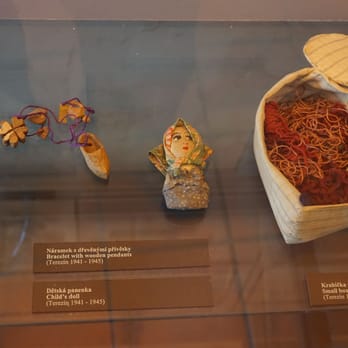
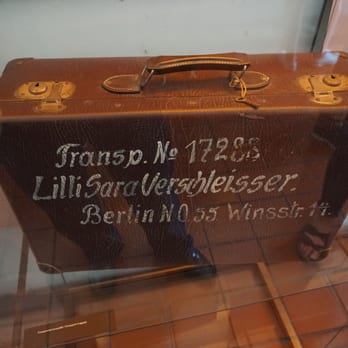
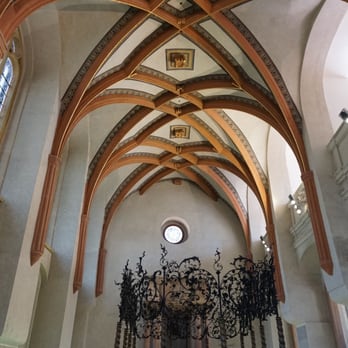
An emotional tribute to the children of Terezin and 78,000 victims of the Holocaust. The second oldest serving synagogue in Prague is another emotional stop on the Jewish Museum Tour. Built starting in 1535, it is a mix of Gothic, Renaissance, Baroque and Rococo styles. After the Holocaust, the walls were covered with the names of the 78,000 Czech and Moravian Jews that perished. It was closed during the Soviet occupation. It also has a collection of the artwork of the children of Terezin. Frederika Dicker-Brandeis and her husband were deported to Terezin in December 1942. She helped to organize secret art classes for the children in this concentration ghetto as a way for them to express their emotions. Before she was transported to Auschwitz in 1944, she managed to smuggle two suitcases filled with 4500 of the children's drawings to the chief tutor of Girls'Home L410. After the war, the director returned the suitcases with the children's drawings to the Jewish community in Prague where they are currently displayed in the Pinkas Synagogue. These pictures give an insight into their grim experiences, hopes and daily lives. read more




Visiting this place will make you realize the extent of the victims' deaths. Very sad to see the names on the walls and the children's paintings throughout the area. This is a significant part of the history while visiting Prague and should not be missed. It felt weird walking through the cemetery but that's part of the tour. It's a walk around the entire cemetery which I didn't like because I felt like I was intruding but it's one way and it's tough to leave from the middle: only one exit and another side for entrance. You can get the tickets all together for the Jewish area: it covers the Synagogue, cemetery, ceremonial hall etc. If you have a Prague card it's included in your Prague card purchase.~ read more


11 years ago
I feel odd rating a memorial and cemetery like this, but it is a visitor's attraction, so I guess it makes sense. The museum is just a short walk away from the Spanish Synagogue (which is the route we took the day we visited). You have to walk through a small courtyard - where there are one or two stalls set up for tourists - to get to the ticket booth before they'll let you in to the memorial itself. Note - men are required to cover their heads. They provide loaner yarmulkes at the gate, or they allow you to wear hats, scarves or hoodies. Just please don't be that obnoxious ass who thinks you don't have to observe their rules. It's a sacred place, you can cover your head for the 45 minutes you're inside. /endrant The memorial is powerful. It strikes you the second you walk through the doors, and see the walls absolutely covered with the names of the over 70,000 Nazi victims. It may take a minute for your mind to process what it's seeing - you go from white walls to walls that are covered with red and black ink. You stop to stare, then maybe you pick a point on a wall, and step up to take a closer look. You get there, and even though you're closer and the text is clearer, it still takes another minute to digest - these are names of people who lived in the area. Their names are followed by the dates of birth and of their disappearance. And the names continue. The text is small. The walls are covered. It's astounding. There are small plaques in front of each wall, so if you're looking for a specific surname, you should be able to find it by following the signs. It's overwhelming, and more often than not, you'll see another tourist just kind of rooted in place, staring slack-jawed at the thousands of names set out before them. This part of the memorial continues on for two stories. Two stories of tiny, crammed names neatly inscribed on every wall in your sight. Upstairs is a small set of rooms full of children's artwork. It's cramped up there, but it's absolutely a must-see. It's heartbreaking, seeing these relics of children victims. Upon leaving the building, you take another small walk through a courtyard, which eventually leads you to the Jewish Cemetery, which is the oldest surviving Jewish cemetery in Europe. This, again, is breathtaking. Tombstones tilt at every angle. Some of them have fallen over. Some are crumbling away. Most are covered by weeds and flowers and grass. And there are so many of them. They lean against each other, climb over and obscure each other. They're at all different levels, some in better repair than others, some with mementos left by visitors over the years. It's a short walk through the entirety of the cemetery. Your gaze will capture every type of tombstone, in every stage of repair. You'll see the notes under stones, the stones, and the coins. You can find a spot to stand and reflect, or you can walk slowly along, absorbing it all as you go. Leaving the cemetery, you're deposited into a side street that has access to two more stops on the museum ticket (assuming you purchased a combo). read more




4 years ago

11 years ago
Eerie, somber yet striking landmark in the Jewish quarter that actually has more burials than tombstones which is crazy because you won't believe how many there really are. Dating back to the 1400s with many notable people buried here. It's haunting and amazing to visit and is an absolute must on your itinerary. It is attached to the Jewish museum which houses textiles, metals visual and photographic art. It's very fascinating. Admission is only CZK300 which is about $12 so it's inexpensive. read more


13 years ago