1. Royal Victoria Dock Bridge

    1. Royal Victoria Dock Bridge

    0

    London, XGL

    Cancel

    Open app

    Search

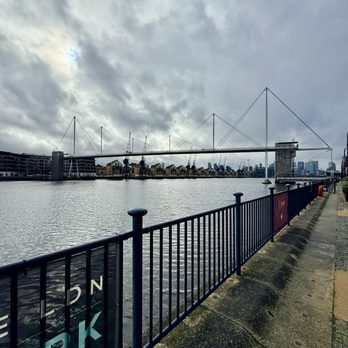
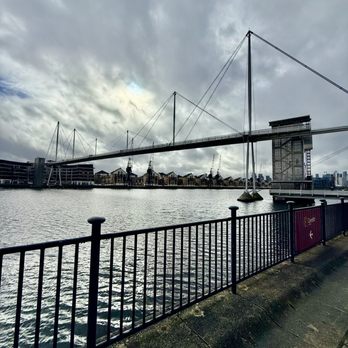
    Royal Victoria Dock Bridge

    5.0 (1 review)

    Royal Victoria Dock Bridge Photos

    Recommended Reviews - Royal Victoria Dock Bridge

    Your trust is our priority, so businesses can't pay to alter or remove their reviews. Learn more about reviews.
    Yelp app icon
    Browse more easily on the app
    Review Feed Illustration

    5 months ago

    Helpful 22
    Thanks 8
    Love this 24
    Oh no 0

    Verify this business for free

    Get access to customer & competitor insights.

    Verify this business

    Queen's House - The Great Hall

    Queen's House

    4.4(16 reviews)
    2.2 miGreenwich

    The Queen's House is located near the National Maritime Museum and the Royal Observatory. It is a…read morebeautiful 17th century house that has been home to a number of queens. Again, like most of the London area museums, admission is FREE. We took a self-guided tour of the house. We visited in October (off-season) and the house was not crowded nor did we need tickets in advance. I'd suggest, however, that during the busier summer season you might want to make reservations. The furnishings and art are stunning. The decor is beautiful. We spent about an hour in the Queen's House.

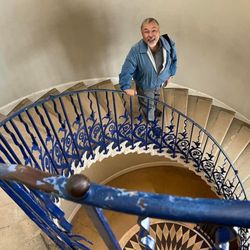
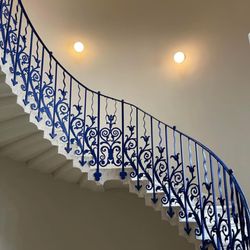
    This isn't the name of a gay nightclub just in case you were wondering. This museum is in Greenwich…read morebetween the ferry pier and the Royal Observatory, and it would be a damn shame if you bypass this gorgeous 17th-century Palladian-style manor. Admission is free, so you really have no excuse. It was originally built as a present from King James I to Danish-born Queen Anne. Apparently the king uttered profanities in front of her when he accidentally shot one of his favorite hunting dogs. Wow, she sounds like a real Meghan Markle. Royal guilt must be in the bloodlines. The resulting house has been refurbished many times over, and it's quite nice with each room featuring a dizzying array of art from traditional portraits of Elizabeth I to an arresting Kehinde Wiley painting called "Ship of Fools" (photo: https://yelp.to/u5cl20xBM2). All the furnishings were impressive, but the architecture is what resonates the most starting with the Great Hall with its geometric black-and-white marble flooring. However, the Tulip Staircase was definitely the main attraction. It was the first geometric self-supporting spiral staircase in Britain and quite the architectural statement...don't you agree? (video: https://yelp.to/wjykuYT3IU) RELATED - Exploring London? Here's my collection of places I've visited and reviewed: https://bit.ly/3zFACrx

    Photos
    Queen's House - Tulip Stairs

    Tulip Stairs

    Queen's House - Tulip Stairs

    Tulip Stairs

    Queen's House - Queen's House

    See all

    Queen's House

    The Crossness Pumping Station - Part of the engine Prince Consort and decorative ironwork

    The Crossness Pumping Station

    4.8(5 reviews)
    4.6 miThamesmead

    While visiting England for a few weeks I found out about Crossness by accident. I was googling some…read morehistory sites, and up popped some photos of a beautiful Victorian cast iron fantasyland, a monument to 19th century civil engineering and the the sewers that transformed London from a stinky disease-ridden hellhole to a large and thriving metropolis. I was delighted to score a ticket for one of their guided tours, which are held once a week and seem to sell out fast. The trek from Central London in the morning by tube/train was very easy, and I got a cab for the short distance from the Abbey Wood station. This was well worth the trip. The building dates from the 1860s and was nearly lost to the wrecking ball in the 1950s, but has been lovingly restored by many volunteers who continue to work on maintenance, preservation, and expansion. You enter from a separate gate outside the Thames Water facility, and walk up a ramp to a little volunteer-run small-gauge train shuttle. The pumping station looks somewhat nondescript from the outside (especially as some of its original features were removed/scrapped over the years), but once you walk in, you will discover there's no hyperbole to the website's claim that Crossness is a 'cathedral of engineering' - our current-day public works are so half-a** in comparison. Glorious, lavishly ornate painted ironwork and complex machinery, all to handle poo! We started with a slide presentation and talk, about the Thames, backyard privies/cisterns and cholera outbreaks, the Great Stink of 1858 & the building of the sewers. Then we were split up into groups and guided around the property on a leisurely and thorough tour. Much of the facility has been lovingly restored, as funds permit, and the meticulous attention to detail with matching Victorian paint colors, etc., is commendable. The steam engine wasn't operational when I went, but I can imagine how loud it must be when it's going! The outbuilding that once served as a school for the workers, now contains a number of antique mechanical devices that have been expertly restored, and another is the shop where you can see people working away at metal lathes, etc. There is also an impressive array of antique toilets. This was well worth the side trip out of town and I would definitely go back; it would be a great family trip, or school visit. Anyone who doesn't stop to think about how our cities and civilizations deal with human waste, is missing out. Read "The Big Necessity" by Rose George, and "The Ghost Map" by Stephen Johnson, and visit Crossness Pumping Station. Why Bazalgette doesn't have an enormous statue in London I will never understand.

    You wouldn't really put 'sewage' and 'beauty' in the same sentence, would you? Well, you might…read moreafter a trip to Crossness in Abbey Wood. The interior of this Romanesque style Grade 1 listed building looks more like an ornate church than a pumping station, but not without reason, as this served as Victorian London's much-needed sewerage system. The Prince of Wales opened this building in 1865 and claimed to feel the whole floor rumble when he turned on the giant engines (a rumble you can still feel today if you go on a steamer day). These engines are the originals and possibly remain the largest rotative beam engines in the world. Adult entry is £4/£5 on streaming day, children under 16 go free. Crossness has just received a large grant from the National Heritage Fund, so check the website for opening times as they will be by appointment only in 2009.

    Photos
    The Crossness Pumping Station - A view from the Beam Floor into the Octagon, the central area of the Beam Engine House

    A view from the Beam Floor into the Octagon, the central area of the Beam Engine House

    The Crossness Pumping Station - Toilets galore

    Toilets galore

    The Crossness Pumping Station - One of the capitals of the columns between the windows features a little Joseph Bazalgette face!

    See all

    One of the capitals of the columns between the windows features a little Joseph Bazalgette face!

    Tower of London - Composite armor for man and horse

    Tower of London

    4.5(839 reviews)
    4.4 miAldgate, The City

    We recently visited the Tower of London again for the second time and it truly lived up to its…read morereputation as one of London's top attractions. This nearly 1,000-year-old fortress, which has served as a royal palace, prison, treasury, and execution site, offers an immersive journey through Britain's past that exceeds expectations for most visitors. The Jewel House is the standout! Visitors glide past on a moving walkway to admire the stunning coronation regalia, crowns, sceptres, and massive gems like the Cullinan diamond. It's absolutely worth the visit on its own--the sparkle and historical weight of these treasures create a "pinch-me" moment. Walking the grounds, exploring the White Tower (with its impressive armoury), the Bloody Tower, the battlements, and spotting the famous ravens feels incredibly immersive. Families, history buffs, and first-timers alike often describe it as unforgettable and deeply educational. Despite occasional crowds and the cost of admission, the Tower of London is absolutely worth it for history enthusiasts, castle lovers, and anyone fascinated by British royalty and its darker tales. It's a living piece of history that leaves a strong, lasting impression.

    We bought tickets a few days in advance and was able to get an 11am entry time. There was no line…read morewhen we got there, but had to snake through before entering. There was a guided tour starting right when we entered, but we did the audio tour on our own. I had also prepaid for a kids's book that we picked up at the gift shop. I wouldn't get it again if I had a redo. We also picked up our audio guides, which were included in the price of admission. This was great as it had a kids program and the guided map let us pick and choose what path we wanted to take. We chose to hit the highlights, which takes 90 minutes and we ended up being there for 2 hours. The line for the crown jewels wan't too bad and was the highlight of the visit. They also had live shows in the common area that the kids loved.

    Photos
    Tower of London - Medieval Palace

    Medieval Palace

    Tower of London - Guards

    Guards

    Tower of London - Crown Jewels in here

    See all

    Crown Jewels in here

    Crossbones Graveyard

    Crossbones Graveyard

    4.6(5 reviews)
    5.1 miBorough

    This little garden was on a list of strange/offbeat attractions to see on my trip to London because…read moreof the dark history around it. It's basically a garden grown atop a mass grave for poor, unmarried women, sex workers, and children. Small but lovingly cared for by volunteers, it is only open from noon to 3PM on weekdays during the summer. There is some artwork and little memorials. It's a little out of the way, but if you're in the area it's a nice quick stop to pay tribute to the forgotten women and children.

    Another Halloween visit? This one holds a celebration here…read more Cross Bones Graveyard was a mediaeval burial ground, situated in St Saviours parish, now Redcross Way SE1. There is a long established tradition that it was a final resting place for Winchester Geese, ie prostitutes, from the legalised brothels or 'stews' of Bankside. This dates back to the days when the Bishop of Winchester ran Bankside and licensed the Geese. Recent archaeological digs for the Jubilee Line extension have uncovered evidence of a highly overcrowded graveyard where bodies are piled up on top of each other and tests have shown that many of the bodies are women and children with diseases ranging from smallpox, TB and pagets disease to osteoarthritis and vitamin D deficiency. This is Cross Bones, an unconsecrated graveyard going back to medieval times. The Tudor historian John Stow refers to it as a burial ground for 'single women' - a euphemism for the prostitutes who worked in Bankside's legalised brothels or 'stews'. In his 1603 Survey of London, Stow writes: 'I have heard of ancient men, of good credit, report that these single women were forbidden the rites of the church, so long as they continued that sinful life, and were excluded from Christian burial, if they were not reconciled before their death. And therefore there was a plot of ground called the Single Woman's churchyard, appointed for them far from the parish church.' The burial registers of St Saviour's parish don't distinguish between burials in Cross Bones and those in the churchyard adjoining what is now Southwark Cathedral. However, the long-established local tradition - that Cross Bones was a prostitutes' graveyard - is restated in the Annals of St Mary Overy (1833): 'There is an unconsecrated burial ground known as the Cross Bones at the corner of Redcross Street, formerly called the Single Woman's burial ground, which is said to have been used for this purpose' Such women were condemned to be buried in unhallowed ground. Yet many were actually licensed by the church. For some 500 years, the Bishop of Winchester exercised sole authority within Bankside's 'Liberty of The Clink', including the right to licence prostitutes under a Royal Ordinance dating back to 1161. These women became known as 'Winchester Geese'. Cromwell and the Puritans shut down the Bankside pleasure quarter, with its bear-pits, theatres, taverns and stews. By Victorian times, the area around Cross Bones was known as The Mint - an overcrowded, cholera-infested slum, and a notorious thieves quarter. When William Booth was conducting his survey of poverty, his researcher George Duckworth described it as: ' a set of courts and small streets which for number, viciousness, poverty and crowding, is unrivalled in anything I have hitherto seen in London.' Duckworth walked around The Mint with a policeman who told him: 'Police don't go down here unless they have to, and never singly.' Around this time, Cross Bones witnessed many a pauper's burial. It was also the haunt of body-snatchers, seeking specimens for the anatomy classes at nearby Guy's Hospital. The graveyard was finally closed in 1853, on the grounds that it was 'completely overcharged with dead' and that 'further burials' would be 'inconsistent with a due regard for the public health and public decency'. In 1883, it was sold as a building site, prompting Lord Brabazon to write to The Times: ' with a view to save this ground from such desecration, and to retain it as an open space for the use and enjoyment of the people.' (10th November 1883) The following year the sale was declared null and void, under the Disused Burial Grounds Act (1884). Subsequent attempts to develop the site were fiercely resisted by local people. The land was briefly used as a fair-ground until an action was taken against the showmen for abatement of the nuisance caused by steam organs and noisy music. Apart from these minor intrusions, the graveyard slept peacefully and unmolested for the best part of a century. Then, in the 1990s, London Underground built an electricity sub-station to supply power for the Jubilee Line Extension. Prior to the work, Museum of London archaeologists conducted a partial excavation of the site, removing some 148 skeletons. By their own estimate, these represented: 'less than 1% of the total number of burials that were made at this site.' Some were exhibited at the Museum's 1998 London Bodies exhibition, including: ' a young woman's syphilitic skull with multiple erosive lesions, from Red Cross Way, Southwark, 18th century'.' 'For tonight in Hell, they are tolling the bell For the Whore that lay at The Tabard And well we know how the carrion crow Doth feast in our Cross Bones Graveyard.' They have since conducted many rituals and community events at the graveyard. The rituals are simple, inclusive and non-dogmatic, emphasising respect for 'the Ancestors', and honouring the spirit of

    Photos
    Crossbones Graveyard
    Crossbones Graveyard
    Crossbones Graveyard

    See all

    Royal Victoria Dock Bridge - landmarks - Updated July 2026

    Loading...
    Loading...
    Loading...