Cancel

    Open app

    Search

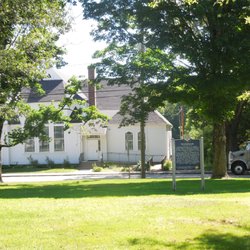
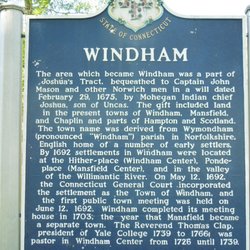
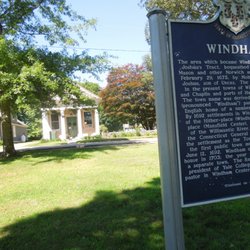
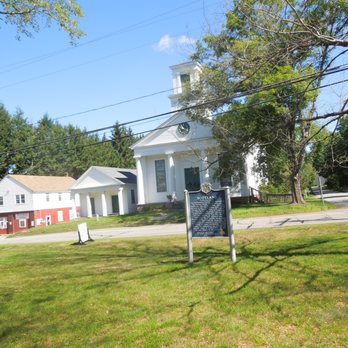
    Scotland Historical Marker

    4.0 (1 review)

    Scotland Historical Marker Photos

    More like Scotland Historical Marker

    Recommended Reviews - Scotland Historical Marker

    Your trust is our priority, so businesses can't pay to alter or remove their reviews. Learn more about reviews.
    Yelp app icon
    Browse more easily on the app
    Review Feed Illustration

    9 years ago

    Helpful 8
    Thanks 0
    Love this 6
    Oh no 0

    Verify this business for free

    Get access to customer & competitor insights.

    Verify this business

    Prudence Crandall Museum

    Prudence Crandall Museum

    4.3(6 reviews)
    9.2 km

    Excellent tour and tour guide by Joan DiMartino, Museum Director and Curator. Joan is a spell…read morebinding extremely knowledgeable lecturer with a vast repository of historical data about the life and times of Prudence Crandall. Prudence Crandall was a Quaker who opened the first school of color for girls in the state of CT in 1831. The school faced exordinary opposition and persecution from the local town government and citizenry of Canterbury. Town merchants refused to sell the school supplies; mobs of town folks broke windows, threw eggs, garbage, poisoned the well with manure and eventually tried to burn the school down. She was arrested and spent a night in jail for starting a school of color without first securing permission from the town council. Prudence was tried 2 times at the state level but was acquitted, it was the first civil rights trails in America. CT passed the Black Laws in 1834 denied black students an education without local town approval which in most cases would not be granted. She and her students eventually were driven out of town and the school closed. Her court case impacted the 13th,14th and 15th amendments to the Constitution. Supreme Court Justice Thurgood Marshall cited the Prudence Crandall case as precedent in the over turning of Brown vs The Board of Education which desegregated America's schools.

    It's sad what happened to this house. We went in fall of 2024. The entire upstairs was closed…read moreoff. We had to sign up for a "tour" and pay money to get in. The "tour guide" was a fast talker and rattled off a lot of details about the new version of Prudence Crandall's life which was apparently edited by a legal scholar. We often take out of state company to the Prudence Crandall House. Will not make that mistake again

    Photos
    Prudence Crandall Museum - Joan DiMartino, Museum Curator & Site Superintendent gave us a 50 minute guided tour of the Prudence Crandall home and boarding school.

    Joan DiMartino, Museum Curator & Site Superintendent gave us a 50 minute guided tour of the Prudence Crandall home and boarding school.

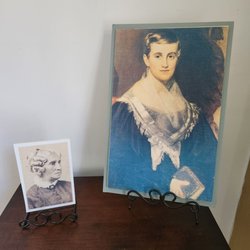
    Prudence Crandall Museum - Prudence Crandall

    Prudence Crandall

    Prudence Crandall Museum - Information about the museum by parking area

    See all

    Information about the museum by parking area

    General Putnam Monument

    General Putnam Monument

    5.0(1 review)
    14.7 km

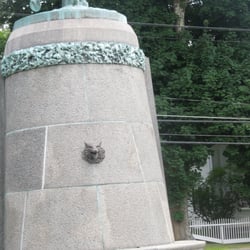
    In 1718, 22-year old Israel Putnam moved from MA to CT to be a farmer. He ended up in the military…read moreand served with distinction during the French and Indian War, rising to the rank of captain, and then major. But his greatest glory lay ahead. When British bullets killed Massachusetts colonists at Lexington and Concord, legend has it that Putnam became so enraged that he abandoned his plow in the field, jumped on his horse, and rode 100 miles to Boston to join the Revolution. He rose to the rank of Major General and led his troops in the Battle of Bunker Hill (where legend also has it that he uttered the immortal words "Don't fire until you see the whites of their eyes") and the Battle of Long Island. This fabulous monument has an 8 foot tall bronze statue of General Israel Putnam on his horse. The statue is mounted on s 20-foot tall granite base. It was dedicated on June 14, 1888 and it marks Putnam's grave. Check out the detail of Putnam's Revolutionary War uniform. You'll see boots, a tri-cornered hat, knee britches, and a coat with fancy epaulets. Of course he has a sword dangling from his belt. One interesting detail I saw on the base was a wolf head. Supposedly, as a boy Putnam crawled into a wolf cave and killed a wolf! Plaques on the base are inscribed as follows: Sacred be this Monument to the memory of ISRAEL PUTNAM, Esq. Senior Major General in the Armies of the United States of America, who was born in Salem, in the Province of Massachusetts on the 7th day of January, A.S. 1718 and died on the 29th of May A.D. 1790 Passenger, if thou art a soldier, drop a tear over the dust of a Hero, who ever attentive to the lives and happiness of his men dared to lead where any dared to follow. If a Patriot, remember the distinguished and gallant services rendered thy country by the Patriot who sleeps beneath this marble; if thou art honest, generous and worthy, render a cheerful tribute of respect to a man whose generosity was singular, whose honesty was proverbial; who raised himself to universal esteem and offices of eminent distinction by personal worth and a useful life.

    Photos
    General Putnam Monument
    General Putnam Monument
    General Putnam Monument

    See all

    Lebanon Historical Marker - Side One

    Lebanon Historical Marker

    4.0(1 review)
    12.9 km

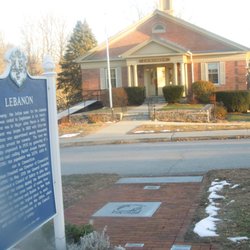
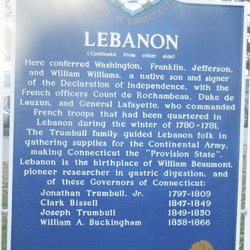
    Things I learned from the Lebanon Historical Marker:…read more 1) The area was first settled by colonists way back in 1665. 2) A Revolutionary "War Office" and Council of Safety was established here because Lebanon was at the cross roads of travel between Norwich and Hartford and Boston. 3) Some pretty important people - George Washington, Benjamin Franklin, Thomas Jefferson, and French officers French officers Count de Rochambeau, and Lafayette, among others, met here. 4) But my favorite is this- all hail native son William Beaumont -described as a "pioneer researcher in gastric digestion". This two-sided marker from the CT Historical Commission has the familiar white lettering on a blue background. It's located in a veteran's park directly across the street from Town Hall. The marker was installed in 1976, and is in great shape with crisp white lettering and an unmarred blue background- both are in very good condition. The full inscription reads: Lebanon Poquechaneeg, the Indian name for the Lebanon area, was ceded to Englishmen in six tracts; the first was to Major John Mason in 1665. Settlement was begun in 1695 with fifty-one proprietors who apportioned among themselves home lots around the common. The town was formally organized in 1700 by gathering of a church and calling Pastor Joseph Parsons. By 1756, the population was 3,274, sixth in size in Connecticut. Jonathan Trumbull was Governor of Connecticut 1769-1784. In May, 1775 the General Assembly established a Council of Safety to plan the defense of the colony during the Revolutionary War. On the cross roads of routes from Norwich to Hartford and Boston to New York, Lebanon was the logical place to meet. Trumbull's store became the War Office, where met nearly 1200 sessions of the Council of Safety. Here conferred Washington, Franklin, Jefferson and William Williams, a native son and signer of the Declaration of Independence, with the French officers Count de Rochambeau, Duke de Lauzun, and General Lafayette, who commanded French troops that had been quartered in Lebanon during the winter of 1780-1781. The Trumbull family guided Lebanon folk in gathering supplies for the Continental Army making Connecticut the "Provision State". Lebanon is the birthplace of William Beaumont, pioneer researcher in gastric digestion, and of these Governors of Connecticut: Jonathan Trumbull. Jr 1797-1809 Clark Bissell 1847-1849 Joseph Trumbull 1849-1850 William A. Buckingham 1858-1866 Erected by the Town of Lebanon and the Connecticut Historical Commission 1976

    Photos
    Lebanon Historical Marker - Side Two

    Side Two

    Lebanon Historical Marker

    See all

    Jonathan the Husky Statue

    Jonathan the Husky Statue

    5.0(2 reviews)
    18.7 km

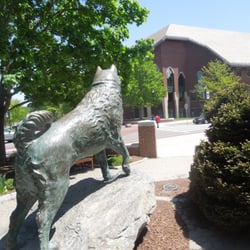
    Jonathan is a cute Husky statue that was donated by the alumni, sculpted by Larry Waisele. It is…read morelocated in the Thomas and Bette Wolff Family Park, located to the west of the Athletics Ticket Office. There are a couple of benches in there where you can sit down, relax, and just enjoy the view of the statue. The nose and the ears are worn, as students seem to rub it for good luck. Definitely a cute thing to check out if you're on the UConn campus :D +located in the Thomas and Bette Wolff Family Park +sculpted by Larry Waisele +located to the west of the Athletics Ticket Office

    Jonathan the Husky is the mascot and symbol of the University of Connecticut…read more He is named after the state's Governor Jonathan Trumbull who served way back during the Revolutionary War. Jonathan became the school's official mascot in 1934 when it won a naming contest in a landslide. There is a real life Jonathan. His proper name is Jonathan XIII and he is a purebred Siberian Husky, white in color. He was born in Pennsylvania on December 17, 2006 and makes public appearances on behalf of UConn. This 1995 statue of Jonathan is located right outside of Gampel Pavillion, which serves as UConn's basketball arena. It's located in a mini-park at the main entrance to Gampel. There are benches and a long stone wall around the statue and it's a common sight to see students lounging around or rubbing Jonathan's nose for good luck.

    Photos
    Jonathan the Husky Statue
    Jonathan the Husky Statue - Jonathan!

    Jonathan!

    Jonathan the Husky Statue - Jonathan!

    See all

    Jonathan!

    Israel Putnam Marker

    Israel Putnam Marker

    4.0(1 review)
    14.8 km

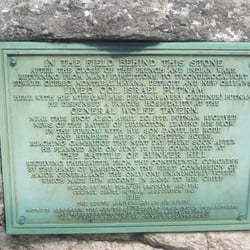
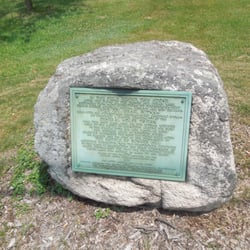
    His exploits remind me of a comic book super hero…read more In childhood he crawled into a wolf den to kill a wolf. He was minutes away from being burned at the stake by Indians. He was farming at his CT home when he heard of the killings at Lexington and Concord. So what did he do? He abandoned his plow, jumped on his horse, and rode 100 miles in 18 hours to join the revolution. This monument in the form of boulder and bronze plaque commemorates the patriotic life of General Israel Putnam and is located in the center of Brooklyn, CT. It was dedicated on the 200th anniversary of his birth, close to where he operated a tavern with his wife. the plaque's inscription tells his glorious story, his rise to command colonial forces at the Battle of Bunker Hill, and his subsequent promotion to become George Washington's second in command. The full inscription reads: In the field behind this stone after the close of the French and Indian wars, returning from many expeditions to ticonderoga, fort edward, quebec, montreal, havana, detroit, and new orleans lived col. israel putnam here, with his wife (2nd) mrs. deborah (avery gardiner) putnam he dispensed a famous hospitality at the general wolfe tavern near this spot, also, april 20, 1775, putnam received news of the battle of lexington. leaving his plow in the furrow with his son daniel, he rode one hundred miles in eighteen hours, reaching cambridge the next day. there soon after he planned and on june 17, 1775, commanded at the battle of bunker hill receiving thereafter from the continental congress by the hand of washington the first commission of major general (and the only one unanimously voted) which made him second in rank to his chief ----- placed by the town of brooklyn and the colonel daniel putnam association inc. 1918 the 200th anniversary of his birth ----- patriot, remember the heritages received from your forefathers and predecessors, protect and perpetuate them for future generations of your countrymen. The plaque has become difficult to read because of the copper patina over time. Maybe a restoration should be in order for the 300th anniversary of his birth in 2018?

    Photos
    Israel Putnam Marker
    Israel Putnam Marker

    See all

    Scotland Historical Marker - landmarks - Updated July 2026
    Loading...
    Loading...
    Loading...