Prudence Crandall Museum
Prudence Crandall Museum Photos


More like Prudence Crandall Museum
Recommended Reviews - Prudence Crandall Museum
Start your review...


Reviews With Photos


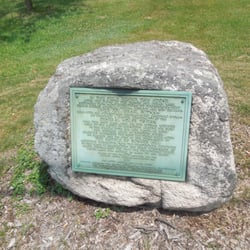
She was a schoolteacher Laws were passed to make what she did illegal. She was a schoolteacher that went to jail. Her plight became a national story, drawing abolitionist support from all over the country. Mark Twain became one of her most passionate defenders. So who was Prudence Crandall, and what did she do that was so controversial that it led to her imprisonment? She opened a school for "young ladies of color". There is a marker at the intersection of Routes 14 and 169 that marks the site where Crandall admitted a black woman to her school in 1833. When the parents of the white girls in class pulled their daughters from the school in protest, Crandall countered by opening a school for "Young ladies and Misses of colour." Black families of means sent their daughters to Crandall's school. The State of CT soon passed "Black Laws" which defined any school for out of state Black women as illegal. Crandall was convicted and jailed under these laws, in 1834. The court ruling that led to her imprisonment was overturned after a two year legal battle but the school eventually was forced to close because of harassment aimed at its young students and mob attacks on the school. Years later, the state awarded her restitution for the way she was treated. Here, the amazing life of this courageous woman is honored in this museum and commemorated by this historic marker.


We visited in July 2019 and were told they will be undergoing a 1 year restoration project beginning in the Fall. So don't wait! Go before the end of August 2019 or you will have to wait until summer 2021 to visit again! Ok, now that that is out of the way: We drive past this museum about once a month and finally made the stop in. I am so glad we did. It's so interesting. I had no idea who Prudence Crandall was. A trained teacher, whose family lived in the area, she was asked to open a school for the local affluent girls, which she was happy to do. Shortly after opening, a black woman asked her to attend the school as well and after some personal and religious deliberation Prudence said yes. The extent the community went through to stop black girls from attending her school is astounding! Even going so far as to try to burn down the house. Besides the history of the school you will learn about those who supported her, what some of her students went on to accomplish and where Prudence Crandall ended up in her senior years. There is a video presentation at the end of the tour which is quite well produced. On the second floor there is information on how schools have changed through the years in CT and some of the effort by Americans of African descent to acquire an education and the liberty they were promised at emancipation. If you go before they close for the season this year, you can complete a questionnaire after your tour (take the guided tour, so worth it!) and let them know what you liked most and what you'd like to see in the new collection when they reopen after restoration. They give you a gift for completing the survey. Also, items in the gift shop are presently half off before the restoration, so plan to pick up some personal and gift items. Beginning Sept 1, the museum director has two months to move all the collections out of the building. While structural work is completed beginning in November, she will have the task of developing new collection displays. A mighty task indeed. I look forward to going back in 2021 to see the new displays. I hope you make it in this year before the restoration begins. read more


15 days ago

Excellent tour and tour guide by Joan DiMartino, Museum Director and Curator. Joan is a spell binding extremely knowledgeable lecturer with a vast repository of historical data about the life and times of Prudence Crandall. Prudence Crandall was a Quaker who opened the first school of color for girls in the state of CT in 1831. The school faced exordinary opposition and persecution from the local town government and citizenry of Canterbury. Town merchants refused to sell the school supplies; mobs of town folks broke windows, threw eggs, garbage, poisoned the well with manure and eventually tried to burn the school down. She was arrested and spent a night in jail for starting a school of color without first securing permission from the town council. Prudence was tried 2 times at the state level but was acquitted, it was the first civil rights trails in America. CT passed the Black Laws in 1834 denied black students an education without local town approval which in most cases would not be granted. She and her students eventually were driven out of town and the school closed. Her court case impacted the 13th,14th and 15th amendments to the Constitution. Supreme Court Justice Thurgood Marshall cited the Prudence Crandall case as precedent in the over turning of Brown vs The Board of Education which desegregated America's schools. read more

2 years ago

She was a schoolteacher Laws were passed to make what she did illegal. She was a schoolteacher that went to jail. Her plight became a national story, drawing abolitionist support from all over the country. Mark Twain became one of her most passionate defenders. So who was Prudence Crandall, and what did she do that was so controversial that it led to her imprisonment? She opened a school for "young ladies of color". There is a marker at the intersection of Routes 14 and 169 that marks the site where Crandall admitted a black woman to her school in 1833. When the parents of the white girls in class pulled their daughters from the school in protest, Crandall countered by opening a school for "Young ladies and Misses of colour." Black families of means sent their daughters to Crandall's school. The State of CT soon passed "Black Laws" which defined any school for out of state Black women as illegal. Crandall was convicted and jailed under these laws, in 1834. The court ruling that led to her imprisonment was overturned after a two year legal battle but the school eventually was forced to close because of harassment aimed at its young students and mob attacks on the school. Years later, the state awarded her restitution for the way she was treated. Here, the amazing life of this courageous woman is honored in this museum and commemorated by this historic marker. read more


7 years ago

13 years ago
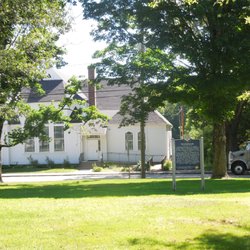
Prudence Crandall is Connecticut's State Heroine. She was a teacher who ran a school out of her house, and was approached by an African American girl to find out if she could attend her school. Even though it was illegal, Ms. Crandall admitted her, and many others as time went on. She faced such opposition from other residents of Canterbury that at one point her house was set on fire. Today, the house is a museum where you can learn about her life, the story of the school, and tour the downstairs with a docent. The second floor of the house is a self-guided museum about life in the "last green valley" in the 1800s. This museum is also one of three sites in the National Park system's Quinebaug & Shetucket Rivers National Heritage Corridor, which means that it is not a national park, but the NPS deems the region to be historically significant. It also means that if you're like me, you'll want to get your National Parks Passport stamped. :) They will stamp it for you at the admission desk. There is also a sweet little gift shop. read more