Cancel

    Open app

    Search

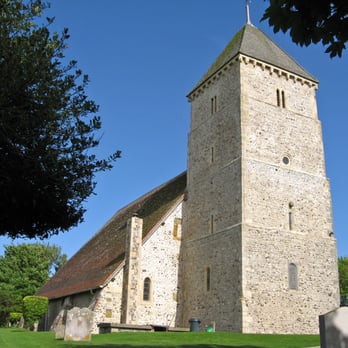
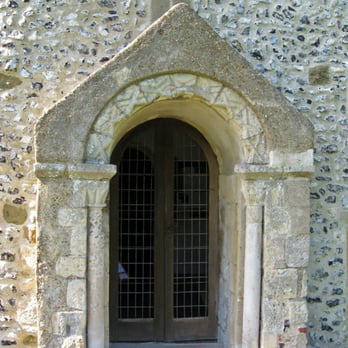
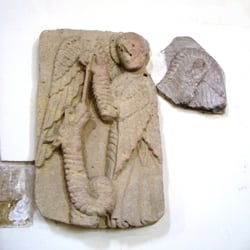
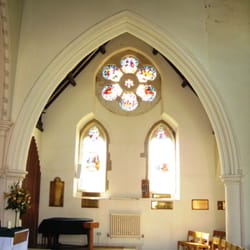
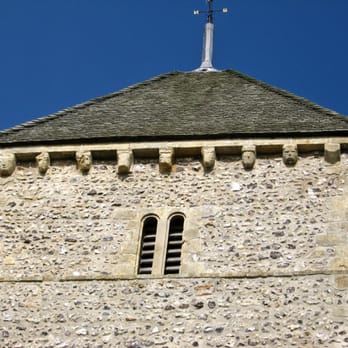
    St Andrew's Church Photos

    Recommended Reviews - St Andrew's Church

    Your trust is our priority, so businesses can't pay to alter or remove their reviews. Learn more about reviews.
    Yelp app icon
    Browse more easily on the app
    Review Feed Illustration

    19 years ago

    Helpful 0
    Thanks 0
    Love this 1
    Oh no 0

    Verify this business for free

    Get access to customer & competitor insights.

    Verify this business

    Church of St Leonard

    Church of St Leonard

    5.0(1 review)
    1.3 mi

    Seaford is very quiet as seaside towns go - there's not even an amusement arcade on the seafront…read moreand, on my visit, only a few souls were braving the breeze on the promenade. But this is an ancient town - one of the original Cinque Ports - developed by the Normans after the Conquest to facilitate trade with Normandy. The church was built in 1090, and enlarged in several stages during the mediaeval period. However, it suffered badly from French raids during the Hundred Years' War, and the port declined sharply after the river Ouse changed its course in the late 16th century. It was not until the Victorian period that the railway brought renewed prosperity, and a significant rebuilding in 1861-2 delivered the building we see today - now a Grade I listed building. The church is unusually hard to 'read' architecturally, as a complex series of rebuildings have left fragments from several periods, and some formerly internal features are now outside. But essentially, it has a Norman Nave of two bays, rebuilt in the Early English style some time the early 13th century, with an Early English Gothic clerestory. The west tower is mostly late 15th century but has the remains of Norman arches on the south (exposed) and north (now in the vestry) with round arches with shafts and capitals either side, both with a small Norman clerestory window above and, on the south side, an Early English clerestory window above that: a clear indication that, for much of its life, it was part of the nave. The West doorway is largely a Victorian reconstruction of a Norman original. The tower opens through a 14th century arch into the nave. The north aisle also has the remains of two small Norman windows. The spacious crossing arches and apsed chancel are pure Victorian. The most interesting features are found in the nave: the round piers have attractive capitals with stiff-leaf carving, except - notably - one 'Historiated' capital, carved with scenes from the Bible. This is a great rarity, and though it is much weathered, the crucifixion with a weeping Mary and St John the Divine is most clear, with scant remains of Daniel in the lions' den. (A guide shows older photographs which are rather clearer). Other scenes are now too vague to make out. Other features of interest include an excellent sculpted panel of St Michael and the Dragon, dated around 1130, on the north arcade, and an excellent stained glass window by Kempe (1903) in the south aisle. A corbel on the south arcade features two grotesque faces, one upside down. Under the tower is an ancient tombstone, an anthropomorphic tomb chest and a case containing a 17th century King James bible and a copy of the Book of Common Prayer from 1686. The interior has recently been re-floored in pale parquet and is bright and airy, and clearly has a busy parish life: on my visit, I was welcomed warmly by three cheerful pensioners, eager to show off their church.

    Photos
    Church of St Leonard
    Church of St Leonard
    Church of St Leonard

    See all

    Church of St Michael and All Angels, Southwick

    Church of St Michael and All Angels, Southwick

    5.0(1 review)
    14.7 mi

    Southwick is now firmly part of the suburban sprawl running from Brighton and Shoreham, and is…read moreknown to most people for the power station that dominates the far side of Shoreham Harbour. But there was a community here in Saxon times, and its church is surprisingly ancient. In fact, the walk from the station crosses the Green, an attractive and villagey stretch of tree-lined common which splits Southwick into two halves. There are some handsome cottages surrounded by well appointed semi-detached suburban homes, and a rather less appealing row of post-war shops. St Michael and All Angels was, until the 18th century, dedicated to St Margaret, and sits among a very pretty churchyard, thickly studded with trees. Although there was probably a church here in Saxon times, it first recorded in 1086, and in 1206 the right to appoint the rector was granted to the Templars, and then to the Hospitallers, although much of the early mediaeval period was taken up with disputes over these rights with the monks of Sele Priory. The ownership passed from Sele Priory to Magdelene College at the Dissolution, and patronage thereafter passed to the Crown until the 20th century. Fire in the 19th Century damaged the nave and an unexploded bomb (and the subsequent excavation to remove it) damaged the tower in 1941. The church itself is built of flint, and is essentially in three parts: the tower, nave and chancel. The tower is by far the most impressive part: its foundations and lower walls are said to be Saxon, although it mostly dates from the late 12th and 13th centuries. It is an attractive composition, with paired round-headed arches with narrow openings surmounted by paired gothic lancets and, above that, a shingle broach spire. The west door is also attractive, but a modern addition: the tower was carefully taken down and faithfully rebuilt in 1950 after the bomb damage, with vestries built either side. The chancel is mostly 13th century, with two original lancets, framed by a 14th century chancel arch. There are two round headed arches to the south, although the central column probably dates from the Victorian rebuilding. A 14th wooden screen with narrow lancets also survives in the south aisle. The nave burned down in the 1830s and was rebuilt with narrow lean-to aisles in 1834, with round-headed arcades and lancet windows. Pevsner's Buildings of England described the nave as a 'loveless cover for pew-space', which I think is a bit harsh, although there's no doubt it doesn't match the quality of the tower. The furnishings other than the south aisle screen - are limited in interest to what appears to be a mediaeval aumbry, some 18th and 19th century tombs and memorials, and a sturdy, square font, probably from the 13th century. The church is today the centre of large and busy parish, and has a vibrant church life, with services daily through the week.

    Photos
    Church of St Michael and All Angels, Southwick
    Church of St Michael and All Angels, Southwick
    Church of St Michael and All Angels, Southwick

    See all

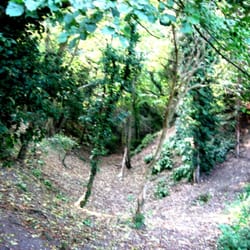
    Bramber Castle - Bramber castle - dry moat

    Bramber Castle

    3.8(6 reviews)
    18.8 mi

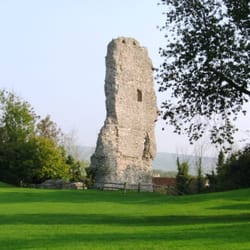
    Built to defend an important port on the River Adur, Bramber Castle was constructed as a motte and…read morebailey castle around 1073 by William De Braose, who fought alongside William the Conqueror at the battle of Hastings in 1066. Apart from a period of confiscation during the reign of King John, it remained in the ownership of the De Braose family until themale line died out in 1324. Thereafter, it passed via the Mowbray and Howard families into the estate of the Dukes of Norfolk, who held it until it until 1926. It was given to the National Trust in 1946. Very little survives of the original castle, thanks to a gradual decline over the years, damage during the Civil War in 1642 and looting of the stones as a quarry for building by the locals. The most prominent feature is the tall and unsteady-looking fragment of the Gatehouse tower, still standing to almost its full original height. In the centre of the grounds is the impressive original motte, its earthen mound rising some 30ft (10m). A short distance away is a section of the curtain wall which survives up to 10ft (3m) in places. Around the perimeter are also the remains of the castle's impressive moat. (NB be careful with small children, as there are some sheer drops in places). Although the ruins are rather fragmentary, the grounds are beautifully kept by the National Trust, and make a wonderful place for a picnic, as well as affording excellent views of the surrounding countryside.

    This place is a bit of a let down. There seems to be no effort to make it obvious where/what parts…read moreof the ruins were. They have a lame sign at the entrance but little else. It just seems like an enclosed play field.

    Photos
    Bramber Castle
    Bramber Castle - Bramber Castle - remains of main gatehouse

    Bramber Castle - remains of main gatehouse

    Bramber Castle

    See all

    Combe Hill Neolithic Camp

    Combe Hill Neolithic Camp

    5.0(1 review)
    7.1 mi

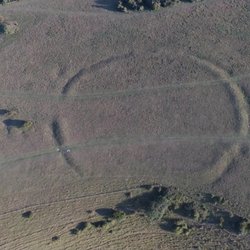
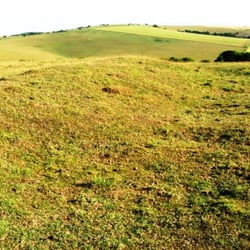
    This is a 5,400 year-old Neolithic causewayed camp or enclosure, situated on Combe Hill between the…read moreEastbourne suburb of Willingdon and the village of Jevington. Although there isn't a great deal to see unless you're an aficionado, it's a lovely place for a walk, with great views, and it is older than Stonehenge! History and what to see The camp consists of two (possibly three) sets of concentric ditches and ring is the most complete of the three, measuring 90 by 70 metres and enclosing an area of 0.53 hectares, and rising to 1.2m. That may not sound much, but archaeological finds of flints, animal bones, an unusual small carved chalk block and Ebbsfleet Ware pottery have dated the site to around 3,400BC - earlier than the first phase of Stonehenge. It's not surprising that erosion over the millennia have reduced its physical impact. Evidence also suggests that, when built, it would have been constructed in newly cleared forest. Finds from the ditches indicate the site was used up to the fourth century AD, possibly for votive offerings, but its use is unlikely to have continuous. The material includes Bronze Age Beaker Ware pottery, bronze rings and Roman coins. It's not exactly known what such enclosures were used for, but it is unlikely to have been continuously inhabited. It has been speculated that they were religious or social meeting places, cattle enclosures or trade centres, and were rare clearings in otherwise dense forest. There are three bronze Age barrows adjacent, one to the west and two to the east, and date from around 2,000BC. The western 'Bowl' barrow rises to nearly 2m, and is 20m in diameter. In 1908 four Bronze Age axe heads were found within the mound. The other two mounds to the east are slightly smaller, but all three may have been damaged by early and unrecorded amateur antiquarian investigations which have reduced their height. Practicalities The site lies a mile from Willingdon and 1.5 miles from Jevington on the 1066 Country Path, Ordnance Survey reference TQ 5702. It's 600ft up, so allow a good half hour to reach it from either starting point, and take a map and good shoes - the paths can be very steep, and the grass can be slippery in wet weather.

    Photos
    Combe Hill Neolithic Camp - Approaching the hill summit from Jevington on the 1066 Country Walk path, with the western Bronze Age barrow on the left.

    Approaching the hill summit from Jevington on the 1066 Country Walk path, with the western Bronze Age barrow on the left.

    Combe Hill Neolithic Camp - A section of one of the ditches (centre) and banks (to the left) of the causewayed enclosure. Built c. 3,400BC.

    A section of one of the ditches (centre) and banks (to the left) of the causewayed enclosure. Built c. 3,400BC.

    Combe Hill Neolithic Camp - Standing in one of the concentric ditches, with the bank to the right; the causeway across it is straight ahead. The bank on the

    See all

    Standing in one of the concentric ditches, with the bank to the right; the causeway across it is straight ahead. The bank on the

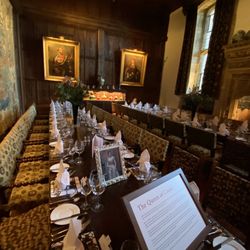
    Hever Castle - Hever Castle's dining hall, laid up for a private event

    Hever Castle

    4.8(20 reviews)
    27.5 mi

    Thatcher would be proud…read more Looking around Hever, many would be left with the impression that the owners are enormous fans of Anne Boleyn. The unfortunate wife of Henry VIII is, after all, the main focus of the exhibition and makes an appearance on much of the marketing material. But look a bit closer, and the more astute visitor may notice a different, more 'true blue', streak permeating the house. Yes, Labour voters clutch your pearls, but the proprietors appear to be worshippers of none other than Margaret Thatcher. (More so than Ms Boleyn, I would wager.) In the castle, visitors are treated to a near life-size oil painting of the union basher. And for those lucky enough to stay in the guest house for the price of £300 per night, they will find a letter written by the Iron Lady to thank the castle for her stay that has been framed and hung in one of the hallways. Among the owners personal possessions, I note Ms Boleyn has not received a similar dose of affection. Of interest is also the fact that this castle, its stunning gardens and water maze, owe their amazing condition to our friends across the Atlantic. Most stately homes in Britain are now virtually on their knees, with years of decline and underinvestment in the country reflected in their faded carpets, moth-eaten curtains and peeling paintwork. Hever, however, has avoided this fate for the good reason that it was bought by... gasp... an AMERICAN. Horrifying as it may sound, Mr Astor - who owes his astounding wealth to the rise of New York City - purchased the castle and injected nothing short of a fortune into it in order to create the attraction that we see today. Demonstrating an entrepreneurial spirit so often absent in Britain, he then had the vision to order the construction of a second moat, a lake, a walled Italian garden complete with artefacts from Pompeii, a 'wall waterfall' and to direct the gardeners to shape some bushes like a chess set. I don't think he was involved in the water maze, so loved locally, but its presence reflects Hever's enduring ambitious spirit. Perhaps it was this spirit that so inspired Margaret Thatcher to write of Hever: 'I have seen several castles and large country houses but none as perfect as Hever.'

    If you are visiting London, Hever Castle is a must do. Only a 90 minute drive from London hotels,…read morethe trip is well worth the wait upon arrival. From its sprawling vistas to the castle itself this place is a real treat. There is a large lake on site that offers rowing, an area that allows you to try your hand at archery and even a place to see falconry. There are jousting exhibitions and plenty of food from the cafe or restaurant on site. The REAL gem is the castle. Home for Queen Anne Boleyn from 5 years old to 12 one can only imagine the wonder this place brought her. The castle provides an audio tour in several languages so there is no issue there. (The staff are marvelously kind and helpful in the castle and in the dining areas and gift shop.) It's small but chock full of informative history about Anne Boleyn as well as those who lived in the castle after her death. If you are looking for a respite from the concrete jungle and noisy planet that is London, Hever provides you with lots of peace and quiet Tour the rose garden or just sit and enjoy the views and shade from the trees. It's an idyllic setting and a trip that will make your visit to the UK complete.

    Photos
    Hever Castle - Lovely walkway to the castle

    Lovely walkway to the castle

    Hever Castle - Billard Room

    Billard Room

    Hever Castle - Tulip room's four poster bed - Do not be mislead by the beauty of this bed.  It is the most uncomfortable bed we have ever slept in.

    See all

    Tulip room's four poster bed - Do not be mislead by the beauty of this bed. It is the most uncomfortable bed we have ever slept in.

    St Andrew's Church - landmarks - Updated July 2026

    Loading...
    Loading...
    Loading...