Wandsworth Common is one of London's historic Commons and also a great area of green space…read more
History
The Manor of Wandsworth and Battersea goes back to the 11th century and the Common was mentioned in the Domesday Book. Like most such land, the Common was an area was set aside which the general population could use under 'common rights' for grazing animals and providing wood for fuel.
The Common largely escaped the enclosures that destroyed other commons in the 18th century, but between 1794 and 1866 some 53 partial enclosures took place. It had also begun to be dissected by roads and railway lines, giving rise to pressure for development. Maps of the period show market gardens, a windmill and a large lake known as the 'Black Sea', filled in around 1884.
This led to efforts by the local Vicar of Battersea to oppose further incremental development of the Common, and its preservation under the Metropolitan Commons Act of 1866. A first attempt in 1868 failed, but a Commons Defence Committee was formed, and after a series of public meetings, demonstrations (with bands and other entertainment!) and a lot of fund raising and political lobbying, the 1871 Wandsworth Commons Act was passed, securing its future.
It passed to the Metropolitan Board of Works in 1887, who started to improve its maintenance - until then it was largely treeless, and much of it was bare and muddy. In 1971 responsibility passed to Wandsworth Borough Council.
The Common
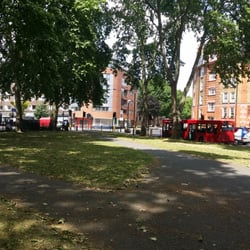
Despite being dissected by roads and railways, the Common is still a great open space: in fact the various bits have very distinct characters, some with grassland ideal for ball games, others being set aside as woodland and wildlife reserves. A small finger of the Common even penetrates beyond Battersea Rise towards Clapham Junction station.
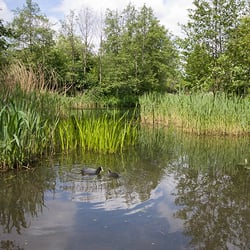
Its 175 acres includes sports pitches, tennis courts, a bowling green, two lakes (one of which can be fished - membership required), a trim trail exercise route and a children's playground.
Part of the common is known as the Scope in recognition of a large telescope (once the largest in the world) erected here in 1852. It was removed in the 1870's when air pollution made it unusable. Today, the Scope is a wildlife area, and contains oak and birch woodland, grassland and scrub habitats.
Another historic feature is the small windmill on Windmill Road, built in 1837 to pump water from the railway cutting into the Black Sea lake. The sails were removed in 1884 when the lake was filled in, but the base survives and is now a Grade II listed structure.
Overall, it is an excellent - and very popular - place to relax in the summer.